
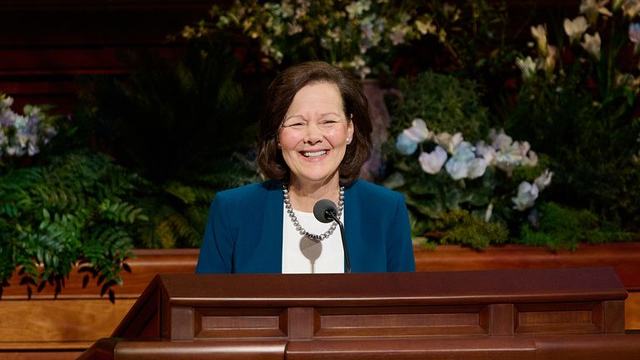
“Here Am I, Send Me”
 Open talk in Gospel Library
Ideas for Opening the Lesson
- Invite class members to think of a time when they felt prompted to help someone in a simple way. Ask a few to briefly share what they did and what happened. Then introduce the talk’s invitation to say, “Here am I, send me,” and discuss how the Lord used willing hearts.
- Begin by writing the phrase “Here am I, send me” on the board. Ask the class what this phrase teaches about willingness, trust, and discipleship. After a few responses, explain that President Porter taught that this attitude can shape daily life and help us bless others.
- Show or describe the story of the boy with five loaves and two fishes. Ask, “What do we learn from his willingness to offer what he had?” Use the discussion to introduce the principle that the Lord can magnify small and simple offerings.
- Invite class members to name blessings that come “now” and blessings that come “later” from following Jesus Christ. After listing a few on the board, connect their answers to President Porter’s teaching that discipleship brings both immediate help and eternal blessings.
- Ask the class to reflect silently on one person in their family, ward, workplace, or neighborhood who may need comfort or encouragement. Then explain that President Porter taught that through the Spirit, Heavenly Father can send us to help specific people in simple but meaningful ways.
Topics
Remember your divine identity and purpose
President Porter taught that God’s children lived as spirits before coming to earth and were born with gifts and a purpose. She said that each person had the ability to make a difference for good. Her message helped listeners see themselves as more than their age, circumstances, or limitations.
You were born with gifts. You have a purpose. And you have the ability to make a difference for good.
- How did remembering our premortal life and divine identity strengthen our sense of purpose?
- What gifts had the Lord given us that we may sometimes overlook?
- How could a clearer understanding of our divine identity change the way we approached daily challenges?
- When had you seen someone, including a child or youth, make a real difference for good?
- What could we do to help family members or quorum and Relief Society members see their God-given worth and purpose?
- How did the world’s messages about identity differ from what President Porter taught?
Trust Heavenly Father’s plan of happiness
President Porter said that Heavenly Father loved His children and wanted them to receive all the blessings He enjoyed. She taught that His plan included coming to earth, gaining a body, keeping commandments, and returning to live with Him and our families. She presented the plan as evidence of God’s love and desire for our joy and peace.
Heavenly Father loves His children so much that He wants each of us to receive all the blessings He enjoys.
- What did this talk teach us about the loving purposes behind Heavenly Father’s plan?
- How had the plan of happiness given you hope during difficult times?
- Why was it important to remember that God’s commandments were part of a loving plan?
- How did the doctrine of eternal families influence the way we lived now?
- What experiences had helped you trust Heavenly Father’s plan more deeply?
- How could we teach this doctrine more clearly in our homes and ministering efforts?
Rely on Jesus Christ’s saving mission
President Porter testified that Jesus Christ willingly said, “Here am I, send me,” and came to earth to help Heavenly Father’s children return home. She taught that He showed us how to live, suffered for our sins and challenges, died, and was resurrected. She emphasized that through His Atonement and Resurrection, He overcame everything hard and unfair in life.
Jesus, our Lord and Savior, won the battle over everything that is hard and unfair in our lives.
- What did President Porter emphasize about the willingness of Jesus Christ to fulfill His mission?
- How had the Savior’s Atonement helped you with both sin and suffering?
- Why did it matter that Jesus Christ not only taught truth but also overcame death and all injustice?
- How could Easter truths shape our faith throughout the entire year?
- When had you felt peace because you knew the Savior understood you personally?
- How could we bear a more confident witness of Jesus Christ in our homes and classes?
Stay close to Jesus Christ daily
President Porter taught that Jesus Christ knew, understood, and loved each of God’s children. She invited listeners to stay close to Him, learn about Him, and keep the commandments to love God and love others. She said that as people did so, the Savior would help them grow, find comfort, and receive strength in daily life.
Jesus Christ knows you, He understands you, and He loves you. Jesus has done everything to help you. Stay close to Him.
- What did it mean in practical terms to stay close to Jesus Christ each day?
- How had learning about the Savior changed your relationship with Him?
- What blessings had come as you tried to love God and love others more fully?
- How could we make Jesus Christ more central in our homes, ministering, and personal worship?
- What habits sometimes pulled us away from the Savior, and how could we correct them?
- When had you felt the Savior helping you grow into the person you were meant to become?
Offer yourself to God in willing prayer
President Porter invited listeners to begin each day with purpose and confidence by praying, “Here am I, send me.” She taught that disciples could then listen for spiritual impressions about whom to help and what to do. Her counsel showed that willingness and responsiveness to the Spirit were central to Christian discipleship.
Follow His example and say in prayer to Heavenly Father, “Here am I, send me.” Then listen for thoughts and ideas.
- What changed when we approached prayer with the attitude, “Here am I, send me”?
- How had the Spirit prompted you to serve or speak up for truth?
- Why was listening after praying just as important as speaking in prayer?
- What might keep us from acting on promptings we received?
- How could we become more confident in recognizing the Lord’s direction?
- What simple daily opportunities had the Lord given us to help others?
Let God magnify your small offerings
Using the story of the boy with five loaves and two fishes, President Porter taught that disciples did not need to solve every problem around them. She said the Lord could provide miracles when people simply offered what they had. Her message encouraged faith that God could make small and simple efforts great.
Heavenly Father can provide miracles when you simply offer what you have.
- Why did the story of the loaves and fishes fit so well with President Porter’s message?
- What small offering had you given that the Lord seemed to magnify?
- How did this principle help us when we felt inadequate or overwhelmed?
- What were some “small and simple” things we could offer in our homes and ward?
- Why did the Lord often work through ordinary efforts rather than dramatic solutions?
- How could we teach children and youth to trust that their offerings mattered to God?
Bless others through simple discipleship
President Porter shared examples of children around the world who blessed others by reading scripture with family, sharing food, serving sick children, and speaking of faith. She showed that true discipleship was expressed in ordinary acts of love, generosity, and testimony. These examples illustrated that anyone, regardless of age, could bring God’s love to others.
I have seen children all over the world who are offering what they have to bring God’s love to their families, church, friends, and communities.
- What stood out to you from the examples President Porter shared from around the world?
- How had you seen simple acts of discipleship soften hearts or strengthen faith?
- What did these stories teach about the spiritual capacity of children and youth?
- How could we better notice and encourage quiet acts of goodness in our families and ward?
- What opportunities did we have right now to bring God’s love to friends, neighbors, or ministering assignments?
- How had someone’s simple act of kindness or testimony blessed your life?
Seek blessings now and later
President Porter used a family story about dessert to teach that following Jesus Christ brought blessings both now and later. She said present choices helped people change and grow today while also preparing them for eternal joy. Her message connected immediate spiritual blessings with the everlasting promises of the gospel.
When you strive to bring yourself and others closer to Jesus, you will receive blessings now and later.
- What blessings of discipleship had you experienced now in your current life?
- How did present obedience prepare us for eternal blessings later?
- Why was it helpful to remember both immediate and eternal outcomes of righteous choices?
- How could this perspective strengthen us when blessings seemed delayed?
- What choices today would most help us and our families receive blessings now and later?
- How might this teaching influence the way we set spiritual goals?
Additional Discussion Questions
- What invitation from President Porter felt most important for our class to act on right now?
- How did the phrase “Here am I, send me” apply to ministering, family life, and ward service?
- What did this talk teach us about the relationship between divine identity and daily discipleship?
- How could we better help children, youth, and adults recognize that they had gifts and a purpose?
- What were some ways the Savior helped us with things that felt hard or unfair?
- How could we become more intentional about listening for promptings after we prayed?
- What fears or excuses sometimes kept us from offering what we had to the Lord?
- How had the Lord used small and simple acts to bless your family or someone you ministered to?
- What did President Porter’s examples teach us about sharing the gospel through everyday actions?
- What is one specific way we could say “Here am I, send me” this week and then act on it?
