
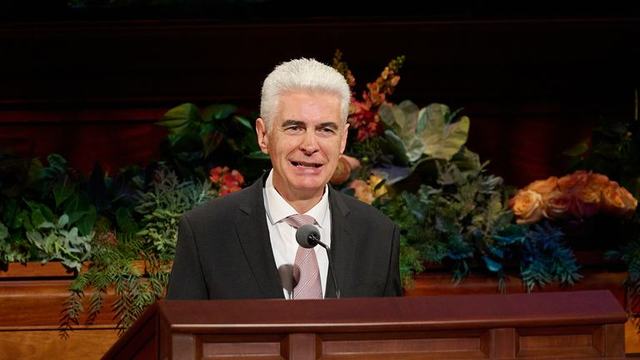
The Gift of Testimony
 Open talk in Gospel Library
Ideas for Opening the Lesson
- Write “What does the Lord expect me to do with this gift?” on the board. Invite class members to silently consider their testimony as a gift from God, then discuss how this question changes their approach to sharing it. Introduce Elder Caussé’s invitation to bear witness with gratitude, humility, and love.
- Read the niece’s two-sentence testimony: “I know that God loves me” and “I know that God has a plan for me.” Ask what makes these simple statements meaningful. Use the discussion to introduce the teaching that a testimony’s power depends on sincerity and the Holy Ghost, not eloquence.
- Write “I know” and “I love you” on the board. Ask how each expression can help someone feel the Savior’s love. Read Elder Caussé’s teaching that testimony and love strengthen one another, and invite members to look for that connection throughout the lesson.
- Invite class members to think quietly about someone whose words or actions help them recognize Jesus Christ. Ask willing participants to share what makes that witness meaningful, without naming anyone if they prefer. Connect their observations to the responsibility of every disciple to testify in word and deed.
- Read the Lord’s promise quoted in the talk: “Be of good cheer, and do not fear, for I the Lord am with you, and will stand by you; and ye shall bear record of me, even Jesus Christ.” Ask which words offer reassurance when sharing faith feels difficult. Introduce the lesson as an opportunity to discover simple, loving ways to bear witness of the Savior.
Topics
Listen to Apostles Bear Witness of Jesus Christ
Elder Caussé identifies bearing witness of Jesus Christ as central to his apostolic calling. Apostles hold priesthood keys and bear a unique, authoritative, divinely empowered witness of the living Christ, His gospel, His Atonement, and His Resurrection. Their testimony remains central to the doctrine of the restored Church.
Apostles bear a unique, authoritative, divinely empowered witness of the living Christ—of His divine reality, His gospel, His Atonement, and His Resurrection.
- What does Elder Caussé’s focus on bearing witness of the Savior teach us about the purpose of an Apostle’s calling?
- How does an Apostle’s witness of Jesus Christ differ from the witness all disciples are invited to share?
- Which apostolic testimony of Jesus Christ brings you particular peace or hope, and why?
- How can we listen for testimony of the Savior as we study general conference messages?
- What can you change in your conference study to give greater attention to Jesus Christ, His Atonement, and His Resurrection?
Keep Your Covenants by Witnessing of Christ
The responsibility to bear witness of Jesus Christ extends to every disciple, not only to prophets and apostles. Members who covenant to take upon themselves His name keep that covenant by sharing their witness of God and His Son. Their words and deeds demonstrate the reality of a loving Savior and the blessings of His gospel.
As members of the Church who have covenanted to take upon ourselves the name of Christ, sharing our witness of God and His Son is an essential way to keep that sacred covenant.
- How does understanding testimony as a covenant responsibility change the way you approach it?
- What does standing as a witness of God look like in ordinary situations at home, at work, or in the community?
- How do our actions help others recognize the reality of a loving Savior?
- What experiences help you see the importance of combining a spoken testimony with gospel living?
- What is one setting in your life where you can more intentionally represent Jesus Christ this week?
Trust and Nurture Your Personal Testimony
Testimony is a precious gift from God that develops within a personal relationship with Him. It grows through faith, earnest seeking, gospel living, and the quiet influence of the Holy Ghost. Because each testimony reflects unique experiences and needs, Elder Caussé encourages disciples to trust, nurture, and bear their own witness rather than compare it with someone else’s.
Your testimony may be different from mine or that of other family members or fellow Saints. Please trust it, nurture it, and bear it, because it is uniquely yours.
- What does it mean to receive testimony as a gift from God rather than as a personal achievement?
- How does the quiet influence of the Holy Ghost help you recognize gospel truth?
- How can comparing our testimony with someone else’s distract us from nurturing our own?
- What experiences show you how faith, earnest seeking, and gospel living work together to strengthen testimony?
- Which practice helps nurture your testimony, and what adjustment can you make to give it more attention?
Share the Gift God Entrusts to You
Elder Caussé redirects attention from why we receive a testimony to what the Lord expects us to do with it. Testimony is not something to hide but a gift to share. Gratitude, humility, and love shape how disciples offer this gift to others.
Our testimony is not a talent to be hidden. It is a gift to be shared—with grateful hearts and in a spirit of humility and love.
- How does asking “What does the Lord expect me to do with this gift?” change your perspective on testimony?
- What sometimes leads us to hide our testimony, and how can we respond to those concerns with faith?
- What does gratitude sound like in a testimony?
- How can humility help us share our convictions without making another person feel judged or pressured?
- Who comes to mind as you consider how to share your testimony with greater love?
Express Christlike Love Through Your Testimony
Testimony and love are connected gifts that strengthen each other. Sharing a witness of Jesus Christ expresses love because it offers something precious to another person. Expressing sincere Christlike love also bears witness of the Savior, and together these expressions help create an environment where the Spirit can dwell.
Whenever we express Christlike love to those around us, we bear witness of Him, the source of all perfect love.
- How can saying “I know” become an expression of love rather than merely a statement of certainty?
- How does sincere Christlike love bear witness of Jesus Christ?
- What experiences help you recognize the connection between feeling loved and being open to spiritual truth?
- How can we make our homes or quorum and Relief Society discussions places where both faith and love are expressed?
- What is one way you can bring a heartfelt expression of love and a sincere expression of faith together this week?
Testify Simply and Rely on the Holy Ghost
A powerful testimony does not require length, eloquence, or dramatic experiences. Elder Caussé uses his niece’s simple testimony to emphasize sincerity, humility, and truth. The Holy Ghost confirms truth, giving divine power to the witness of ordinary disciples whose words may be simple or imperfect.
There is great power in a sincere, humble, and heartfelt testimony. It need not be long, eloquent, or dramatic—it only needs to be true.
- What does the niece’s two-sentence testimony teach us about what matters most when we testify?
- How does knowing that the Spirit confirms truth help when we feel nervous or inadequate?
- What experiences illustrate the spiritual power of a brief, simple testimony?
- How can we encourage someone whose testimony is just beginning without asking them to claim more than they sincerely believe?
- If you choose to share, what simple statement of faith honestly expresses your testimony today?
Strengthen Faith and Offer Hope Through Testimony
Sharing testimony strengthens the person who bears it and can bless those who hear it. Elder Caussé teaches that testifying draws disciples closer to the Lord and helps them become instruments in His hands. Alma’s remembrance of his father’s witness illustrates how testimony can offer hope in Jesus Christ and invite repentance.
As you share it freely, your own testimony will grow stronger. You will draw closer to the Lord and feel more deeply the power of His redemption.
- How does sharing your testimony help strengthen your own faith?
- What does Alma’s remembrance of his father’s witness teach us about the lasting influence of testimony?
- How can testimony offer hope to someone who feels discouraged or distant from God?
- What experiences show you that a loving witness can matter even when its influence is not immediately visible?
- How can you make your testimony more clearly point to the hope and redemption available through Jesus Christ?
Seek Daily Opportunities to Bear Witness
Elder Caussé invites disciples to look each day for opportunities, as prompted by the Holy Ghost, to testify of Jesus Christ and His restored gospel. These opportunities include family conversations, testimony meetings, ministering visits, missionary lessons, social media, and everyday interactions. Even a brief, natural expression of faith can bless lives and help spread the love of Christ.
I invite you to look each day for opportunities, as prompted by the Holy Ghost, to bear witness of Jesus Christ and His restored gospel—even if only for a minute or two.
- Where do natural opportunities to share faith arise in your daily life?
- How can you become more attentive to the Holy Ghost’s promptings to bear witness?
- What makes an expression such as “I love our Savior, Jesus Christ” feel natural and sincere in conversation?
- How can we share testimony in ministering or online in ways that communicate humility, love, and respect?
- What specific step can you take this week to notice and act on an opportunity to testify?
Additional Discussion Questions
- What central message from this talk feels most relevant to your discipleship right now, and why?
- How does Elder Caussé’s account of receiving peace through the Lord’s promise help you face responsibilities that feel overwhelming?
- How can our quorum or Relief Society help members feel welcome to share both growing faith and sincere questions?
- What does a Christ-centered testimony emphasize, and how can we keep the Savior at the center of our witness?
- How can we express conviction while remaining gentle toward people whose beliefs or experiences differ from ours?
- What habits help you recognize God’s hand in daily life and find simple words to describe it?
- How can parents, relatives, and ministering brothers or sisters make testimony a natural part of relationships rather than only a formal occasion?
- When sharing faith feels uncomfortable, how can you distinguish a need for courage from a need to listen or choose a more appropriate moment?
- How do gratitude for testimony and responsibility to share it reinforce each other?
- What invitation from this talk do you feel prompted to act on, and how can you make that action part of your daily discipleship?
