
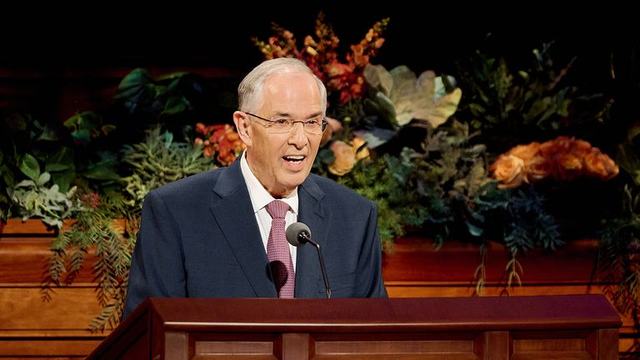
Courage Born of Our Faith in Jesus Christ
 Open talk in Gospel Library
Ideas for Opening the Lesson
- Write “Spiritual courage” on the board and invite class members to describe what it looks like in everyday life. Read Elder Andersen’s definition: “Spiritual courage is the triumph over obstacles, doubt, and fear in choosing the right.” Ask how this definition differs from simply feeling fearless.
- Read Rosemary Chibota’s conversion story from the opening of the talk. Invite class members to consider the courage involved in acting on a spiritual witness when family members do not yet share that conviction. Ask how her example encourages patience and faith in family relationships.
- Draw two arrows connecting the words “Faith in Jesus Christ” and “Courage to choose the right.” Read Elder Andersen’s explanation that faith increases courage and courageous choices strengthen faith. Invite class members to identify everyday choices that illustrate this relationship.
- Invite class members to spend a brief moment in quiet reflection on the statement “We need stillness to nourish our faith in Christ.” Ask what competes with stillness in their lives and what helps them create space for the Savior. Allow participants to keep personal impressions private.
- Read the Woodbury family’s statement: “Our family is safe, and our faith is secure. We can build another house.” Ask what this statement reveals about their trust in Jesus Christ. Explain that the lesson explores courage in both ordinary responsibilities and extraordinary trials.
Topics
Anchor Your Courage in Jesus Christ
Elder Andersen grounds spiritual courage in the reality of Jesus Christ, His perfect life, His atoning sacrifice, and His Resurrection. The Savior makes repentance, forgiveness, and resurrection possible. Faith in Him provides the foundation for courageous discipleship rather than confidence in our own strength alone.
As we choose faith in Christ, He blesses us with the courage, sometimes in very difficult situations, to choose the right, and as we manifest our courage to choose the right, our faith in Christ strengthens.
- What makes faith in Jesus Christ a different source of courage from confidence in our own abilities?
- How does knowing that the Savior makes repentance and forgiveness possible help us face our weaknesses?
- How does faith in the Resurrection influence the way we approach fear, loss, or uncertainty?
- What experiences in your life illustrate the Savior’s ability to give courage beyond your own strength?
- What helps you turn to Jesus Christ first when a difficult decision arises?
Choose the Right Despite Fear and Opposition
Elder Andersen teaches that discipleship requires courage to overcome obstacles, doubt, and fear. Moroni exemplifies loyalty to Christ even in profound isolation and danger. In our own circumstances, we face doubts, distractions, and deceptions that require deliberate, faithful choices.
Being His true disciple, overcoming the world, keeping His commandments, and trusting in Him and His promises are not casual pursuits. Spiritual courage is the triumph over obstacles, doubt, and fear in choosing the right.
- How does Elder Andersen’s definition of spiritual courage help us act even when fear remains?
- What does Moroni’s declaration “I, Moroni, will not deny the Christ” teach us about discipleship?
- In what everyday situations does choosing the right require quiet courage rather than a dramatic action?
- How can we recognize doubts, distractions, or deceptions without becoming fearful or suspicious of others?
- What helps you remain faithful when you feel alone in your convictions?
- What is one choice you can make this week that places loyalty to Christ ahead of convenience or approval?
Nourish Faith Through Stillness and Private Prayer
Elder Andersen contrasts constant streams of information with the stillness our spirits need. Private prayer strengthens our courage to choose the right, and the quiet struggles within our souls become opportunities to deepen faith. Making room for stillness helps us give attention to our relationship with Heavenly Father and Jesus Christ.
It is our faith in Jesus Christ that gives us the desire to humbly kneel alone and pray to our Heavenly Father. In those quiet moments when we speak with our Heavenly Father privately, independently, we are given the increased courage to choose the right.
- What is the difference between simply being alone and experiencing stillness that nourishes faith?
- How do constant information and digital distractions affect your ability to reflect on spiritual things?
- What practices help you make private prayer a meaningful conversation with Heavenly Father?
- Without sharing anything too personal, how does prayer help you face an inward struggle or difficult choice?
- What does the phrase “the silent chambers of your own soul” invite you to consider about discipleship?
- What realistic change can you make to create more stillness in your daily life?
Strengthen Faith Through Covenants and Courageous Service
Faith in Christ gives us courage to honor sacramental commitments, accept callings, minister, and keep commandments. Elder Andersen uses President Oaks’s willingness to accept a demanding calling to illustrate how faithful action increases faith. He also recognizes the courage involved in family responsibilities and remaining true to covenants across different life circumstances.
Each week we prayerfully receive the sacrament and witness before God, and in the presence of others, that we “are willing to take upon [ourselves] the name of [Jesus Christ], and always remember him and keep his commandments.” Then, with courage, we are true to our covenants, and in turn, the Lord blesses us with increased faith.
- How can remembering our sacramental commitments influence a difficult choice during the week?
- What does President Oaks’s statement “Gathering all my faith, I accepted the call” teach about responding to feelings of inadequacy?
- What experiences illustrate how serving others strengthens faith as well as requires it?
- How can we support someone who feels overwhelmed by a calling or a family responsibility?
- What does courageous covenant keeping look like for people whose circumstances differ from our own?
- Which act of obedience or ministering invites you to exercise greater faith in Christ right now?
Trust the Savior Through Uncertainty and Grief
Elder Andersen teaches that faith gives courage when illness, financial trouble, disaster, or betrayal disrupts life. The Woodbury family and a woman experiencing deep grief exemplify trust in Christ without suggesting that pain disappears. Hope in the Savior allows us to face real trouble without surrendering to despair.
With our hope alive in Christ, even with life’s challenges, we too may be, as the Apostle Paul said, “troubled on every side, yet not distressed; … perplexed, but not in despair.”
- What do the Woodburys’ words “our faith is secure” teach about what can remain steady when circumstances change?
- How can trust in Jesus Christ coexist with grief, confusion, or unanswered questions?
- What helps you recognize the Savior as “the rock of [your] salvation” during hardship?
- What experiences are you comfortable sharing that illustrate receiving courage while a problem remains unresolved?
- How can we minister to someone in deep sorrow without minimizing the difficulty of that person’s experience?
- What can you do now to nourish hope in Christ before the next unexpected challenge comes?
Speak of Christ and Follow Spiritual Guidance
Elder Andersen connects faith with the courage to speak openly about the Savior, make temple covenants, repent, follow living prophets, and respond to the Holy Ghost. Peter and John exemplify bold witness as they identify the risen Christ as the source of healing. Our own discipleship includes both speaking of Christ and acting on His guidance.
It is our faith in Christ that gives us the spiritual courage to speak openly with others about our Savior, make covenants in the house of the Lord, repent and receive forgiveness, follow living prophets, and be guided by the quiet impressions of the Holy Ghost.
- What helps you speak naturally and respectfully about Jesus Christ with others?
- How does the example of Peter and John clarify the difference between bearing witness and trying to win an argument?
- Why does repentance require spiritual courage, and how does faith in Christ make it possible?
- What helps you respond to a quiet impression of the Holy Ghost when acting on it feels uncomfortable?
- How can following living prophets express trust in the Savior?
- What opportunity in your current circumstances invites you to speak of Christ or act on spiritual guidance?
Act in Faith and Trust the Savior’s Promises
Elder Andersen promises that believing in Christ, following Him, and keeping His commandments bring answers, greater spiritual power, and courage that shapes our eternal souls. He also shares the Savior’s promise of divine companionship to those who love Him and keep His words. His concluding testimony centers on the living Jesus Christ, who guides His restored gospel.
I promise you that as you strengthen your faith in Jesus Christ by believing and following Him and keeping His commandments, your answers will come, your spiritual power will increase, and your courage in following Christ will define your eternal soul.
- Which part of Elder Andersen’s promise gives you particular hope, and why?
- How can we continue believing and following Christ while we wait for answers?
- What might increasing spiritual power look like in ordinary daily life?
- What does it mean to you that courage in following Christ can “define your eternal soul”?
- How does the Savior’s promise to “make our abode with him” deepen your understanding of obedience?
- What specific action can help you respond to these promises this week?
Additional Discussion Questions
- As you consider the whole talk, where do you most need courage born of faith in Jesus Christ?
- How can you distinguish acting with spiritual courage from acting out of pride, pressure, or a desire for recognition?
- Which example in the talk most closely connects with your present circumstances, and what does it invite you to do?
- How can our quorum or Relief Society become a place where people feel supported in courageous discipleship?
- What small, repeated choices help faith and courage strengthen each other over time?
- How can we honor the courage of disciples whose faithful efforts are quiet or largely unseen?
- What can Rosemary Chibota’s example teach us about trusting God while loved ones follow a different spiritual path?
- How do private prayer, the sacrament, and ministering work together to strengthen courage?
- How can we encourage one another to trust the Savior without implying that faithful people never experience fear or sorrow?
- What invitation from this talk do you choose to act on, and how can you make room to follow through?
