
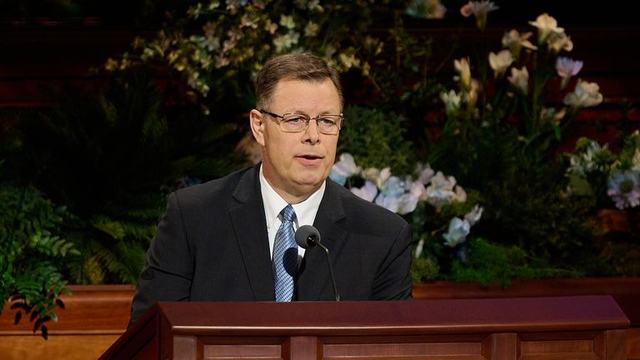
Come Home
 Open talk in Gospel Library
Ideas for Opening the Lesson
- Invite class members to think silently about the phrase “come home.” Ask them what feelings or images that phrase brings to mind spiritually. Then explain that Elder Gilbert taught that the Savior was tenderly calling each person home, especially those who felt distant, unworthy, doubtful, or hesitant.
- Begin by reading the final hymn lines quoted in the talk: “Softly and tenderly Jesus is calling.” Ask the class to listen for what those words teach about the Savior’s character. This could help set a warm, hopeful tone for discussing repentance, belonging, and returning to the Lord.
- Show or describe the image Elder Gilbert mentioned of students using phone flashlights to signal that there was still room. Ask, “How can a ward or quorum or Relief Society hold up light for someone who wonders if there is still a place for them?” Then connect that image to the Savior’s invitation to come home.
- Start with a brief personal reflection activity. Ask class members to consider one person they love who may feel far from the Lord, or one time they themselves felt spiritually distant. Invite them to listen during the lesson for principles that could help someone return with hope.
- Write on the board: “I don’t belong,” “I don’t measure up,” “I have doubts,” and “I’m held back.” Ask the class which of these messages people commonly hear from the adversary. Then explain that Elder Gilbert addressed each of these barriers and testified that Jesus Christ still called people home.
Topics
Trust Christ to repair what we lack
Elder Gilbert said that he and his wife had felt the overwhelming weight of his calling, but they had been grateful that Christ’s grace made up the difference in their lives. He testified that Jesus Christ was both Redeemer and Repairer. He taught that when people fell short or lost their way spiritually, the Savior still made change and return possible.
I witness that Christ is our Redeemer. When we fall short, He repairs the breaches in our lives.
- What did Elder Gilbert teach about the difference between our limitations and the Savior’s power?
- How have you seen Christ “make up the difference” in your life?
- Why is it important to understand the Savior as both Redeemer and Repairer?
- How can this doctrine help someone who feels overwhelmed by weakness or past mistakes?
- What changes in our daily discipleship might come as we trust Christ more fully to repair what we cannot fix alone?
- How does this truth affect the way we speak to others who feel discouraged spiritually?
Answer God’s call to come home
Elder Gilbert taught that God was calling His children home. He acknowledged that choices had consequences, but he emphasized that through the gospel of Jesus Christ, people could still change and return. He used both prophetic teachings and personal experiences to show that the Lord patiently helped people find their way back.
To those who are struggling to come home, know that it is your Savior who’s the one calling you back.
- What stood out to you about Elder Gilbert’s description of the Savior’s invitation to come home?
- Why might the image of “coming home” be more powerful than simply “coming back”?
- How does knowing that the Savior is the one calling us change the way we view repentance?
- What helps people recognize the Lord’s voice when He invites them to return?
- What can we do when we feel spiritually far from home?
- How can we help our homes and wards feel more like places people want to return to?
Welcome those who feel they do not belong
Elder Gilbert shared Tammy Anglesey’s story to show how painful and intimidating returning to church could feel. She had spent Sundays sitting alone in a church parking lot, wanting to come back but feeling overwhelmed. Through an inspired invitation and the Lord’s help, she eventually returned and received temple blessings.
She had spent Sundays sitting alone in a church parking lot. But the Lord brought her home and restored her to His light, love, and joy.
- What did Tammy’s experience teach about the hidden struggles people may carry when approaching the Church again?
- Why do you think feeling that we do not belong can be such a powerful barrier?
- How can a simple invitation, like the bishop’s note, help someone take a step toward the Lord?
- What can our class or ward do to help people feel seen and welcomed before they feel fully comfortable?
- Have you ever had an experience where someone helped you feel that you belonged spiritually?
- How can we become more sensitive to those who may be sitting on the edges, physically or emotionally?
Rely on Christ instead of measuring up
Elder Gilbert addressed those who felt they did not measure up by sharing the experience of Luis Vargas. Luis believed he was not good enough to be baptized because he compared himself to others at church. Elder Gilbert taught him that perfection was not required to belong in the Church; sincere effort and the Savior’s grace were what mattered.
Brother Vargas, you don’t have to be perfect to be in this Church. You just have to do your best, and Christ will make up the difference.
- Why do comparisons sometimes keep people from making covenants or participating fully in the Church?
- What is the difference between striving to improve and believing we must already be perfect?
- How can this teaching help someone who hesitates to repent because they feel unworthy?
- In what ways does the Savior’s grace change our understanding of spiritual progress?
- How can we avoid creating a culture where people feel they must appear flawless?
- What experiences have taught you that the Lord works with willing hearts, not perfect people?
Anchor faith while working through doubts
Elder Gilbert spoke to those who doubted by sharing the story of Justin and Kenna Valdez. He said they were encouraged to anchor in the things they did believe and trust the Lord to help with the things they did not. He emphasized that returning was not mainly about resolving every question, but about recognizing the Holy Ghost and reanchoring on the Savior.
We promised them that as they anchored in the things they did believe, the Lord would help with the things they didn’t.
- What did Elder Gilbert teach about the relationship between faith and unanswered questions?
- Why is it helpful to anchor in what we do believe rather than focus only on what we do not understand?
- How does the Holy Ghost help us navigate seasons of doubt?
- What are some practical ways to stay anchored in the Savior while working through difficult questions?
- How can we support loved ones with doubts without demanding immediate resolution?
- What have you learned about the Lord’s patience with sincere seekers of truth?
Let eternal truth overcome limiting traditions
Elder Gilbert described John Raass’s hesitation to join the Church because he wanted to honor the faith traditions of his deceased parents. Through loving conversation, John came to see that his parents would understand more clearly now and would honor his decision. Elder Gilbert showed that family traditions can be meaningful, but they should not keep someone from responding to the Lord’s invitation.
He cited the need to honor the faith traditions of his now deceased parents. We helped him realize that they now understood the Church and they would honor his decision.
- Why can family traditions or expectations sometimes make spiritual decisions more difficult?
- How can we honor our families while still following revealed truth?
- What do you learn from the way Elder Gilbert and others approached John’s concern?
- How can we discuss sensitive family or cultural traditions with greater compassion?
- What blessings come when someone chooses the Savior even when that choice is difficult?
- How can we help others feel that following Christ does not require disrespecting those they love?
Stay in covenants while helping others return
In his conclusion, Elder Gilbert counseled those trying to help loved ones come home to hold on to the truth and keep their covenants. He taught that helping others required personal faithfulness. He also said that people needed patience, service, and love from others as they made their own choices to return.
To those who are trying to help those they love, hold on to the truth. Keep your covenants. Helping others requires you to stay in your covenants.
- Why is our own covenant faithfulness essential when we are trying to help someone else come home?
- What does it look like to combine truth with patience, service, and love?
- How can we avoid trying to force someone’s spiritual journey while still lovingly inviting them?
- What have you seen happen when someone consistently ministers from a place of covenant strength?
- How can we remain hopeful when a loved one’s return seems slow or uncertain?
- What might the Lord want us to become while we wait and serve?
Hold up light and save a seat
Elder Gilbert concluded with the image of students using phone flashlights to show late-arriving students that there was still room. He used that moment as a symbol of disciples inviting others to come and belong. His message suggested that members could actively signal welcome, hope, and place to those who feared there was no room for them.
It was as if they were holding up a light to say, “Please come sit with me; we saved a seat just for you.”
- What does the image of holding up light teach about fellowship and ministering?
- How can we “save a seat” for someone in spiritual and practical ways?
- Who in our ward or neighborhood may need that kind of signal right now?
- Why do small acts of welcome often matter so much to someone returning to church?
- How can we better reflect the Savior’s invitation through the way we greet, include, and remember others?
- What is one specific way our class could hold up light for someone this week?
Additional Discussion Questions
- Which story in Elder Gilbert’s talk felt most meaningful to you, and why?
- What barriers to coming home did Elder Gilbert identify, and which do you think are most common today?
- How did Elder Gilbert balance personal choice with the Savior’s mercy and invitation?
- What do President Nelson’s teachings in the talk add to our understanding of repentance and returning?
- How does reanchoring on the Savior help with emotional, spiritual, and intellectual struggles?
- What role did inspired leaders play in the stories Elder Gilbert shared?
- How can we make sure our ward culture reflects the message, “There is still space for you”?
- What might it look like for someone to begin coming home one small step at a time?
- How can the hymn “Softly and Tenderly Jesus Is Calling” shape the way we think about the Lord’s invitation?
- After studying this talk, what is one thing you feel prompted to change in how you follow Christ or help others come home?
