
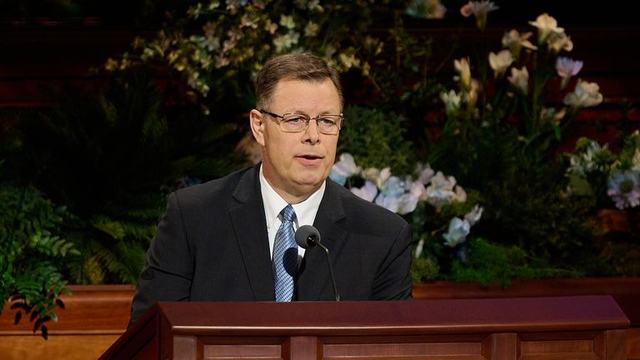
Come Home
 Open talk in Gospel Library
Contents
Before Reading
Before reading or listening to the talk, consider the following questions:
- What does it mean to Elder Gilbert that Jesus Christ is both Redeemer and Repairer?
- What are some reasons people hesitate to return to the Lord and His Church?
- How does the Savior help people who feel they do not belong or do not measure up?
- What role do covenants, grace, and the Holy Ghost play in coming home spiritually?
- How can disciples of Jesus Christ help others feel welcomed and invited back?
- What do the stories in this talk teach about patience in ministering to others?
- What might the Lord be inviting me to do so that I can come closer to Him?
Topics
Witness of Jesus Christ as Redeemer and Repairer
Elder Gilbert begins by acknowledging his dependence on the Savior’s grace in his new apostolic calling. He echoes President Dallin H. Oaks’s earlier declaration of wholehearted devotion and bears witness of Jesus Christ by emphasizing two sacred roles: Redeemer and Repairer. He teaches that Christ not only saves but also repairs the broken places in our lives, inviting all to come home.
As Christine and I have felt the overwhelming weight of this calling, we have been grateful to know that Christ’s grace makes up the difference in our lives.
Today I echo that same declaration. I pledge my life to be a witness to the name of Jesus Christ.
Today, I will specifically witness to the names of Redeemer and Repairer, as I focus on Christ’s invitation for all of us to come home.
I witness that Christ is our Redeemer. When we fall short, He repairs the breaches in our lives.
The Savior loves all of us and is tenderly calling for you and for me to come home.
- How does Elder Gilbert describe the Savior’s grace in relation to human inadequacy?
- What two names of Christ does Elder Gilbert emphasize in this talk?
- What does Elder Gilbert testify that Christ does when we fall short?
- How does Elder Gilbert connect his apostolic witness to the invitation to come home?
- Where in my life do I need to rely more fully on Christ’s grace?
- How have I seen Jesus Christ act as Redeemer or Repairer in my life?
- What broken place in my life do I need to bring to the Savior for healing?
- How can I strengthen my personal witness of Jesus Christ this week?
Trust the Savior’s mercy when you have lost your way
Using Shakespeare’s image of missed opportunities, Elder Gilbert acknowledges that choices have consequences. Yet he teaches that the gospel of Jesus Christ offers hope beyond spiritual wandering. Through President Russell M. Nelson’s words, he emphasizes that God does not give up on His covenant children and will help them find their way back when they stray.
Choices do have consequences, but we know in the gospel of Jesus Christ that when we lose our way spiritually, the Savior still allows us to change.
Because of our covenant with God, He will never tire in His efforts to help us, and we will never exhaust His merciful patience with us.
And "should [we] stray, He will help [us] find [our] way back."
- What does Elder Gilbert teach about the consequences of choices?
- What hope does the gospel provide for those who have lost their way spiritually?
- What does President Nelson’s statement teach about God’s covenant relationship with us?
- How does this section show that repentance and return are possible?
- Have I ever felt far from God? What helped me begin to return?
- What does God’s merciful patience mean to me personally?
- Is there a spiritual course correction I need to make now rather than delay?
- How can I exercise more faith in the Savior’s willingness to help me change?
Recognize that God is calling His children home
Elder Gilbert shares a personal experience of hoping and praying for future children, using the image of gathering family as a symbol of the Lord’s call home. He then explains that in his ministering assignments he has repeatedly seen people return to faith. This pattern confirms that God actively seeks His children and that returning is possible, even after long absence or difficulty.
Like that young mother, we were pleading for our future children to gather with our family.
In my weekend assignments as a General Authority, I have repeatedly witnessed people finding their way home.
It may not always have come quickly, but it happened—over and over again.
- How does Elder Gilbert’s family experience help introduce the idea of coming home?
- What has Elder Gilbert repeatedly witnessed in his ministering assignments?
- What does this topic teach about the Lord’s persistence in gathering His children?
- Why is it significant that returning home may not happen quickly?
- Who in my life am I praying will come closer to the Savior?
- How have I seen the Lord gather people back to Him over time?
- What can I do to patiently support someone on their journey back to faith?
- How can I better recognize God’s invitations in my own life?
Welcome those who feel they do not belong
Through Tammy Anglesey’s story, Elder Gilbert addresses those who feel out of place in the Church. After 30 years away, Tammy felt anxiety, grief, and a sense of exclusion, even while attending a temple open house. Yet through an inspired invitation from a bishop and continued effort, she returned, received her endowment, and found the Lord’s light, love, and joy. The story shows that belonging can be restored through patient invitations and the Savior’s grace.
I will first speak to those who feel they don’t belong.
She had long known something was missing in her life but felt overwhelmed just to walk back into church.
All I could see was an experience I would never have. No sealing, and no [endowment].
Overcome with anxiety, she simply drove home, changed her clothes, and wept alone.
An inspired bishop later sent her a note inviting her back to church.
She had been away from the Church for 30 years! She had spent Sundays sitting alone in a church parking lot. But the Lord brought her home and restored her to His light, love, and joy.
- What feelings kept Tammy from returning to church for so long?
- How did the temple open house affect Tammy?
- What role did the bishop’s invitation play in her return?
- What does Tammy’s experience teach about belonging in the Church?
- Have I ever felt that I did not belong spiritually? What truths can help me?
- Is there someone I know who may be sitting on the margins and needs an invitation?
- How can I help make my ward or branch feel more welcoming to returning members?
- What simple act of ministering could help someone feel seen and loved?
Rely on Christ when you feel you do not measure up
In the story of Luis Vargas, Elder Gilbert addresses feelings of inadequacy that can keep people from baptism and full participation in the Church. Luis believed he was not good enough compared to others at church. Elder Gilbert taught him that perfection is not the requirement; sincere effort and Christ’s grace are. This truth helped Luis move forward in faith, leading to baptism and eventual temple sealing with his family.
Next, I speak to those who feel they don’t measure up.
Brother Vargas felt like he wasn’t good enough to be baptized—that he couldn’t measure up to the other people he saw at church.
Brother Vargas, you don’t have to be perfect to be in this Church. You just have to do your best, and Christ will make up the difference.
Honey, I think it’s time I join this Church so I can become a better father and a better husband.
He was baptized a month later, and their beautiful family was eventually sealed in that same temple.
- What concern was keeping Luis Vargas from baptism?
- How did Elder Gilbert answer Luis’s fear that he did not measure up?
- What does this story teach about the relationship between effort and grace?
- How did Luis’s perspective change by the end of the temple visit?
- Do I ever compare myself to others in ways that weaken my faith?
- What does it mean in my life to do my best and let Christ make up the difference?
- How can I encourage someone who feels unworthy or inadequate?
- What next step of faith might I be delaying because I feel imperfect?
Anchor in what you believe when doubts arise
Elder Gilbert speaks to those who doubt through the story of Justin and Kenna Valdez. Though they had moved away from family to make leaving faith easier, their son’s desire to be baptized opened the door to ministering. Elder Gilbert taught them to anchor in the truths they still believed and trust the Lord to help with unresolved questions. He emphasizes that spiritual return often depends not on solving every issue immediately but on recognizing and following the Holy Ghost.
To those who doubt.
But she eventually confided she still had faith in the Savior and even a testimony of the Book of Mormon.
We promised them that as they anchored in the things they did believe, the Lord would help with the things they didn’t.
Overcoming their concerns was not an issue of resolving every faith question but of helping them recognize the Holy Ghost.
You live in a season in which the adversary has become so effective at disguising truth that if you don’t have the Holy Ghost, you will be deceived.
Hi Elder Gilbert! We are ready to be sealed as a family.
- What beliefs did Kenna still hold even while struggling?
- What counsel did Elder Gilbert give about dealing with unresolved questions?
- Why does Elder Gilbert emphasize the Holy Ghost in navigating doubt?
- How did Justin and Kenna’s story end?
- What truths do I know and can anchor myself to when questions arise?
- How have I felt the Holy Ghost guide me through uncertainty?
- Are there doubts I need to approach with more patience and faith?
- What spiritual habits help me stay anchored in Jesus Christ?
Let go of traditions that keep you from the restored gospel
Through John Raass’s experience, Elder Gilbert addresses those who are held back by family or cultural traditions. John hesitated to join the Church because he wanted to honor the faith traditions of his deceased parents. Elder Gilbert and others helped him see that his parents, with greater understanding now, would honor his righteous decision. Once freed from that barrier, John chose to learn, be baptized, and later be sealed with his family.
I speak next to those who are trapped in traditions.
We eventually asked John why he had never joined the Church. He cited the need to honor the faith traditions of his now deceased parents.
We helped him realize that they now understood the Church and they would honor his decision.
John then chose to meet with the missionaries. Two months later he was baptized. And a year later his family was sealed in the temple.
- What tradition was keeping John from joining the Church?
- How was John helped to see his situation differently?
- What does this story teach about honoring family while following truth?
- What were the results of John’s decision to move forward?
- Are there traditions, expectations, or fears that make it harder for me to follow the Lord fully?
- How can I honor my family while still acting on spiritual truth?
- What conversations might I need to have with loved ones about my faith commitments?
- How can I lovingly support others who face family or cultural barriers to discipleship?
Stay in your covenants as you help others return
In his concluding counsel, Elder Gilbert teaches that many factors can delay a person’s response to the Lord’s invitation, but the answer begins by reanchoring on the Savior. He reminds listeners that everyone struggles and needs patience, service, and love. For those helping others, he gives a clear charge: hold to the truth and keep covenants, because effective ministering depends on personal faithfulness.
Feeling we don’t belong, struggling with doubts, or being limited by traditions are just a few of the reasons we don’t immediately answer the call to come home.
Only Jesus Christ can fully restore that light and joy into your life.
We all struggle. We need patience, service, and love from others.
To those who are trying to help those they love, hold on to the truth. Keep your covenants. Helping others requires you to stay in your covenants.
To those who are struggling to come home, know that it is your Savior who’s the one calling you back.
In the end, everyone must make their own choices to come home.
- What reasons does Elder Gilbert list for why people may delay coming home?
- What does he say is necessary for helping others effectively?
- Why does Elder Gilbert emphasize covenants in ministering?
- What does he teach about agency in the process of coming home?
- How can I better keep my covenants as I try to bless others?
- Who needs more patience, service, and love from me right now?
- Am I trying to help others from a place of personal spiritual strength?
- How can I respect another person’s agency while still inviting them to come unto Christ?
Hold up your light and make room for others
Elder Gilbert uses the image of students turning on phone flashlights in a crowded devotional to show how disciples can help others come home. Though the room appeared full, there was still space, and students signaled to latecomers that they were welcome. This becomes a metaphor for the Church and for individual discipleship: we can actively show others that there is room for them and that a seat has been saved.
Then something remarkable happened. Students who had already found their seats began to turn their phone flashlights on to signal to the late-arriving students that there was still space.
It was as if they were holding up a light to say, "Please come sit with me; we saved a seat just for you."
- What happened at the BYU devotional that Elder Gilbert uses as an example?
- What does the flashlight image symbolize in the context of coming home?
- How does this story deepen the message of welcoming others?
- What does it suggest about the responsibility of those already seated?
- How can I signal to others that there is a place for them in the Church?
- Who might need me to "save a seat" for them spiritually or socially?
- What can I do in my ward, quorum, class, or family to make room for someone returning?
- How can I be more intentional about inviting rather than merely waiting?
Hear the Savior’s tender invitation to come home
Elder Gilbert closes with the hymn “Softly and Tenderly Jesus Is Calling,” framing the invitation to come home as the voice of the Lord Himself. He emphasizes the Savior’s patience, tenderness, and love for the weary and wandering. His final testimony centers on Christ’s power to redeem and repair, assuring all listeners that the Lord is personally calling them home.
I conclude with a hymn that to me feels like the very voice of the Lord calling us home:
Softly and tenderly Jesus is calling—
Calling for you and for me.
Patiently Jesus is waiting and watching—
Watching for you and for me!
Come home! Come home! Ye who are weary, come home!
Earnestly, tenderly, Jesus is calling—
Calling, O sinner, come home!
The Savior loves all of us and is tenderly calling for you and for me to come home. Come home.
- Why does Elder Gilbert use the hymn at the end of his talk?
- What do the words of the hymn teach about the character of Jesus Christ?
- How does Elder Gilbert describe the Savior’s invitation?
- What final testimony does Elder Gilbert leave about Christ?
- When have I felt the Savior calling me to come closer to Him?
- What would "coming home" look like in my life right now?
- How can I respond more fully to the Savior’s tender invitation?
- What can I record in my journal about times I have felt Christ’s patience and love?
