
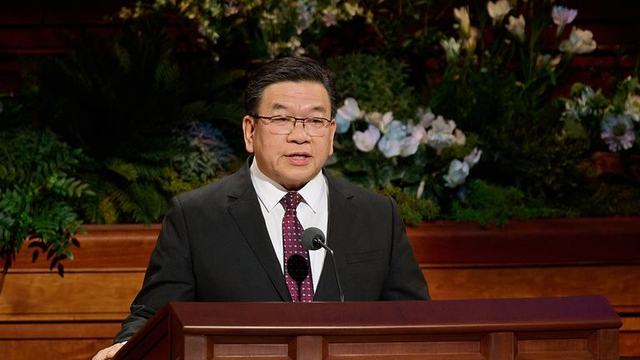
Follow the Prophet; He Knows the Way
 Open talk in Gospel Library
Ideas for Opening the Lesson
- Invite class members to think of a time when following prophetic counsel blessed them, even if they did not fully understand the reason at first. Ask a few to briefly share. Then introduce the talk’s central message that following the prophet helps us follow the Savior.
- Begin by writing on the board, “Follow the prophet; he knows the way.” Ask the class what that phrase meant to them in adulthood compared with when they first sang it as children. This could lead naturally into a discussion about trust, discipleship, and covenant living.
- Show or describe the image of light reflecting off a building into a dark apartment. Ask how disciples of Jesus Christ can reflect His light to others. Then connect that image to Elder Teh’s teaching that as we follow the Savior, He uses us to bless others.
- Invite the class to quietly consider whether there are any personal, family, or cultural traditions that help them live the gospel and whether there are any that may conflict with covenant discipleship. After a moment of reflection, introduce Elder Teh’s family experience with choosing gospel culture.
- Start with the scripture account of the rich young ruler and Christ’s invitation, “Come, follow me.” Ask what made that invitation difficult for him. Then connect the discussion to Elder Teh’s emphasis that true discipleship requires continuous commitment and sometimes significant change.
Topics
Choose to follow the Savior continually
Elder Teh taught that following Jesus Christ was not meant to be casual or occasional. He centered his message on the truth that following the prophet helped disciples follow the Savior. He used the example of the rich young man to show that the Lord’s invitations could require sacrifice but led to heavenly treasure.
“Following Christ is not a casual or occasional practice. It is a continuous commitment and way of life that should guide us at all times and in all places.”
- What did Elder Teh’s use of the rich young man teach about the cost and blessings of discipleship?
- How had following Jesus Christ become more of a continuous commitment in your life over time?
- What were some signs that discipleship had become casual or occasional, and how could we correct that?
- How did prophetic counsel help us stay on the Savior’s path in everyday life?
- What sacrifices had you made to follow the Savior, and what blessings came from them?
- How could we help our families make following Christ a way of life rather than just a Sunday practice?
Embrace gospel culture through covenant living
Elder Teh described how his family had to examine traditions and practices in light of the restored gospel. His parents discovered that some cherished customs were not consistent with gospel culture and chose to keep their covenants instead. He taught that embracing gospel culture meant keeping covenants, even when family or social pressure made that difficult.
This experience taught me that embracing gospel culture simply meant keeping our covenants.
- What did Elder Teh’s family experience teach about the relationship between culture and covenant discipleship?
- Why might it be difficult to let go of traditions that conflicted with the gospel?
- How had you seen the gospel refine, elevate, or replace parts of personal or family culture?
- What were some examples of good traditions that supported gospel culture in a home?
- How could we respond with love and faith when family or friends pressured us to hold on to practices contrary to the gospel?
- What covenant-focused changes might the Lord be inviting us to make now?
Repent and change what opposes God’s commandments
Using President Oaks’s teaching, Elder Teh emphasized that the gospel challenged people to change. Repentance included giving up personal, family, ethnic, and national practices that were contrary to God’s commandments. He taught that the purpose of the gospel was transformation into celestial citizens, and that transformation required change.
“Repent” is its most frequent message, and repenting means giving up all of our practices—personal, family, ethnic, and national—that are contrary to the commandments of God.
- How did this teaching expand your understanding of repentance?
- Why was repentance about more than feeling sorry for sin?
- What kinds of practices or habits could quietly become inconsistent with the gospel?
- How had the Lord helped you change something that once felt deeply rooted in your life?
- Why was change essential if the gospel was to transform us into celestial citizens?
- How could we teach repentance in a hopeful and encouraging way in our homes and classes?
Rely on Christ’s enabling power in trials
Elder Teh shared experiences with members in Japan and Korea who faced serious suffering with faith and brightness. He expected to minister to them, but instead felt ministered to by their examples. He testified that Jesus Christ strengthened them through His Atonement, giving them power to endure their trials.
And because of this, His Atonement empowers Him to succor us—to give us the strength to bear it all.
- What stood out to you in Elder Teh’s experience visiting those who were suffering?
- How did those stories deepen your understanding of the enabling power of the Atonement?
- When had the Savior given you strength to bear something you could not bear alone?
- Why do you think some faithful disciples experience peace and brightness even in severe trials?
- How could we better minister to those who are suffering without assuming we know what they feel?
- What did it mean to you that Christ could succor us because He had experienced all mortal challenges?
Reflect the Savior’s light through service
Elder Teh used the image of sunlight reflected from a nearby building into his apartment to teach that disciples could reflect the Savior’s light. As people followed Jesus Christ, He used them to bless others. Through example and service, others could feel the Savior’s love.
I was reminded that when we strive to follow the Savior, He will use us to bless others. Through our example and service to others, they will feel the Savior’s love for them.
- What did the reflected sunlight teach about our role as disciples of Jesus Christ?
- How had someone else reflected the Savior’s light into your life?
- What simple acts of service helped others feel seen, loved, and strengthened?
- How could our example point people to Christ rather than to ourselves?
- What might make it hard for us to believe the Lord could use us to bless others?
- How could we become more intentional about holding up the Savior’s light this week?
Trust living prophets as seers and watchmen
Elder Teh testified that prophets were not trapped in the past but saw into the future as watchmen on a tower. He quoted scripture about seers knowing things past and things to come. He bore witness that President Dallin H. Oaks and the other senior leaders of the Church were prophets, seers, and revelators whom the Lord used to guide His people.
They actually see into the future as watchmen on a tower.
- Why did Elder Teh say some people misunderstood prophets, and how did he correct that idea?
- What did it mean to you that prophets were watchmen on a tower?
- How had prophetic counsel protected or prepared you for future challenges?
- Why was it important that the Church had living prophets rather than only past scripture and past prophets?
- How could we strengthen our trust in prophetic counsel when we did not yet see the reasons for it?
- What blessings came when we followed the teachings and examples of the First Presidency and the Twelve?
Follow the prophet to follow the Savior
Elder Teh concluded with a clear testimony that following the teachings and examples of living prophets meant following Jesus Christ. He expressed gratitude for participating in the solemn assembly and bore witness that the Lord led His Church through living prophets. His message especially invited young people and all disciples to trust prophetic leadership.
My dear brothers and sisters, especially you, my dear young friends, when we follow their teachings and examples, we are following our Savior, Jesus Christ.
- Why was following the prophet ultimately about following Jesus Christ?
- How had your testimony of living prophets grown through personal experience?
- What prophetic invitations were especially relevant in your life right now?
- How could we help youth and children develop joyful trust in prophetic counsel?
- What was the difference between merely admiring prophets and actually following them?
- How could we act more promptly on prophetic teachings we had already received?
Additional Discussion Questions
- What central message do you think Elder Teh most wanted the Saints to remember from this talk?
- How did Elder Teh connect covenant keeping, repentance, and following the prophet?
- Which story or image from the talk affected you most, and why?
- What was one teaching in this talk that challenged you to change something in your life?
- How could this talk help someone who felt torn between family expectations and gospel standards?
- What did the talk teach about the relationship between Jesus Christ and His living prophets?
- How could we better recognize the Savior’s strengthening hand in our own trials?
- What were some practical ways to build a stronger gospel culture in our homes?
- How could we become better at reflecting Christ’s light in ordinary daily interactions?
- What was one prophetic teaching you felt impressed to follow more fully after studying this talk?
