
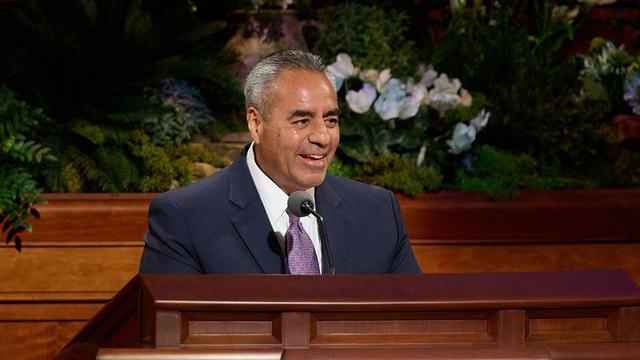
Tithing—Putting God First
 Open talk in Gospel Library
Ideas for Opening the Lesson
- Invite class members to quietly consider the phrase “putting God first” and write down one area of life where that feels easy and one area where it feels difficult. Then ask a few volunteers to share what they learned from Elder Becerra’s talk about what it means to put God first.
- Begin by reading Alma 7:3 and Alma 7:18, focusing on the phrase “state of dilemma.” Ask the class what kinds of spiritual dilemmas disciples face today. This could help the class connect the talk’s message about double-mindedness, commitment, and tithing to their own lives.
- Display or read Matthew 6:33: “Seek ye first the kingdom of God.” Ask the class to discuss what the word “first” changes in the way we think about obedience. Then introduce Elder Becerra’s message as a study of how tithing reflects wholehearted discipleship.
- Share Elder Becerra’s story about considering whether to sell his car, but pause before the outcome. Ask the class what faith, fears, and questions they think he may have felt in that moment. Then finish the story and discuss what it taught about obedience and trust.
- Invite class members to think of a time when obeying a commandment required sacrifice before blessings were visible. Let a few people share brief experiences, and then connect those experiences to Elder Becerra’s teaching that tithing and offerings help us put God first and avoid spiritual double-mindedness.
Topics
Avoid spiritual double-mindedness
Elder Becerra taught that Alma’s warning about an “awful dilemma” pointed to the danger of being double-minded. He explained that double-mindedness involved wavering, indecision, and divided commitment. He said that disciples overcame this spiritual dilemma by learning to put God first.
A double-minded person is one who is wavering, indecisive, or conflicted, someone who lacks commitment to a single purpose or belief.
- What did Elder Becerra say the “awful dilemma” was, and why does that matter for disciples today?
- In what ways can double-mindedness show up in our spiritual lives even when we still attend church and believe?
- Why do you think wavering and divided commitment can weaken our relationship with God?
- How has putting God first helped you feel more settled, clear, or committed in your discipleship?
- What are some common situations in modern life that tempt us to be spiritually double-minded?
- What changes could we make this week to become more wholehearted in following the Lord?
Put God first in all things
Elder Becerra emphasized that the Lord had always taught His children to put Him first. He connected this principle to Jesus Christ’s teaching to seek first the kingdom of God. He showed that putting God first was not just about one commandment but about the order of our hearts and priorities.
One way to overcome double-mindedness is to learn to put God first in our lives.
- What does it mean in practical terms to put God first rather than merely fit Him into our lives?
- How did Elder Becerra connect putting God first with overcoming spiritual conflict and indecision?
- What are some signs that God is truly first in a person’s life?
- How can we evaluate our priorities without becoming discouraged or overly self-critical?
- What blessings have come to you when you chose the Lord’s way before your own preferences?
- How can families help one another keep God first in daily routines and decisions?
Offer the Lord your firstlings
Using the account of Adam and Eve, Elder Becerra taught that God commanded His children from the beginning to offer the firstlings of their flocks. He emphasized that the Lord asked for what came first, not what was left over. He said this pattern helped disciples avoid double-mindedness and taught them to worship with faith and obedience.
Please notice that the Lord commanded Adam and Eve to offer the firstlings of their flocks. In other words, He commanded them to put God first to avoid the spiritual dilemma of double-mindedness.
- Why do you think the Lord asked for the “firstlings” rather than something less costly or less intentional?
- How does the principle of firstlings apply beyond money to time, attention, energy, and devotion?
- What did Adam’s obedience teach us about trusting God even before we fully understand His purposes?
- How can offering our “firstlings” help us become more faithful and less divided in heart?
- What are some ways we may be tempted to give God our leftovers instead of our first and best?
- What is one area of life where you feel invited to offer the Lord your firstlings more fully?
Exercise faith through tithing sacrifice
Elder Becerra shared a personal experience from his early married life when he had fallen behind in tithes and offerings during financial hardship. After pondering a question from Elder Clinton L. Cutler, he felt impressed to try to sell his car so he could pay his tithing. He described how the sale happened unexpectedly and how the Lord then provided another vehicle, teaching him that putting God first required faith and sacrifice.
This came to me after pondering and desiring to put God first.
- What stands out to you from Elder Becerra’s experience with selling his car?
- How did his story illustrate the difference between pressure from others and personal revelation?
- Why is sacrifice often part of learning to trust the Lord more deeply?
- How have you seen the Lord help people who chose obedience during uncertainty?
- What fears can arise when we try to obey financially, and how can faith help us move forward?
- How can we recognize miracles that come after acts of obedience, even if they are quiet or unexpected?
Trust the Lord in financial hardship
Elder Becerra acknowledged that many faithful people faced real economic difficulty. He quoted President Gordon B. Hinckley, who taught that obedience in paying tithing mattered even in poverty and hardship. Elder Becerra testified that this principle applied both temporally and spiritually and that the Lord blessed those who honored Him first.
I am certain that the payment of tithes and offerings will enhance our spiritual capacity as we put God first and offer our “firstlings of [the] flock.”
- Why is the law of tithing especially challenging during times of financial stress?
- What did President Hinckley’s statement add to your understanding of obedience and trust?
- How can we discuss tithing with sensitivity toward those who are struggling financially?
- What spiritual blessings can come from paying tithing even before temporal blessings are visible?
- How does obedience to tithing build faith in God’s awareness of our needs?
- How can ward members support one another in living gospel principles during difficult economic times?
Receive spiritual power through obedience
Elder Becerra testified that obedience and sacrifice brought spiritual power and direction into our lives. He pointed to Adam’s experience, noting that after Adam had offered sacrifice, the Holy Ghost fell upon him. Elder Becerra taught that tithing was not only a financial principle but also a source of spiritual capacity, illumination, and guidance.
I witness that a spiritual power and direction, heretofore unknown, will come into our lives as we keep the law of obedience and sacrifice.
- What do you think Elder Becerra meant by “spiritual power and direction, heretofore unknown”?
- How can obedience increase our ability to feel the Holy Ghost?
- Why do you think spiritual blessings are such an important part of the law of tithing?
- When have you felt greater clarity or strength after choosing obedience?
- How does sacrifice prepare us to receive revelation or spiritual illumination?
- What can we do to better notice the spiritual effects of our obedience?
Open heaven through faithful tithing
Drawing on Elder David A. Bednar’s teaching about the windows of heaven, Elder Becerra said that tithing brought spiritual illumination and perspective. He emphasized that the blessings of tithing were not always dramatic material outcomes but often came as light, understanding, and divine help. He taught that honoring the law of tithing opened us to heaven’s influence.
In like manner, spiritual illumination and perspective are poured out through the windows of heaven and into our lives as we honor the law of tithing.
- How did the image of the windows of heaven deepen your understanding of tithing?
- Why might spiritual illumination be one of the Lord’s greatest blessings for those who pay tithing?
- How have you seen the Lord provide perspective or guidance through your obedience?
- What are some blessings of tithing that people might miss if they look only for financial results?
- How can we become more aware of the light and perspective the Lord pours into our lives?
- How would you explain the blessings of tithing to someone who is new to the gospel?
Follow Jesus Christ’s perfect example
Elder Becerra concluded by bearing witness that Jesus Christ was the perfect example of putting God first. He said that the Savior laid down His life in complete submission to the Father’s will. This testimony placed tithing within the larger pattern of Christlike obedience, sacrifice, and devotion.
I witness that Jesus Christ is the perfect example of how to put God first in our lives.
- How did Elder Becerra connect the law of tithing to the example of Jesus Christ?
- What does the Savior’s complete submission to the Father teach us about our own obedience?
- How can focusing on Jesus Christ change the way we think about sacrifice?
- Why is it important to see commandments as invitations to become like the Savior?
- What helps you trust the Father’s will more fully when obedience is difficult?
- How can remembering the Savior’s example strengthen us in keeping all commandments, including tithing?
Additional Discussion Questions
- What did this talk teach about the relationship between tithing and discipleship?
- Which part of Elder Becerra’s message felt most relevant to your life right now, and why?
- How does putting God first help us make decisions with greater faith and less fear?
- What is the difference between obeying God conditionally and obeying Him wholeheartedly?
- How can we teach children and youth to see tithing as an act of faith rather than merely a financial duty?
- What role did family testimony play in Elder Becerra’s faith, and how have family examples influenced your obedience?
- How can we better recognize the Lord’s hand after we choose sacrifice and obedience?
- What are some ways the Lord may bless us spiritually that are easy to overlook?
- How can class members encourage one another to trust the Lord more fully in temporal and spiritual matters?
- After studying this talk, what is one action you feel impressed to take to put God first more intentionally?
