
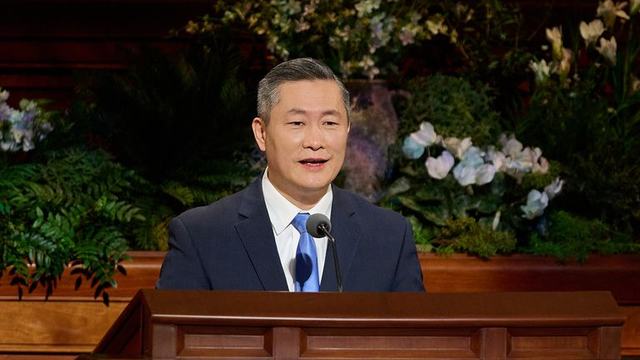
“I Will Give Away All My Sins to Know Thee”
 Open talk in Gospel Library
Ideas for Opening the Lesson
- Invite class members to quietly ponder the talk’s title for 30 seconds: “I Will Give Away All My Sins to Know Thee.” Then ask them what words in the title stood out most to them and why. This could help set a reflective tone and lead naturally into a discussion about repentance, desire, and coming to know God.
- Begin by asking the class to think about a time when learning one truth changed the direction of their life. Then connect that idea to Elder Wu’s experience of learning about Heavenly Father and Jesus Christ for the first time. This could help class members relate personally to the power of conversion.
- Write two questions on the board: “How do we come to know God?” and “What are we willing to change to follow Christ?” Invite class members to listen for answers from the talk as you briefly summarize its main message. This opening could focus the class on both doctrine and personal application.
- Share the account of the king in the Book of Mormon who prayed, “I will give away all my sins to know thee.” Then ask the class why that statement is so powerful. This could open a meaningful discussion about the kind of faith and humility that lead to true conversion.
- Invite class members to name blessings that come from the restored gospel, such as peace, purpose, hope, or eternal perspective. Then connect their answers to Elder Wu’s statement that the gospel changed his life for the better and gave him an eternal purpose. This could help the class begin with gratitude and testimony.
Topics
Discover the living God through the gospel
Elder Wu said that as a child he had grown up in a non-Christian family and had worshipped in Chinese temples with his mother. He explained that a great miracle came when he met the missionaries in Bolivia and learned about a living God who is his Heavenly Father. He said that this knowledge changed his understanding of God and opened the way to a new life of faith.
They taught me that He is a living God, with a glorified body of flesh and bones; that He is my Heavenly Father, that He loves me, and that I am literally His child.
- What impressed you most about Elder Wu’s first understanding of Heavenly Father?
- How has learning that God is our literal Father affected your faith and identity?
- Why do you think this truth can be life-changing for someone who is hearing it for the first time?
- How can we teach about Heavenly Father in ways that help others feel His reality and love?
- When have you felt peace or assurance as you learned truth about God?
Let spiritual feelings lead to conversion
Elder Wu said that even though he did not understand all the words the missionaries spoke, he felt peace in his heart and knew that what he was learning was good. He described how that spiritual witness led him to decide on baptism. His experience showed that conversion often began with spiritual impressions that invited action.
Even though I didn’t speak Spanish and couldn’t understand all the words, I felt peace in my heart, and somehow I knew that what I was learning was good.
- What did Elder Wu’s experience teach us about how the Spirit communicates truth?
- How have spiritual feelings helped you recognize that something was true?
- Why is it important to act on spiritual impressions rather than just admire them?
- How can we help others trust peaceful spiritual feelings as they seek truth?
- What experiences have helped your testimony grow even when you did not understand everything at first?
Let the restored gospel change your life
Elder Wu testified that the gospel of Jesus Christ changed his life for the better and gave him an eternal purpose. He said that the gospel helped him prepare to return to God’s presence with his family. His words emphasized that the gospel was not just information but a power that gave direction, hope, and purpose.
The gospel of Jesus Christ changed my life for the better. It gave me an eternal purpose—to prepare to return to God’s presence with my family.
- How has the gospel given greater purpose to your life?
- What does it mean to you to prepare to return to God’s presence with your family?
- What changes have you seen in your life because of living the gospel?
- How can we keep an eternal purpose in mind during ordinary daily life?
- How could we help family members or friends see the gospel as a source of purpose and hope?
Choose belief and act in faith
Using the story of the king taught by Aaron, Elder Wu said that the king did not remain in astonishment but chose to believe and to act. He taught that if we had a sincere desire and were meek and lowly in heart, we could come to know God. He emphasized that the power was in us as we chose belief and acted accordingly.
If we have a sincere desire, being meek and lowly in heart, we can come to know the true God the Father and gain eternal life through His Son, Jesus Christ, for the power is in us—in choosing to believe and deciding to act accordingly.
- What stood out to you about the king’s response to Aaron’s teachings?
- Why is choosing to believe an important part of coming to know God?
- How have meekness and humility helped you receive spiritual understanding?
- What is the difference between being interested in truth and acting on truth?
- What is one way we can act more deliberately on our faith this week?
Come unto Christ to know the Father
Elder Wu taught that the only way to come to know Heavenly Father and gain eternal life was by coming unto Christ and following Him. He said that coming unto Christ was much more than learning about Him; it included faith, works, conversion, and commitment to His restored gospel. He also said that this path brought greater happiness, hope, peace, and purpose.
The only way we can come to know our Heavenly Father and gain eternal life is by coming unto Christ and following Him.
- What does coming unto Christ mean beyond simply learning about Him?
- How does following Jesus Christ help us come to know the Father?
- Which parts of coming unto Christ—faith, works, repentance, obedience, conversion—feel especially important to you right now?
- How have you seen greater happiness, hope, peace, or purpose come from following Christ?
- What can we do as disciples to make our relationship with Christ more active and real?
Forsake sin to truly know God
Elder Wu highlighted the king’s willingness to give away all his sins to know God and asked what we were willing to give up or change. He taught that true conversion required repentance and real change, not just admiration for truth. He used this question to invite deep personal reflection about sacrifice, discipleship, and salvation.
He was willing to forsake all his sins that he might know God. What are we willing to give up or change to truly know God and be saved at the last day?
- Why do you think the king’s statement about giving away all his sins is so powerful?
- What kinds of things might the Lord ask us to give up or change today?
- How does repentance help us know God more personally?
- Why is letting go of sin essential to true conversion?
- How can we approach repentance with hope rather than fear or discouragement?
Accept the gospel’s call to change
Elder Wu quoted President Dallin H. Oaks, who taught that the gospel challenged us to change and that repentance meant giving up practices contrary to God’s commandments. Elder Wu used that teaching to show that the purpose of the gospel was transformation. He emphasized that becoming celestial required real and ongoing change in every part of life.
The gospel of Jesus Christ challenges us to change.
- What does this statement teach us about the purpose of the gospel?
- Why can change feel difficult even when we know it is right?
- How have you seen the gospel help people change in personal, family, or cultural ways?
- What is the difference between outward religious activity and inward transformation?
- What change might the Lord be inviting you to make now?
Exercise sincere desire, faith, and obedience
Elder Wu said that we could not know God without sincere desire and real intent. He taught that we needed faith in Jesus Christ, continuous repentance, and a striving to obey the commandments. He testified that the Savior loved us deeply and invited us again and again to follow Him.
We cannot know God without a sincere desire and real intent. We need to have faith in Jesus Christ, continuously repent, and strive to obey the commandments.
- Why are sincere desire and real intent necessary in our relationship with God?
- How do faith, repentance, and obedience work together in conversion?
- What does continuous repentance look like in everyday life?
- How have you felt the Savior inviting you to come and follow Him?
- What helps you stay steady in striving to obey the commandments?
Trust Jesus Christ as the only way
Elder Wu testified that salvation came only through Jesus Christ. He invited everyone, regardless of age, background, or status, to choose faith in Christ and decide to follow Him. He concluded with a witness that Jesus Christ is risen and lives, making eternal life possible.
For “there is none other name given under heaven save it be this Jesus Christ … whereby man can be saved.”
- Why is it important to remember that Jesus Christ is the only way to salvation?
- How does this truth shape the way we approach repentance and discipleship?
- What does Elder Wu’s invitation teach us about who can come unto Christ?
- How has your testimony of the living Christ influenced your daily choices?
- How can we more boldly center our lives and teaching on Jesus Christ?
Additional Discussion Questions
- What part of Elder Wu’s personal conversion story felt most meaningful to you, and why?
- How does knowing that we are literally children of Heavenly Father affect the way we see ourselves and others?
- What can we learn from the king’s humility in asking God to make Himself known?
- How do we balance patiently learning the gospel with acting promptly on the truth we already know?
- What are some signs that we are truly being converted rather than just becoming more familiar with gospel teachings?
- How can repentance become a hopeful and joyful process in our lives?
- What practices help us keep our focus on eternal life rather than only on immediate concerns?
- How can we help our families experience the greater happiness, hope, peace, and purpose Elder Wu described?
- In what ways does the Savior show His love as He invites us again and again to follow Him?
- What is one specific invitation from this talk that you feel prompted to act on this week?
