
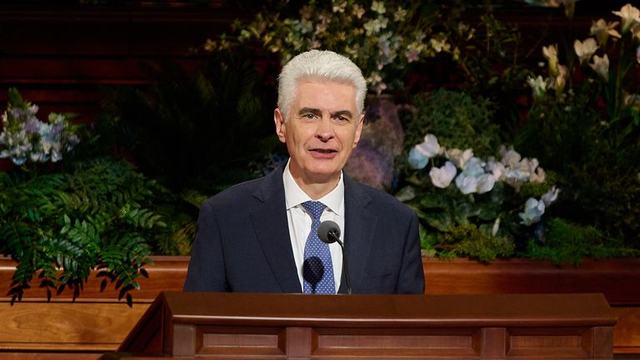
Love All; Love Each
 Open talk in Gospel Library
Ideas for Opening the Lesson
- Invite class members to think of a time when they felt personally seen and loved by God or by another person. Ask a few to briefly share. Then introduce the talk’s central message: Elder Caussé taught that God loves all of His children and also loves each individual soul personally.
- Begin by writing the words "all" and "each" on the board. Ask the class what difference they notice between those two words and why both matter in discipleship. Then explain that Elder Caussé built his message around those two ideas and showed how Christlike love must be both universal and personal.
- Read aloud the line, "God and His Son, Jesus Christ, love all—and They love each." Invite the class to listen for why that truth matters in families, quorums, Relief Societies, and wards. This can help set a reverent and focused tone for the lesson.
- Show a picture of a night sky full of stars, or simply describe Elder Caussé’s experience of looking into the dark sky and gradually seeing the stars appear. Ask how that image might relate to recognizing God’s presence in our lives. Then connect the discussion to the talk’s teaching that God may seem distant until we pause and notice how near He really is.
- Sing or read a verse from "His Eye Is on the Sparrow." Ask class members what the hymn teaches about God’s awareness of individual lives. Then use that as a bridge into Elder Caussé’s testimony that the God who governs the universe also knows and loves each person.
- Invite class members to quietly think of someone in the ward or in their family who may feel overlooked, lonely, or misunderstood. After a brief pause, explain that Elder Caussé taught that in the Church there should be no anonymity and that Christlike love notices the one. This can prepare the class to discuss practical ways to love more personally.
Topics
Recognize God’s nearness in our lives
Elder Caussé said that some people felt God was distant, which could make life feel heavy. He taught that when people paused to reflect on God’s presence, they could discover that He was quietly near, much closer than they imagined. His story of looking into the night sky illustrated how awareness of God could grow as spiritual vision adjusted.
But if they pause to reflect on His presence in their lives, they will find that He is near—quietly present, far closer than they imagine.
- What did Elder Caussé’s experience under the night sky teach about recognizing God’s presence?
- Why do you think people sometimes feel that God is distant?
- What practices have helped you notice that Heavenly Father is near?
- How has reflecting on God’s presence changed the way you faced a difficult season?
- What can we do as disciples to help others feel that God is aware of them?
- How might our prayers or scripture study change if we truly believed God was closer than we imagined?
Trust God’s personal love for every soul
Elder Caussé taught that although the universe was vast beyond comprehension, every soul still had infinite worth to God. He testified that each person was personally known, remembered, and loved by the Father and the Son. He used scripture, the hymn "His Eye Is on the Sparrow," and Elder Maxwell’s teaching to show that God was in the details of individual lives.
Though we may seem small in a physical sense, each of us is personally known, remembered, and loved by our Eternal Father and by His Son, Jesus Christ.
- What in this talk most strengthened your faith that God knows you personally?
- How does the image of God noticing sparrows help you understand His care for you?
- Why is it important to remember both our smallness in the universe and our infinite worth to God?
- When have you felt that God was in the details of your life?
- How can this truth help someone who feels forgotten or insignificant?
- What difference does it make in daily life to believe that Christ knows and loves each person?
See Christ’s Atonement bless all and each
Elder Caussé explained that the words "all" and "each" revealed two dimensions of divine love. He taught that the Savior’s Atonement reached all of God’s children without exception, while also being intimate and individually applied. The blessings of the Atonement were universal in scope and personal in application.
All sons and daughters of God, without exception, will receive a full opportunity to access its supernal blessings. Yet it is a remarkably intimate gift, tailored to each individual’s needs and applied to one person at a time.
- What did Elder Caussé teach about the difference between "all" and "each" in relation to the Atonement?
- How have you seen the Savior’s Atonement work in a personal way in your life?
- Why is it meaningful that the Atonement is both universal and individual?
- How can remembering this truth affect the way we view people whose experiences differ from our own?
- What needs in your life help you appreciate that the Savior’s gift is tailored to each person?
- How can this doctrine increase our hope for ourselves and for others?
Extend Christlike love to all people
Elder Caussé asked whether disciples were selective in deciding who deserved love or whether they extended Christlike love to all. He taught that the Lord saw all people as neighbors and that there were no strangers or outcasts, only brothers and sisters. He also said that discipleship was not meant to be a closed circle but a broad, welcoming community united in Christ.
To Him, all people upon this earth are our neighbors—there are no strangers or outcasts, only brothers and sisters.
- What are some ways we may be tempted to be selective in giving love?
- How does seeing everyone as a neighbor change the way we act at church, at home, or in the community?
- What did Elder Caussé teach about congregations being a beautiful mosaic?
- How can we better welcome those whose background or life experience differs from our own?
- What experiences have helped you feel love for people outside your usual circle?
- How can a quorum or Relief Society become more like the kind of community Elder Caussé described?
Let service expand our circle of love
Elder Caussé taught that service in the Church widened associations and expanded love. He said disciples often did not begin by serving only those they already loved; rather, they came to love people as they served them. Service introduced members to people from many walks of life and helped Christlike love grow through action.
We don’t serve only those we already love; rather, we come to love people as we serve them.
- How has service helped you love someone you did not know well at first?
- Why do you think love often grows through serving rather than waiting for warm feelings first?
- What opportunities for service in the Church have expanded your view of others?
- How can ministering help us develop deeper Christlike love?
- What might change in our ward if more of us saw service as a way to learn to love?
- Who in your life might you come to love more by serving them more intentionally?
Notice and care for each individual
Elder Caussé emphasized that Christ always gave His full attention to the one, even when surrounded by multitudes. He taught that in the Church there should be no anonymity because covenant belonging meant people were known, accounted for, and cared for one person at a time. True discipleship required more than superficial interaction; it required genuine personal concern.
Likewise, in the Church of Jesus Christ, there should be no anonymity.
- What does it mean to you that in the Church there should be no anonymity?
- How did the Savior model care for individuals even in crowds?
- What are some signs that we may be interacting with others only superficially?
- How can we become better at truly knowing the people we worship and serve with?
- What can leaders, teachers, and members do to help each person feel known and cared for?
- When have you felt personally noticed in the Church, and why did that matter?
See divine potential in every person
Elder Caussé said that people who at first seemed insignificant had often become some of the most remarkable individuals he knew. Using the story of Beauty and the Beast, he illustrated the importance of looking beyond outward appearance or rough behavior to the wounded soul within. Christlike love opened spiritual eyes to see others as the Lord saw them and to recognize their divine potential.
In a similar way, as we extend Christlike love to each person we serve, our eyes are opened to their divine potential.
- What did Elder Caussé’s example from Beauty and the Beast teach about how we view others?
- Why is it sometimes hard to see beyond someone’s outward behavior or appearance?
- How have you seen hidden goodness or depth in someone you first misunderstood?
- What helps us see people more as the Lord sees them?
- How can remembering divine potential change the way we respond to difficult people?
- What might happen in our families or ward if we consistently looked for the divine in others?
Help souls come to the Savior
Elder Caussé taught that caring for each soul helped connect that person to Jesus Christ. Through Christlike love, people could be invited to receive healing and transformation through the Savior’s atoning blood. He also said that as disciples did this work, their own lives were blessed, they became more like the Savior, and they were filled with joy.
As we care for each soul, we help connect them to the Savior, inviting them to be healed and transformed through His atoning blood.
- How does loving someone help connect that person to the Savior?
- What have you learned about the relationship between Christlike love and spiritual healing?
- How have your own efforts to bless someone else brought joy into your life?
- What does it mean to invite someone to be healed and transformed through Christ?
- How can we make sure our service points people to the Savior rather than to ourselves?
- In what ways does loving others help us become more like Jesus Christ?
Additional Discussion Questions
- What phrase or teaching from this talk stood out to you most, and why?
- How can we balance loving all people broadly while also giving meaningful attention to individuals?
- What obstacles keep us from loving as the Savior loves, and how can we overcome them?
- How can families apply Elder Caussé’s invitation to love all and love each?
- How can ministering brothers and sisters use this talk to improve the way they serve?
- What does this talk teach about the kind of ward culture the Lord wants us to build?
- How might remembering our own need for grace help us love others more generously?
- Who in our congregation might be at risk of feeling anonymous, and what can we do about it?
- How does knowing that God loves both all and each influence the way we think about repentance, forgiveness, and belonging?
- What is one specific change you feel prompted to make because of Elder Caussé’s message?
