
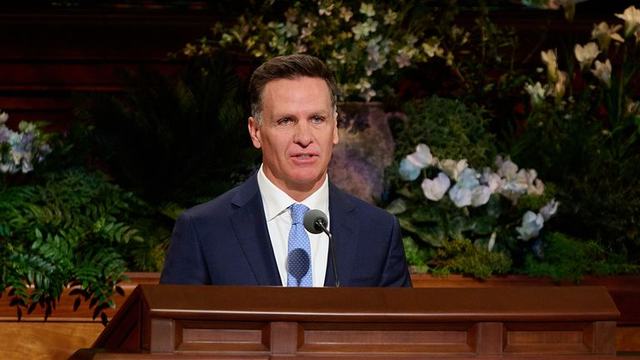
Jesus Christ Is the Way
 Open talk in Gospel Library
Ideas for Opening the Lesson
- Begin by inviting class members to picture a steep mountain trail or a difficult race. Briefly summarize Elder Holmes’s story about the Jungfrau-Marathon and the blind runner tethered to a guide. Then ask, "What does that image teach us about our need for Jesus Christ?" This could help the class immediately connect with the central metaphor of the talk.
- Write on the board: "At some point, we are all like the blind runner." Invite class members to quietly ponder a time when they needed guidance, strength, or help beyond their own ability. After a moment, ask a few volunteers to share what helped them keep moving forward. This could open the way for a discussion about the Savior, covenants, and prophetic guidance.
- Start by reading John 14:6: "I am the way, the truth, and the life." Ask the class what it means that Jesus Christ is not only a teacher or example but "the way." Then explain that Elder Holmes taught that Christ is both our guide and the path, which can frame the rest of the lesson.
- Invite class members to think of a time when they were tempted to give up on something hard. Then read Peter’s words, "Lord, to whom shall we go?" Ask how that question applies in moments of spiritual difficulty. This approach could lead naturally into discussing faithfulness during trials and staying bound to Christ.
- Display three phrases on the board: "Bind ourselves to Christ," "Walk the covenant path," and "Follow the living prophet." Ask the class how these ideas connect. Let a few people respond, then explain that Elder Holmes showed how these three truths work together to help us return safely to Heavenly Father.
Topics
Recognize our need for a divine guide
Elder Holmes compared life to a difficult mountain marathon filled with beauty, hardship, and danger. He taught that no one could successfully finish life’s course by relying only on personal strength. He said that all people eventually become like the blind runner and need a guide greater than themselves.
At some point, we are all like the blind runner. We all need a guide.
- What stood out to you about the story of the blind runner and his guide?
- How did Elder Holmes’s marathon analogy help you better understand mortality?
- Why do you think it is important to admit that we cannot complete life’s journey on our own?
- When have you felt especially aware of your need for heavenly help?
- How can humility open our hearts to the Savior’s guidance?
- What are some dangers of trying to navigate life without divine direction?
Trust Jesus Christ as the only way
Elder Holmes taught that through His perfect life, Atonement, and Resurrection, Jesus Christ alone made eternal life possible. He emphasized that the Savior is not merely one helpful guide among many but the only way back to the Father. He said that Christ is both the guide and the path.
In that simple declaration, the Savior taught that He is not only our guide; He is the path. His way is the only path that leads to eternal life.
- What did Elder Holmes teach about why Jesus Christ alone could say, "I am the way"?
- How does knowing that Christ is the only way affect the way we approach discipleship?
- What is the difference between admiring Jesus and actually following Him?
- How has the Savior helped you through sin, sorrow, or weakness?
- Why is it important in today’s world to be clear that salvation comes only through Jesus Christ?
- How can we strengthen our personal testimony that Christ is the way back to the Father?
Walk the covenant path with Christ
Elder Holmes taught that the Savior invites all to walk with Him on the covenant path. He explained that this path includes faith in Jesus Christ, repentance, receiving ordinances, and enduring to the end. He emphasized that ordinances are essential and not optional for entering the kingdom of God.
Our Savior invites us to walk with Him. His way is the covenant path, the one path that leads to our celestial finish line.
- How did Elder Holmes describe the covenant path?
- Why do you think he emphasized that ordinances are essential?
- How have faith and repentance helped you stay on the covenant path?
- What helps you see covenants as a relationship with Christ rather than just a checklist?
- How can we help family members or others feel invited to walk the covenant path with the Savior?
- What does enduring to the end look like in everyday discipleship?
Stay bound to Christ through covenants
Using the image of the tether between the blind runner and his guide, Elder Holmes taught that covenants bind disciples to Jesus Christ. He said that as people remain faithful to those covenants, they can expect the Savior’s strength, peace, and joy. He also warned that covenant blessings come through ongoing faithfulness, not merely past participation.
Just as the band tethered the blind runner to his guide, covenants bind us to our guide—Jesus Christ.
- What did the image of being tethered to Christ through covenants teach you?
- How have your covenants brought strength or peace during a steep stretch of life?
- What did Elder Holmes mean when he said that only we can sever the tie?
- Why do covenant blessings depend on ongoing faithfulness?
- What are some practical ways we can stay tightly bound to the Savior each day?
- How can sacrament worship help renew our sense of connection to Christ?
Remain with Christ when discipleship feels hard
Elder Holmes used Peter’s response to Jesus to teach that difficult moments are precisely when disciples should stay with Christ. He acknowledged that doubts, demanding discipleship, and the choices of others can test faith. He taught that in such moments there is nowhere else to go because only Christ has the words of eternal life.
When we have doubts, when discipleship feels demanding, when others turn back, that is the moment to stay bound to Christ just as Peter did.
- Why do you think Elder Holmes focused on Peter’s words, "To whom shall we go?"
- How can that question help us during times of doubt or discouragement?
- What are some common reasons people feel tempted to step back from discipleship?
- How have you seen the Savior help someone remain faithful through a hard spiritual season?
- What can we do to support others when discipleship feels steep for them?
- How can we distinguish between having questions and turning away from Christ?
Follow Jesus by following His prophet
Elder Holmes taught that walking with Jesus Christ includes following His prophet. He said the Savior calls prophets, speaks through them, and governs His Church through them. He emphasized that prophetic witness is how God has consistently revealed His Son throughout history.
As we walk with our Savior along the covenant path, we come to know an essential truth: To walk with Jesus is to follow His prophet.
- Why did Elder Holmes teach that following Jesus includes following His prophet?
- How has prophetic counsel helped you come closer to the Savior?
- What examples from scripture show that God reveals His Son through prophets?
- How can we teach this principle with love and clarity in a world that often resists authority?
- What blessings have come into your life as you have acted on prophetic invitations?
- How can we better prepare ourselves to hear and follow living prophets?
Rejecting prophets means rejecting Christ
Elder Holmes directly addressed the idea that someone can follow Jesus without prophets or the Church. He taught from the Savior’s own words that to knowingly reject His chosen servants is to reject Him. He warned that without prophets and apostles, people reshape Christ and doctrine according to personal preference.
To knowingly reject His prophets is, by His own definition, to reject Him.
- Why is this teaching sometimes difficult for people to accept?
- How did Elder Holmes answer the statement, "I don’t need a prophet or a church to follow Jesus"?
- What happens to doctrine and standards when people define Christ only on their own terms?
- How can we respond kindly and faithfully when others question the need for prophets?
- Why do you think the Lord established His Church on the foundation of apostles and prophets?
- How have you seen prophetic leadership protect individuals or families from spiritual confusion?
Rely on prophetic guidance for stability
Elder Holmes taught that apostles and prophets help establish the Church and protect disciples from being spiritually tossed about. He explained that prophetic guidance was given not to control people but to anchor them in truth and keep them from being moved out of their place. He testified that hearkening to the Lord’s servants brings safety and steadiness.
Our Savior promised, “If my people will hearken unto my voice, and unto the voice of my servants whom I have appointed to lead my people, … they shall not be moved out of their place.”
- What did Elder Holmes say prophets help protect us from?
- How have you seen prophetic counsel bring stability in a confusing world?
- Why is spiritual steadiness such an important blessing today?
- What does it mean to be "not moved out of [our] place"?
- How can we better hearken to the voice of the Lord’s appointed servants?
- What recent prophetic teachings have helped anchor you in Christ?
Trust Christ to lead us safely home
Elder Holmes concluded by testifying that Heavenly Father wants all His children to return home and that Jesus Christ is the only way back. He bore witness that because the Savior climbed the steepest mountain in bearing the weight of salvation, no one has to face life’s mountains alone. He promised safety in binding ourselves to Christ through covenants and following the living prophet.
As we bind ourselves to Him through covenant and follow His living prophet, we walk the one path that leads us safely home.
- What feelings or impressions did Elder Holmes’s closing testimony leave with you?
- How does the image of Christ climbing the steepest mountain deepen your gratitude for Him?
- What does it mean to you personally to "walk the one path that leads us safely home"?
- How can this message give hope to someone facing a heavy burden right now?
- What changes do you feel prompted to make after studying this talk?
- How can we help make our quorum or Relief Society a place where people feel supported on the covenant path?
Additional Discussion Questions
- What did this talk teach you about the relationship between Jesus Christ, covenants, and prophets?
- Which image or phrase from the talk was most memorable to you, and why?
- How can we tell whether we are staying tightly bound to Christ in our daily lives?
- What are some ways the adversary tries to persuade people that they do not need the covenant path?
- How can we strengthen our trust in the Savior before a steep stretch of life arrives?
- What role do ordinances play in helping us receive the Savior’s power?
- How can we help youth and children understand that Jesus Christ is both the guide and the path?
- What can we do when we feel spiritually tired but still want to remain faithful?
- How does following living prophets help us avoid creating a Christ in our own image?
- What invitation from Elder Holmes do you feel is most important for you to act on now?
