
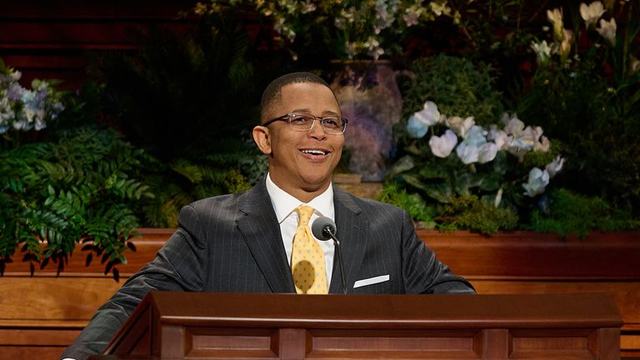
He Knows You by Name
 Open talk in Gospel Library
Ideas for Opening the Lesson
- Invite class members to think quietly about their own name for a moment—what it means, where it came from, or what family story is attached to it. Then ask how it feels to know that beyond family identity, the Savior knows each of us personally by name. This could lead naturally into the talk’s central message.
- Begin by writing the phrase “He knows you by name” on the board. Ask class members what difference it makes in times of sorrow, confusion, or loneliness to believe that statement is literally true. After a few responses, introduce Elder Matswagothata’s testimony that the Savior sees, hears, and knows us personally.
- Start with a brief discussion about the sacrament prayers and the invitation to take upon us the name of Jesus Christ. Ask the class why remembering the Savior’s name each week matters. Then connect that covenant idea to the talk’s teaching that He also remembers us and knows us by name.
- Share the account from the talk about the Primary boy who told Elder Matswagothata that his family prayed for him. Invite the class to listen for what that experience taught about how the Lord answers prayers and reaches individuals through other people. This can open discussion about ministering and personal revelation.
- Ask class members to consider a time when they felt seen, remembered, or helped by the Lord during a difficult season. Invite one or two brief responses if appropriate, then explain that this talk taught that the Savior reaches us in personal ways and also invites us to help others feel His love.
Topics
Remember the Savior’s name through covenant worship
Elder Matswagothata taught that we all needed reminders during mortality, and he said that one of God’s great gifts was the weekly opportunity to partake of the sacrament. He explained that in this ordinance, Heavenly Father invited us to take upon ourselves the name of Jesus Christ, always remember Him, and keep His commandments. He said that these covenants gave us power to rise above life’s challenges.
Perhaps this is why our loving Father in Heaven gives us the opportunity every week to make a covenant with Him as part of the ordinance of the sacrament. He invites us to take upon ourselves the name of His Son, always remember Him, and keep His commandments. He gives us power to rise above mortality’s challenges.
- How did Elder Matswagothata describe the sacrament as a reminder and source of power?
- What does it mean to you personally to take upon yourself the name of Jesus Christ?
- How has the sacrament helped you face a difficult time with greater faith or strength?
- What changes could we make so that our sacrament worship becomes more deliberate and meaningful?
- Why do you think remembering the Savior’s name is connected to receiving power over mortality’s challenges?
- How can our covenants shape the way we respond to stress, grief, or discouragement during the week?
Trust that Jesus Christ knows you personally
A central message of the talk was that Jesus Christ remembered and knew each person by name. Elder Matswagothata pointed to scriptural examples such as Moses, Adam, Mary, Saul, and Joseph to show that the Lord called individuals personally. He testified that the Savior knew our joys and sorrows and that no one was lost in the crowd to Him.
And He knows you and calls you by name too—from crowded cities to quiet villages, in whatever language you speak. He hears, sees, and knows you.
- What scriptural examples in the talk helped you feel that the Lord knows individuals personally?
- How does believing that the Savior knows you by name change the way you pray?
- Why is this truth especially important when someone feels unnoticed or forgotten?
- When have you felt that the Lord saw you personally in your circumstances?
- How can we help others in our quorum or Relief Society feel that they are known and remembered by the Savior?
- What might keep us from fully believing that the Lord knows us personally, and how can faith overcome that?
Rely on the Savior’s succoring power
Elder Matswagothata taught that because of the Atonement, Jesus Christ knew our burdens, pain, sicknesses, temptations, and silent tears. Quoting Alma, he emphasized that the Savior had descended below all things and could succor His people according to their infirmities. He invited those in dark moments to remember that their pain was not evidence of God’s absence or lack of love.
Because of His Atonement, He knows your burdens, pain, and silent tears.
- How did Elder Matswagothata connect the Savior’s Atonement with His ability to understand our pain?
- What does the word succor mean to you in your current circumstances?
- How can remembering that Christ descended below all things help someone in a season of grief or confusion?
- Why is it important to remember that pain is not a sign that God does not love us?
- When have you felt the Savior strengthen or comfort you in a way that only He could?
- How can we speak about suffering in ways that build faith and compassion rather than judgment?
Recognize the Lord’s help through other people
The talk taught that the Savior often reached His children through ordinary people and simple acts of love. Elder Matswagothata shared his own experience of feeling overwhelmed and then being comforted by a Primary boy who told him that his family prayed for him. He said that through that experience he felt seen, loved, known, and not alone, and he taught that the Savior knew how to reach us through a hymn, a smile, a kind word, or unexpected people.
To the Savior, we are never lost in the crowd. He knows how to reach us—through a hymn, a smile, a kind word, and sometimes through people we least expect.
- What did Elder Matswagothata learn from the experience with the Primary boy?
- How has the Lord used another person to answer a prayer or strengthen you?
- Why do simple acts such as a smile, a hymn, or a kind word sometimes have such great spiritual power?
- How can we become more aware that the Lord may want to use us to bless someone else?
- Who in your life might need to feel seen, loved, or remembered this week?
- What can our quorum or Relief Society do to better notice quiet burdens among us?
Choose to walk with Jesus Christ daily
Elder Matswagothata emphasized that the real question was not whether the Savior would walk with us, but whether we would walk with Him. He taught that as we chose to walk with Christ, He became more than a casual acquaintance and became a trusted heavenly friend. He invited disciples to remember and follow the Savior deliberately and always.
The question should never be “Will the Savior walk with me?” He will. The real question is “Will I walk with Him?”
- What does it look like in daily life to walk with Jesus Christ?
- Why do you think Elder Matswagothata contrasted casual discipleship with deliberate discipleship?
- How can we tell when the Savior is becoming a trusted heavenly friend rather than a distant figure in our lives?
- What habits help you stay close to the Savior during busy or difficult seasons?
- What is one way you feel invited to follow Him more deliberately right now?
- How does walking with Christ affect the way we treat family members, coworkers, and ward members?
Follow the Savior through daily discipleship
The speaker testified that peace and joy came as disciples listened to the Savior’s voice in the scriptures, followed living prophets and apostles, repented daily, and responded to the invitation to come and follow Him. He said these practices helped Saints feel the Spirit, trust the Lord, and find strength in a tumultuous world. His counsel was practical and centered on consistent covenant living.
I bear witness that as we listen to His voice in the scriptures, follow the teachings of living prophets and apostles, repent daily, and heed His invitation to “Come, follow me,” we will find peace in this ever-tumultuous world.
- Which of the practices Elder Matswagothata listed feels most needed in your life right now?
- How have the scriptures helped you hear the Savior’s voice more clearly?
- What blessings have come to you from daily repentance?
- How does following living prophets and apostles help us walk with Christ?
- Why can peace and joy exist even in trying moments when we are living as disciples?
- What would help our class members make daily discipleship more consistent and intentional?
Receive enabling power through Christ’s name
Elder Matswagothata returned to the meaning of his surname and used it as a witness that through faith in Jesus Christ and through covenants, there was always a way forward. He taught that by taking upon ourselves the Savior’s name in baptism, the sacrament, and the temple, we gained access to His enabling power. He testified that Jesus Christ not only knew the way but was the way.
It is a witness of an eternal reality: that through faith in Jesus Christ and by taking upon us His name through the covenants made at baptism, during the sacrament, and in His holy house, we gain access to His enabling power—power that can and will change our lives.
- What did Elder Matswagothata mean by the Savior’s enabling power?
- How have covenants with God helped you do something hard that you could not do alone?
- Why is taking upon us the name of Christ connected with real spiritual power?
- How does this teaching strengthen your hope when there seems to be no clear way forward?
- What experiences have taught you that Jesus Christ is not only someone who shows the way but is the way?
- How can we draw more fully on covenant power in our current responsibilities and trials?
Honor covenant identity in Jesus Christ
Near the end of the talk, Elder Matswagothata taught that regardless of whether someone came from a first-generation or multigenerational Church family, the most eternity-shaping name we could receive was the sacred name of Jesus Christ. He said that while we honored those who came before us, above all we honored the Savior because in His name we were bound through covenant identity. He also testified of the restored Church that bore His name.
Whether your name represents the first generation in the Church or a multigenerational heritage of faith, the most eternity-shaping name we can receive is the sacred name of Jesus Christ.
- What does covenant identity in Jesus Christ mean to you?
- How can this teaching bless both new converts and lifelong members of the Church?
- Why is it important to place our deepest identity in Christ rather than only in background, culture, or family tradition?
- How does belonging to the Church that bears His name help us stay anchored in Him?
- What can we do to honor the Savior’s name more fully in our homes and callings?
- How might this doctrine change the way we see ourselves and other members of the Church?
Additional Discussion Questions
- What phrase or teaching from this talk felt most personally directed to you, and why?
- How did Elder Matswagothata balance personal comfort with a call to action in discipleship?
- What can we learn from the repeated idea that the Lord both knows us and invites us to know Him?
- How can we better help those who are carrying quiet burdens in our ward?
- Why do you think remembering Christ and taking His name upon us is such a recurring theme in the restored gospel?
- How can we teach children and youth that the Savior knows them personally by name?
- What does this talk teach about the relationship between suffering, covenant keeping, and hope?
- How have you seen the Lord make tomorrow better than today in your own life or in the life of someone you love?
- In what ways can a quorum or Relief Society become a place where people feel seen, loved, and not alone?
- What is one invitation from this talk that you feel impressed to act on this week?
