
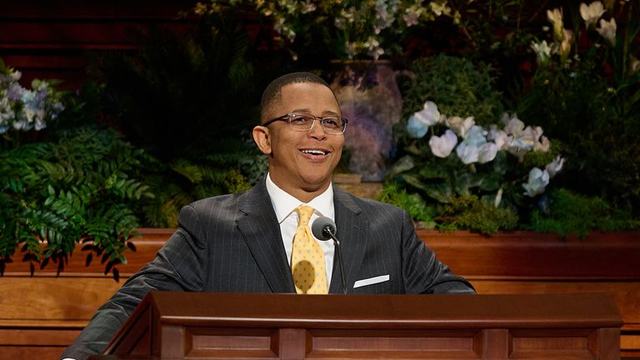
He Knows You by Name
 Open talk in Gospel Library
Contents
Before Reading
Before reading or listening to the talk, consider the following questions:
- What does it mean to take upon myself the name of Jesus Christ?
- How does knowing that the Savior knows me by name change the way I face trials?
- What does this talk teach about the Savior’s ability to succor, heal, and strengthen me?
- How does the sacrament help me remember who I am and whose I am?
- In what ways might the Lord reach out to me through other people?
- What does it look like to walk with Jesus Christ deliberately and always?
- How do ordinances and covenants connect me to the Savior’s enabling power?
Topics
Remember the Savior by taking His name upon you
Elder Matswagothata begins with the meaning of his surname and uses it to point to a greater source of hope: the name of Jesus Christ. He teaches that throughout mortality we need reminders of who we are and whose we are. The sacrament provides a recurring opportunity to covenant with God, take upon ourselves the name of His Son, remember Him, and keep His commandments. Through that covenant relationship, the Lord gives us power to rise above life’s challenges.
My surname is a reminder to me that the Savior can and will guide us through every season of life—especially through difficult times.
We all need reminders like that throughout our mortal journey.
He invites us to take upon ourselves the name of His Son, always remember Him, and keep His commandments.
He gives us power to rise above mortality’s challenges.
I rejoice even more in the name of Jesus Christ, for in and through His name all who come unto Him can be saved.
- How does Elder Matswagothata connect personal identity with the name of Jesus Christ?
- What does he teach the sacrament helps us remember each week?
- According to the talk, what blessings come from taking upon ourselves the Savior’s name and keeping His commandments?
- Why does the speaker say we need reminders during mortality?
- How can I make the sacrament a more deliberate time to remember the Savior and my covenants?
- What personal reminders help me remember Jesus Christ during difficult seasons?
- How has taking the Savior’s name upon me given me strength in the past?
- What can I do this week to better honor the name of Jesus Christ in my thoughts, words, and actions?
Trust that Jesus Christ knows you by name
A central message of the talk is that the Savior remembers individuals personally. Elder Matswagothata points to scriptural examples in which the Lord called Moses, Adam, Mary, Saul, and Joseph by name. He then extends that truth to every listener: wherever we live and whatever language we speak, the Lord hears, sees, and knows us. This doctrine gives comfort and assurance that no one is overlooked or forgotten by heaven.
Even as Jesus Christ invites us to always remember Him and take upon ourselves His name, He also remembers us and knows each of us by name.
In the Old Testament, the Lord taught Moses this assuring truth: “I know thee by name.”
In Eden’s garden, He called Adam.
At the empty tomb, He called Mary.
On the road to Damascus, He called Saul.
And in the Sacred Grove, He called Joseph.
And He knows you and calls you by name too—from crowded cities to quiet villages, in whatever language you speak. He hears, sees, and knows you.
- What examples does the speaker give to show that the Lord calls people by name?
- What does the phrase “He hears, sees, and knows you” teach about the Savior’s relationship with individuals?
- How does the Savior’s personal knowledge of us relate to His invitation to remember Him?
- Why is it significant that the Lord knows people in every place and language?
- When have I felt that the Lord knew me personally?
- How would my prayers change if I more fully believed that God knows me by name?
- What experiences can I record that show the Lord has seen and guided me personally?
- Who around me may need reassurance that they are known and loved by the Savior?
Rely on the Savior’s Atonement to heal and succor you
Elder Matswagothata teaches that because of His Atonement, Jesus Christ understands every burden, sorrow, pain, and silent tear. He cites Alma’s teachings that the Savior took upon Himself not only sins but also pains, afflictions, temptations, and sicknesses so He would know how to succor His people. This doctrine means that Christ’s empathy is perfect and His power to heal is real. He can lift broken hearts and make people whole again.
He knows your joys, and He rejoices with you. He knows your sorrows, and He can succor and lift you.
Because of His Atonement, He knows your burdens, pain, and silent tears.
The prophet Alma taught that through His Atonement, Jesus Christ would “take upon him the sins of his people.”
“He shall go forth, suffering pains and afflictions and temptations of every kind; and … he will take upon him the pains and the sicknesses of his people … , that he may know … how to succor his people according to their infirmities.”
He who “descended below all things” knows how to heal your broken heart and make you whole again.
- What does the talk teach that Jesus Christ suffered as part of His Atonement?
- How does Alma’s teaching explain the Savior’s ability to succor His people?
- What is the relationship between the Savior’s suffering and His perfect understanding of our pain?
- According to the speaker, what can the Savior do for a broken heart?
- What burden do I need to place more fully in the Savior’s hands?
- How has the Atonement of Jesus Christ brought me comfort, healing, or strength?
- What would it look like for me to trust more deeply that the Savior understands my silent tears?
- How can I turn to Christ more intentionally when I feel weak, hurt, or overwhelmed?
Recognize that the Lord reaches you through others
The speaker acknowledges that many people carry hidden struggles such as grief, illness, loneliness, anxiety, conflict, and unanswered prayers. He shares a personal experience from a difficult season of grief and pressure, when a Primary child told him that his family prayed for him every morning and night. Through that simple interaction, Elder Matswagothata felt seen, loved, and known by the Savior. He teaches that the Lord often reaches His children through hymns, smiles, kind words, and unexpected people.
Brothers and sisters, many carry quiet burdens—grief, illness, loneliness, anxiety, or prayers that seem unanswered.
When life feels unfair and confusing, in those dark moments when you are tempted to ask, “O God, where art thou?” please remember this powerful truth: He knows you.
My prayers were best expressed in the Primary song: “Heavenly Father, are you really there? And do you hear and answer ev’ry child’s prayer?”
I felt seen. I felt loved. I felt known. I felt that I was not alone.
To the Savior, we are never lost in the crowd.
He knows how to reach us—through a hymn, a smile, a kind word, and sometimes through people we least expect.
Just as that family prayed for me, there is someone praying for you.
- What kinds of hidden burdens does Elder Matswagothata mention?
- What did the experience with the Primary child teach him about the Savior’s love?
- According to the talk, in what ways might the Lord reach out to His children?
- What does the phrase “we are never lost in the crowd” teach about divine care?
- When has the Lord comforted me through another person?
- Who in my life may be carrying a quiet burden that I can help lighten?
- How can I become more attentive to promptings to speak, smile, pray, or serve?
- What can I do to let someone know this week that they are seen, loved, and not alone?
Choose to get close to God in the refiner’s fire
The talk teaches that pain should not be interpreted as evidence that God does not love us. Elder Matswagothata emphasizes that the Lord truly loves His children, even in seasons of confusion and suffering. Quoting President D. Todd Christofferson, he urges listeners to draw near to God rather than become angry with Him during trials. Faithful closeness to God allows refining experiences to deepen trust instead of diminish it.
Your pain is not a sign that God does not love you. He truly does.
So, as President D. Todd Christofferson taught, “In the midst of [the] refiner’s fire, rather than get angry with God, get close to God.”
Trust His promise that the sun will rise again for you and tomorrow will be better than today.
- What misunderstanding about suffering does the speaker correct?
- What counsel does President Christofferson’s statement give about responding to trials?
- How does trust in God change the way we experience refining challenges?
- What hope does the speaker offer to those in dark moments?
- How do I usually respond when life feels unfair or confusing?
- What would it mean for me to get closer to God in my current challenges?
- Are there feelings of anger, distance, or discouragement I need to take to the Lord in prayer?
- How can I act in faith today that tomorrow can be better through Christ?
Walk deliberately with Jesus Christ
Elder Matswagothata explains that the Savior not only knows us but invites us to know Him and the Father. Referring to the Savior’s Intercessory Prayer, he teaches that eternal life is to know God and Jesus Christ. He describes Christ as the Good Shepherd and the Light of the World, then asks a searching question: not whether the Savior will walk with us, but whether we will walk with Him. Discipleship should be deliberate, consistent, and active rather than casual or occasional.
Not only does the Savior know you, but He also wants you to come to know Him and His Father.
“This is life eternal, that they might know thee the only true God, and Jesus Christ, whom thou hast sent.”
He is the Good Shepherd, who leads us to green pastures and still waters.
He is the Light of the World, who lights our path so that we need not walk in darkness.
The question should never be “Will the Savior walk with me?” He will. The real question is “Will I walk with Him?”
May I invite you to choose to remember Him and follow Him—not casually or occasionally but deliberately and always.
May we become the kind of disciples who notice, reach out, and lift as the Savior did.
- What does the Savior’s Intercessory Prayer teach about eternal life?
- How do the titles Good Shepherd and Light of the World deepen our understanding of Jesus Christ?
- What distinction does the speaker make between the Savior walking with us and us walking with Him?
- How does Elder Matswagothata describe deliberate discipleship?
- In what ways have I treated discipleship casually rather than deliberately?
- What is one specific way I can walk more closely with Jesus Christ this week?
- How can I better notice, reach out, and lift others as the Savior did?
- What habits would help me come to know the Savior and Heavenly Father more personally?
Find peace and joy by following Christ daily
The speaker testifies that peace in a tumultuous world comes as we listen to the Savior’s voice in the scriptures, follow living prophets and apostles, repent daily, and accept the invitation to come and follow Him. These daily acts of discipleship bring the Spirit, joy in trying moments, and strength to trust in the Lord’s promises. The talk presents faithful consistency as the path to spiritual steadiness and hope.
As we listen to His voice in the scriptures, follow the teachings of living prophets and apostles, repent daily, and heed His invitation to “Come, follow me,” we will find peace in this ever-tumultuous world.
We will feel of His Spirit and experience joy even in our most trying moments.
We will find strength to trust in Him and His promises of a better tomorrow.
- What practices does Elder Matswagothata identify as bringing peace in a tumultuous world?
- How does daily repentance fit into his description of discipleship?
- What blessings does he promise to those who follow Christ in these ways?
- Why is following living prophets and apostles important according to the talk?
- Which of these daily discipleship practices needs more attention in my life right now?
- How has scripture study or prophetic counsel brought me peace during difficult times?
- What does daily repentance look like for me in practical terms?
- How can I make more room in my life to feel the Spirit and trust the Lord’s promises?
Receive enabling power through covenants in Christ’s name
Returning to the meaning of his surname, Elder Matswagothata teaches that deliverance from difficult situations is an eternal reality through Jesus Christ. Through faith in Him and by taking His name upon us in baptism, the sacrament, and temple covenants, we gain access to His enabling power. This power changes lives and provides a way forward in the Lord’s time and way. The speaker emphasizes that Jesus Christ does not merely know the way—He is the way.
“Getting out of a difficult situation” is more than a family name to me. It is a witness of an eternal reality: that through faith in Jesus Christ and by taking upon us His name through the covenants made at baptism, during the sacrament, and in His holy house, we gain access to His enabling power—power that can and will change our lives.
I know that in His time and in His way, there is always a way forward.
Because He not only knows the way; He is the way.
- How does the speaker connect covenants with access to the Savior’s enabling power?
- Which ordinances and covenant settings does he specifically mention?
- What does it mean that Christ not only knows the way but is the way?
- How does faith in Jesus Christ help people move through difficult situations?
- How have my baptismal, sacramental, or temple covenants strengthened me in hard times?
- What does the Savior’s enabling power mean to me personally?
- Where in my life do I need to trust that the Lord will provide a way forward?
- How can I more intentionally draw on covenant power in my current circumstances?
Honor the sacred name of Jesus Christ and His restored Church
In the concluding portion of the talk, Elder Matswagothata teaches that regardless of family background in the Church, the most eternity-shaping name we can receive is the name of Jesus Christ. He explains that covenant identity binds disciples to Him. He then bears testimony that Jesus Christ restored His Church, that the Church bears His name, and that it contains the fulness of His gospel with ordinances and covenants that bind us to Him. He closes by testifying that Christ is the Prince of Peace who heals, strengthens, and leads His people home one by one, by name.
Whether your name represents the first generation in the Church or a multigenerational heritage of faith, the most eternity-shaping name we can receive is the sacred name of Jesus Christ.
We honor those who came before us, but above all we honor Him, for in His name we are bound through covenant identity.
I testify that Jesus Christ restored His Church, The Church of Jesus Christ of Latter-day Saints.
It bears His name and contains the fulness of His gospel, with ordinances and covenants that bind us to Him.
I testify that Jesus is the Christ, the Prince of Peace.
He will renew our strength and bring us joy, for He comes “with healing in his wings.”
He reaches for us again and again because He desires to lead us home—one by one, by name.
- What does the speaker teach about the significance of the name of Jesus Christ?
- How does he describe covenant identity?
- What does Elder Matswagothata testify about the restored Church of Jesus Christ?
- What final witnesses does he bear about the Savior’s character and mission?
- How can I more fully honor the name of Jesus Christ in my identity and discipleship?
- What does belonging to the restored Church of Jesus Christ mean to me personally?
- How have ordinances and covenants helped bind me to the Savior?
- What experiences have strengthened my testimony that Jesus Christ leads His people one by one?
