
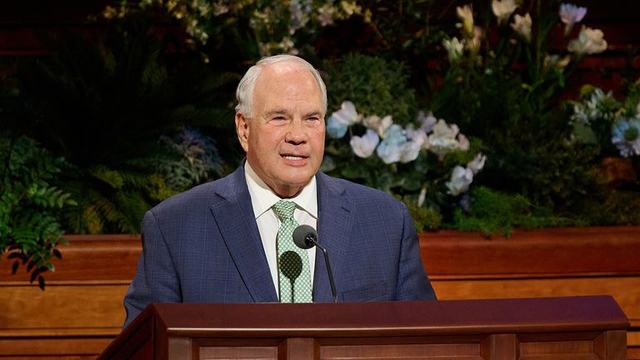
He Is Risen
 Open talk in Gospel Library
Ideas for Opening the Lesson
- Begin by inviting class members to share a word or short phrase that comes to mind when they hear the declaration “He is risen.” After a few responses, explain that Elder Rasband taught that these words have inspired faith, gratitude, and hope for centuries. This can help set a reverent Easter-centered tone and focus the class on the Savior.
- Start with a brief scripture chain from the talk: Luke’s account of the empty tomb, the Savior’s appearance to His Apostles, and His visit to the people at Bountiful. Ask class members what these witnesses teach them about the reality of the Resurrection. This opening can help the class see how multiple scriptural records testify of the same living Christ.
- Invite class members to think quietly about someone they long to see again through the power of the Resurrection. Then read Elder Rasband’s statement about reunion with loved ones and the promise that because Christ lives, we shall live also. This opening can help class members feel the personal hope and healing power of the doctrine.
- Display or read the phrase “I have graven thee upon the palms of my hands.” Ask the class what this image teaches about the Savior’s love, sacrifice, and remembrance of us. Then connect their responses to Elder Rasband’s emphasis on the Savior’s outstretched hands in mortality and after His Resurrection.
- Begin with a short invitation to ponder how belief in the Resurrection affects daily life, not just Easter worship. Then read President Oaks’s statement quoted in the talk that the Resurrection adds meaning to doctrine, motivation to behavior, and hope for the future. This can lead naturally into a discussion about living as witnesses of the risen Christ.
Topics
Center faith on the risen Christ
Elder Rasband taught that the Resurrection and Atonement of Jesus Christ were the most powerful and sacred events in human history. He said that Jesus Christ and His Resurrection were at the very core of the doctrine of the Church. He also bore apostolic testimony that Christ died, was buried, and rose again the third day.
Jesus Christ and His Resurrection are at the very core of the doctrine of The Church of Jesus Christ of Latter-day Saints.
- What did Elder Rasband teach that helped you better understand why the Resurrection is central to our faith?
- How has your testimony of the risen Christ become more personal over time?
- Why do you think it matters that Apostles and Prophets have consistently testified that Jesus Christ rose again?
- How can we keep Jesus Christ and His Resurrection at the center of our worship and daily discipleship?
- What changes in our homes or personal study might help us focus more deliberately on the living Christ?
- How does a strong testimony of the Resurrection influence the way we face uncertainty or trial?
Trust Christ to overcome death
Elder Rasband taught that when Jesus Christ rose from the tomb, He broke the bands of death imposed by the Fall. Through His Resurrection, He secured salvation from physical death for all of God’s children. He emphasized the universal reach of this gift, extending to both the just and the unjust.
After three days in a borrowed tomb, Jesus Christ broke the bands of death imposed by the Fall. With His Resurrection, He secured salvation from physical death for us, all of God’s children throughout the ages.
- What does it mean to you that Christ broke the bands of death for all of God’s children?
- How does the universal nature of the Resurrection deepen your gratitude for the Savior?
- Why is it important to understand that the Resurrection is a literal victory over physical death?
- How has this doctrine brought peace to you during times of grief or loss?
- What would you say to someone who is struggling to feel hope after the death of a loved one?
- How can remembering Christ’s victory over death affect the way we live today?
Rejoice in the witness He is risen
Elder Rasband highlighted the angelic declaration at the empty tomb: “He is not here, but is risen.” He said those words had inspired ceremony, gratitude, faith, and hope for centuries. He also quoted President Oaks, who taught that the Resurrection gave meaning to doctrine, motivation to behavior, and hope for the future.
Those glorious words, “He is risen,” have sparked religious ceremony, gratitude, faith in Jesus Christ and His promises for centuries.
- Why do you think the words “He is risen” have such power across generations?
- How have those words brought hope or strength into your own life?
- In what ways does the reality of the Resurrection add motivation to our behavior?
- How can we make Easter and our Sabbath worship more centered on the living Christ?
- What promises of Jesus Christ feel more meaningful because He truly rose again?
- How can we share the joy of the Resurrection more naturally with family members and friends?
Recognize the living Christ through witnesses
Elder Rasband reviewed several post-Resurrection appearances of Jesus Christ, including His appearances to Mary, the Apostles, disciples on the road to Emmaus, and many in the Holy Land. He also pointed to the Book of Mormon witness of the resurrected Savior appearing at the temple in Bountiful. These accounts showed that the Resurrection was real, physical, and abundantly witnessed.
The resurrected Jesus Christ first appeared to Mary and with tenderness spoke her name.
- What do the many witnesses of the resurrected Christ teach you about the reality of the Resurrection?
- Why is it significant that the Savior appeared in both the Holy Land and the New World?
- How does the Book of Mormon strengthen your testimony of the risen Lord?
- What do you learn from the Savior’s personal and tender interactions after His Resurrection?
- How can studying these witness accounts strengthen someone whose faith is wavering?
- Which post-Resurrection account speaks most deeply to you, and why?
Receive the Savior’s outstretched hand
Elder Rasband emphasized the image of the Savior stretching forth His hand. He connected that image to Christ’s earthly ministry, when He rescued Peter, healed the afflicted, washed feet, instituted the sacrament, and upheld His people. He taught that the Savior’s promise to uphold us with the right hand of His righteousness applied to all of us.
I love the image of Him stretching forth His hand.
- What does the image of the Savior’s outstretched hand mean to you personally?
- When have you felt the Lord rescuing, lifting, or upholding you?
- How do the Savior’s actions in mortality help you understand His character after the Resurrection?
- What might it look like for us to accept His outstretched hand more fully?
- How can we become instruments in the Lord’s hands to help others feel His love?
- Why do you think Elder Rasband returned several times to the image of the Savior’s hands?
Come unto Christ and know Him
Elder Rasband described the Savior’s invitation to the people at Bountiful to come forward, feel the wounds in His body, and know with certainty who He was. The people responded one by one and gained a sure witness. This showed that testimony of Jesus Christ can become deeply personal as individuals come unto Him.
Arise and come forth unto me, that ye may thrust your hands into my side, and also that ye may feel the prints of the nails in my hands and in my feet, that ye may know that I am the God of Israel.
- What do you learn from the Savior’s invitation to come forth one by one?
- How does personal experience with the Lord deepen testimony beyond borrowed belief?
- What helps you come unto Christ in a more personal way?
- Why is it important that the people at Bountiful came individually and gained their own witness?
- How can we help those we teach seek their own spiritual certainty of Jesus Christ?
- What practices in your life have helped you know the Savior more surely?
Trust the Savior with grieving families
Elder Rasband shared the experience of his grandson Paxton, who lived with severe physical limitations and brought great joy to the family. He said that through Paxton, their family developed deeper trust in the Lord, and when Paxton died, they held to the promise of resurrection and reunion. He testified that through the Atonement and Resurrection of Jesus Christ, Paxton would rise in perfect form.
By the power of the Atonement of Jesus Christ, his joy will be in not only a resurrected body but one that is resurrected whole and perfect.
- What did Elder Rasband’s experience with Paxton teach about trusting the Lord in sorrow?
- How has the doctrine of the Resurrection brought comfort to you or your family?
- What can we learn from families who care for loved ones with special needs?
- How does the promise of a perfected resurrected body change the way we view mortal limitations?
- What does it mean to you that joy can come after weeping through Jesus Christ?
- How can we better minister to those who are grieving while pointing them to the Savior’s promises?
Live as witnesses of the risen Lord
Elder Rasband concluded by inviting listeners to be at peace, believe the Lord’s promises, and testify of Him by the way they lived and what they loved. He urged the Saints to rejoice in the truth that Christ is risen. His closing witness called disciples to let their lives reflect devotion to the living Savior.
May we testify of Him by the way we live and what we love.
- What does it mean to testify of Christ by the way we live and what we love?
- How can our daily choices show that we truly believe Jesus Christ is risen?
- What habits or priorities might need to change if we want our lives to witness of Him more clearly?
- How does belief in the Resurrection bring peace in everyday life?
- What are some simple ways to speak more openly and joyfully of the Savior?
- How can families and quorums or societies become stronger witnesses of the living Christ?
Additional Discussion Questions
- What part of Elder Rasband’s testimony of Jesus Christ stood out most to you, and why?
- How did this talk deepen your appreciation for both the Atonement and the Resurrection?
- What do we learn about the character of Jesus Christ from the way He appeared to individuals after His Resurrection?
- How can we use the scriptures mentioned in this talk to strengthen someone who is struggling with fear or grief?
- Why is it important to teach the Resurrection as a literal and physical reality?
- How does the Savior’s ministry to children in Bountiful add to your understanding of His resurrected love?
- What role does gratitude play in becoming a stronger witness of the risen Lord?
- How can remembering that we are graven upon the palms of His hands change the way we face hardship?
- What experiences have helped you feel that the Savior knows you personally, as He knew Mary and the people at Bountiful?
- What is one thing you feel impressed to do because of Elder Rasband’s message about the risen Christ?
