
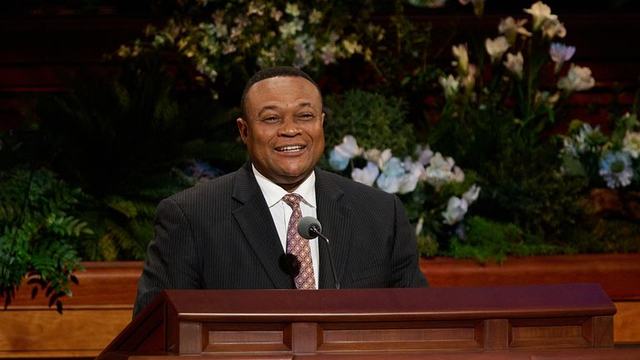
The Joy of a Covenant Relationship with God
 Open talk in Gospel Library
Ideas for Opening the Lesson
- Begin by inviting the class to reflect on the Easter greeting Elder Mutombo shared: “Christ is risen.” “Truly, He is risen.” Ask class members what that declaration means to them personally and how the Resurrection has brought them comfort, peace, or hope. This could help center the discussion on Jesus Christ before moving into the talk’s emphasis on covenants.
- Start with a simple question: “What helps you stay faithful when life does not go as hoped?” After a few responses, explain that Elder Mutombo taught from personal experience about grief, covenant loyalty, and the sustaining power of Jesus Christ. This opening could prepare class members to discuss both doctrine and real-life discipleship.
- Invite class members to think quietly about a difficult season in their lives. Then ask them to listen for truths from the talk that could help someone endure sorrow with faith. This approach could help the lesson feel immediately relevant and encourage thoughtful participation.
- Write on the board: “Come unto me” and “Sunday will come.” Ask the class what these two phrases teach about the Savior. Then explain that Elder Mutombo connected Christ’s invitation, His Atonement and Resurrection, and the joy of keeping covenants with God.
- Open by asking, “What does a covenant relationship with God change during times of trial?” Let a few class members respond, then introduce Elder Mutombo’s testimony that covenants brought peace, identity, strength, and hope during one of the hardest experiences of his life.
- If appropriate, begin by sharing a brief personal experience or inviting one class member in advance to share how temple or baptismal covenants have strengthened them in hardship. Then connect that experience to Elder Mutombo’s teaching that divine love deepens as covenants are made and faithfully kept.
Topics
Celebrate Christ’s Resurrection with faith
Elder Mutombo taught that the Easter greeting was more than a custom; it was a declaration of the central truth of the gospel. He said that through Jesus Christ’s Atonement and Resurrection, all people could receive comfort, peace, reassurance, and hope to return to Heavenly Father. He emphasized that without Christ’s Atonement and Resurrection, there would be no eternal hope.
This is more than just a simple greeting or declaration. It is a celebration of the divine gift offered by Heavenly Father to us.
- What stood out to you about Elder Mutombo’s use of the Easter greeting?
- How has the Resurrection of Jesus Christ brought you comfort, peace, or reassurance?
- Why do you think Elder Mutombo began his message with the reality that Christ is risen?
- How would your daily life be different if you more consciously remembered the Savior’s Resurrection?
- What can we do as disciples of Christ to make our testimonies of the Resurrection more central in our homes?
- How can the truth that Christ overcame death help us face fear, grief, or uncertainty?
- What experiences have strengthened your witness that Jesus Christ is alive?
Accept the Savior’s invitation to come
Elder Mutombo taught that the Savior’s words “Come unto me” were a divine invitation extended to every person, regardless of circumstances. He said that wherever people were and whatever they were experiencing, they could feel God’s infinite love through Jesus Christ. He presented coming unto Christ as the way to receive mercy and eternal life.
“Come unto me” is a divine invitation which means wherever you are now or whatever you are going through in your life, you can feel God’s infinite love manifested through His Son, Jesus Christ.
- What did Elder Mutombo teach about the meaning of the Savior’s invitation to “come unto me”?
- How have you felt God’s love through Jesus Christ during a difficult time?
- Why is it important to remember that the Savior’s invitation applies wherever we are now?
- What are some practical ways we can come unto Christ more fully this week?
- How can we help others feel that they are not beyond the reach of the Savior’s mercy?
- What might keep people from accepting this invitation, and how can faith help overcome those barriers?
- When have you felt especially received by the Lord as you turned to Him?
Deepen divine love through sacred covenants
Elder Mutombo taught that Heavenly Father had a special love for those who made covenants with Him in baptism and that this divine love deepened as additional covenants were made and faithfully kept in the house of the Lord. He connected covenant making and covenant keeping with a richer relationship with God. He presented covenants as a source of identity, belonging, and spiritual strength.
Indeed, our Heavenly Father has a special love for each person who makes the covenant with Him in the waters of baptism. That divine love deepens as additional covenants are made in the house of the Lord and are faithfully kept.
- What did Elder Mutombo teach about how covenants affect our relationship with God?
- How have your baptismal or temple covenants helped you feel closer to Heavenly Father?
- What does it mean to you that divine love deepens as covenants are faithfully kept?
- How can remembering our covenants change the way we face ordinary daily challenges?
- What are some ways we can more intentionally honor our covenants?
- How can we teach children and youth to see covenants as joyful blessings rather than just obligations?
- In what ways have covenants shaped your sense of identity as a disciple of Jesus Christ?
Stand by covenants during painful trials
Elder Mutombo shared the heartbreaking experience of losing four children and then facing family pressure to separate from his wife because of tradition. He said that in prayer he remembered the words of their temple sealing and the promises they had made to God and to each other. He testified that those covenants brought peace, reassurance, and strength to stand firm in truth.
I also remembered the words of our temple sealing and the promises we made to God and to each other. I felt great peace and reassurance that Nathalie and I are a daughter and a son of a loving and caring Heavenly Father.
- What do you learn from Elder Mutombo’s response to intense grief and opposition?
- How can covenants steady us when emotions are overwhelming?
- Why do you think remembering temple promises brought Elder Mutombo peace in that moment?
- What helps you stay true to the Lord when outside voices pressure you to choose another path?
- How can we prepare spiritually now so that we will be anchored in future trials?
- What experiences have taught you that covenant faithfulness brings strength?
- How can we support others in the ward who are trying to remain faithful during painful circumstances?
Choose discipleship over worldly traditions
Elder Mutombo quoted President Dallin H. Oaks to teach that following Christ was not casual or occasional but a continuous commitment and way of life. He said that keeping covenants could require disciples to leave behind what is highly esteemed among men and the traditions of men. His own experience illustrated that discipleship sometimes requires resisting cultural or social expectations that conflict with revealed truth.
Following Christ is not a casual or occasional practice. It is a continuous commitment and way of life that should guide us at all times and in all places.
- What does it mean that following Christ is a continuous commitment and way of life?
- What are some modern examples of traditions or social expectations that can conflict with discipleship?
- Why can it be difficult to choose the Lord’s way over what is accepted by others?
- How have you been blessed when you chose gospel truth over convenience, approval, or tradition?
- How can we discern whether a tradition supports or undermines covenant living?
- What can we do to strengthen one another in choosing Christ in all places and at all times?
- How can we teach our families to value truth more than social acceptance?
Trust that Sunday will come
Elder Mutombo taught that everyone would face dark days in mortality when life did not go as hoped. He pointed to the Savior’s suffering and death, then testified that despair did not last because the Resurrection came on Sunday. He promised that no matter how dark life became, hope would come as people faithfully kept their covenants with the Lord.
So no matter how dark your days are, please remember that Sunday will come if you faithfully keep the covenants that you made with the Lord.
- What do you think Elder Mutombo meant by the promise that “Sunday will come”?
- How does the Savior’s experience help you endure your own dark days?
- Why is covenant faithfulness especially important during seasons of sorrow or waiting?
- When have you seen the Lord bring light after a period of darkness?
- How can we hold on to hope when answers or relief do not come quickly?
- What can we say or do to help someone who is in the middle of a very dark day?
- How does the Resurrection change the way we interpret suffering and loss?
Recognize God’s plan for lasting joy
Elder Mutombo taught that Heavenly Father’s plan was designed for happiness now and joy forever in His presence. He said that God gave laws, commandments, and covenants to bless His children and prepare them to return to Him pure. He framed obedience and covenant living as part of God’s loving purpose rather than as burdens.
Our Heavenly Father’s plan for us is happiness now and joy forever in His presence. He gives us laws and commandments and makes covenants with us to bless us.
- How did Elder Mutombo describe Heavenly Father’s plan and purposes?
- Why is it important to see commandments and covenants as blessings?
- How has obedience brought happiness or protection into your life?
- What misunderstandings do people sometimes have about God’s commandments?
- How can we better trust that God’s requirements are expressions of His love?
- What can we do to help others see the connection between holiness and joy?
- How does an eternal perspective change the way we view sacrifice and obedience?
Resist Satan’s efforts to destroy joy
Elder Mutombo warned that the adversary wanted all people to be miserable and sought to lead them to break their covenants. He said Satan was committed to destruction and often promoted the false idea of “play now and pay later” or that there were no consequences for actions. He contrasted Satan’s deception with God’s path of covenant faithfulness and joy.
He would have us break our covenants to bring sorrow upon us. He is committed to our destruction.
- What did Elder Mutombo teach about Satan’s goals and methods?
- Why do you think covenant breaking leads to sorrow?
- What are some common messages in the world that reflect the adversary’s deception?
- How can we become more spiritually alert to ideas that minimize accountability?
- What practices help you resist temptation and stay true to your covenants?
- How can we teach youth and children to recognize Satan’s counterfeit messages about happiness?
- When have you seen the blessings of choosing long-term spiritual joy over short-term worldly appeal?
Build on Christ with humble obedience
Elder Mutombo quoted President Ezra Taft Benson on obedience, doing the Lord’s will, and loving the Lord. He then taught that people could strengthen their covenant relationship with Heavenly Father and Jesus Christ by becoming humble like a child, building on the rock of Christ, yielding in faith, and responding to the Holy Ghost. He described discipleship as a process of changed nature and faithful obedience.
We can grow in humility and strengthen our covenantal relationship with our Heavenly Father and our Savior Jesus Christ if we change our nature to become like a child, building our life on the rock, who is the Savior Jesus Christ, yielding in faith in Him, responding to the Holy Ghost’s direction to faithfully keep the covenants made with the Lord at our baptism and in the house of the Lord.
- What did Elder Mutombo teach about how we strengthen a covenant relationship with God?
- What does it mean to become like a child in our relationship with the Lord?
- How do humility and obedience work together in discipleship?
- What helps you recognize and respond to the Holy Ghost’s direction?
- In what ways are you trying to build your life more firmly on Jesus Christ?
- How has obedience helped change your nature over time?
- What is one specific way you feel prompted to be more faithful to your covenants?
Additional Discussion Questions
- What phrase or teaching from Elder Mutombo’s talk felt most personally relevant to you, and why?
- How did Elder Mutombo connect the doctrines of Easter with the daily reality of covenant living?
- What do we learn from the way Elder Mutombo and his wife responded to grief together?
- How can remembering our identity as sons and daughters of Heavenly Father change the way we face hardship?
- Why do you think the Lord often strengthens us through covenants rather than removing every trial immediately?
- How can we make our homes places where faith in Jesus Christ is stronger than fear or tradition?
- What role did prayer, hymns, and remembered promises play in Elder Mutombo’s experience, and how can they help us?
- How can quorum or Relief Society members better support those who are carrying hidden sorrow?
- What does this talk teach about the relationship between faith, miracles, and accepting God’s will?
- What is one change you feel inspired to make because of Elder Mutombo’s message?
