
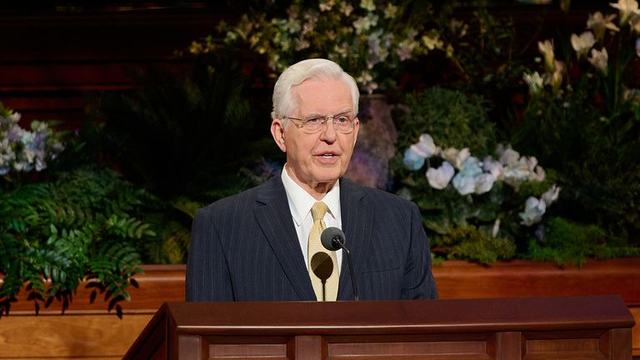
The Character of Christ
 Open talk in Gospel Library
Ideas for Opening the Lesson
- Invite class members to silently consider Peter’s question quoted in the talk: “What manner of persons ought ye to be?” Ask them to write a few words describing the kind of disciple they hope to become. Then explain that President Christofferson taught that becoming that kind of person begins with developing the character of Jesus Christ.
- Begin by displaying three phrases from the talk without explanation: “pure love of Christ,” “lifting and ministering to others,” and “devotion to the will of God.” Ask the class what Christlike attributes might grow from each one. Then connect their answers to President Christofferson’s teaching that Christlike character grows out of Christlike motivations.
- Share a brief experience, either personal or from the talk, that illustrates someone turning outward while suffering. The account from Elder Bednar about the grieving mother could be especially powerful. Invite the class to listen for what that story teaches about the heart of Christ.
- Ask the class to think about the difference between trying to act better and actually becoming better. Then introduce President Christofferson’s central idea that Christlike character is not just behavior modification but the result of a mighty change of heart through faith, repentance, covenants, and grace.
- Start with Easter and the Second Coming themes from the talk. Ask why preparation for the Lord’s return involves more than food storage, plans, or outward readiness. Then guide the class to President Christofferson’s answer: preparing for the Lord means becoming like Him in character.
Topics
Prepare for the Lord by becoming Christlike
President Christofferson began with Peter’s teachings about the Second Coming and the question, “What manner of persons ought ye to be?” He taught that one of the most important ways to prepare for the Lord’s return was to emulate the character of Jesus Christ. He said that taking the Savior’s name upon us includes becoming the kind of people He would have us be.
It is in emulating the character of Christ that we become the “manner of persons” we ought to be. Acquiring the character of Christ is one of the most important ways we take His name upon us.
- How did President Christofferson connect Peter’s question about the Second Coming with the character of Christ?
- Why do you think becoming Christlike is such an essential part of preparing for the Lord’s return?
- What does it mean to you personally to take the Savior’s name upon you through your character?
- How can focusing on who we are becoming change the way we approach repentance and discipleship?
- What are some signs that a person is preparing spiritually for the Lord’s coming?
- How has thinking about the Second Coming influenced the kind of person you want to become?
Let Christlike character grow from a changed heart
President Christofferson taught that Christlike attributes arise from deeper motivations in the heart. He said that the Savior’s character flowed from His thoughts, desires, and intents, and that if we want Christlike character, we must seek Christlike motivations. He explained that this requires the mighty change of heart spoken of in scripture.
Christlike character grows out of a Christlike heart. Thus, if we are to succeed in developing a Christlike character, we must possess His motivations—His thoughts, desires, and intents of the heart.
- What stood out to you about the difference between Christlike behavior and a Christlike heart?
- Why is it important to examine our motives and not just our outward actions?
- How have you seen the Lord change desires, not just habits, in your life?
- What are some ways we can tell whether our hearts are becoming more like the Savior’s?
- Why do you think the scriptures describe this process as a “mighty change of heart”?
- How could this teaching help someone who feels discouraged about slow spiritual progress?
Seek a mighty change through grace and covenants
President Christofferson explained that for some people the mighty change of heart came quickly, but for most it came gradually over time. He taught that this transformation required faith in Christ, repentance, baptismal covenant obedience, and the grace of Jesus Christ through the Holy Ghost. He emphasized that although effort is required, true change comes through divine help and the power of godliness.
The good news of the gospel of Jesus Christ is that we, each of us, can call on the grace of Jesus Christ to help us.
- What did President Christofferson teach about the difference between instant and gradual spiritual rebirth?
- How does it help you to know that real change often happens incrementally?
- What role do faith, repentance, and covenants play in a mighty change of heart?
- How have you felt the grace of Jesus Christ helping you become something better than you could become alone?
- What does the companionship of the Holy Ghost add to this process of transformation?
- How can we balance diligent effort with trust in the Savior’s grace?
Develop pure love like the Savior
President Christofferson taught that the foremost motive in Christ’s character was charity, the pure love of Christ. He pointed to the Savior’s role as Redeemer and His Atonement as the supreme act of love. He said that this love produced compassion, patience, correction guided by the Holy Ghost, and a willingness to forgive.
Foremost among the motives that form Christ’s character is charity, “the pure love of Christ.”
- Why did President Christofferson place charity first among Christ’s motivations?
- How does the Savior’s Atonement show the pure love of Christ in the clearest way?
- What Christlike traits grow naturally when charity fills the heart?
- When has the Lord helped you feel more compassion or patience toward someone?
- Why is forgiveness such an important evidence of Christlike love?
- How can we seek greater charity in our homes, quorums, classes, and ministering relationships?
Turn outward when you suffer
Using Elder Bednar’s account of a grieving mother, President Christofferson illustrated that Christlike character is revealed when people notice and respond to others’ pain even while enduring their own. He also referred to Jesus on the cross caring for His mother. He taught that one mark of Christlike love is the instinct to turn outward rather than inward in moments of suffering.
The Christlike character of this devoted woman was manifested in her immediate and almost instinctive turning outward to attend to the needs of other suffering mothers.
- What do you learn from the story of the mother who thought first of others while grieving her own daughter’s death?
- Why is turning outward during personal pain such a powerful sign of Christlike character?
- How did the Savior model this same pattern even on the cross?
- When have you seen someone show Christlike concern for others while carrying a heavy burden?
- What can help us resist the natural tendency to turn inward when life is hard?
- How might the Lord use our own suffering to make us more aware of others’ needs?
Lift others through humble ministry
President Christofferson taught that another central motivation in the Savior’s character was His desire to foster the happiness and advancement of others. He connected this motive to the Lord’s teaching that greatness comes through ministering. He said that humility, meekness, selflessness, and courage grow out of devotion to the well-being of others.
A second motivation that underlies the Savior’s character is His passion to foster the happiness and advancement of others.
- How did President Christofferson describe the Savior’s desire to bless and advance others?
- What does the Lord’s definition of greatness teach us about true discipleship?
- How does looking to the needs of others help humility grow in us?
- What is the relationship between meekness and strength in Christlike service?
- When have you seen ministering bless both the giver and the receiver?
- What might change in our ward if more of us focused on helping others progress and rejoice?
Learn selfless service from disciples and missionaries
President Christofferson pointed to missionaries as examples of selfless devotion because they gave months and years of their lives to bless others, often strangers. He used their example to show that Christlike character includes sacrifice, courage, and a willingness to offer others the gifts of repentance and forgiveness in the name of Christ. Their service reflected the Savior’s own pattern of giving Himself for others.
What better example do we have than missionaries, the tens of thousands of our missionaries who devote months and years of their lives exclusively to serving others (often strangers) and offering, in the name of Christ, His matchless gifts of repentance and forgiveness?
- What did President Christofferson want us to learn from the example of missionaries?
- How does missionary work reflect the selflessness of Jesus Christ?
- In what ways can members live a missionary spirit even if they are not full-time missionaries?
- What sacrifices have you seen people make to bless others spiritually?
- How does sharing the gospel help shape Christlike character in us?
- What can we do to become more willing to serve people we do not yet know well?
Choose God’s will with integrity and virtue
President Christofferson taught that a third essential motivation in the Savior’s character was His desire to glorify the Father and do the Father’s will in every particular. He said this devotion produced honor, integrity, and virtue. He invited listeners to pursue a life of moral excellence with the Lord’s help and to seek purity in thoughts, words, and actions.
A third motivating force essential to the character of Christ is His desire to glorify the Father and to fulfill the Father’s will in every particular.
- What does it mean to desire God’s will in every particular of life?
- How do honor, integrity, and virtue grow out of devotion to the Father’s will?
- Why is integrity especially important in a world that often excuses compromise?
- What did President Christofferson teach about virtue as a pattern of thought and behavior?
- How can we invite the Lord’s help in pursuing moral excellence?
- What practical changes could help us make our thoughts, words, and actions more virtuous?
Influence the world one Christlike life at a time
President Christofferson taught that adopting the character of Christ was not only personal preparation but also part of preparing the world for the Lord’s return. He said that Jesus had always changed society one by one and that individual choices, aggregated over time, shape communities and nations. He encouraged disciples not to underestimate the influence of a Christlike life.
No one of us alone can change the world, but each of us can have an influence in the world.
- How did President Christofferson connect personal Christlike character with preparing the world for the Second Coming?
- Why do we sometimes underestimate the influence of one faithful disciple?
- What are some ways individual choices shape families, wards, and communities over time?
- How has someone’s Christlike example influenced your life for good?
- What can you do this week to bless the world in a quiet but meaningful way?
- How does the Lord’s one-by-one pattern give you hope about your own ability to make a difference?
Additional Discussion Questions
- Which of the three Christlike motivations mentioned in the talk feels most needed in your life right now, and why?
- How can we teach children and youth that true character begins in the heart?
- What role does regular repentance play in becoming more like Jesus Christ?
- How can covenant keeping help us receive the grace needed for deep inner change?
- What is the difference between appearing righteous and becoming holy?
- How can we better recognize the Holy Ghost as the messenger of the Savior’s grace?
- What habits might help us cultivate more virtuous thoughts and desires each day?
- How can ministering assignments become opportunities to develop the character of Christ rather than just complete a task?
- What does this talk teach about hope for those who feel they are still far from the Savior’s example?
- If our ward or branch more fully reflected the character of Christ, what would look different?
