
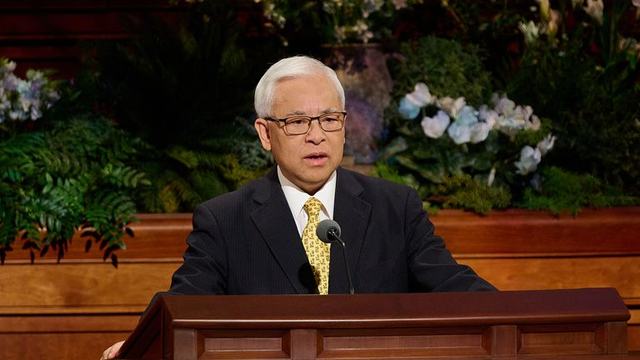
Remember, Remember
 Open talk in Gospel Library
Ideas for Opening the Lesson
- Invite class members to take one minute and write down everything they remember from the phrase “remember, remember” in the talk. Then ask them to share which of the five Book of Mormon reminders stood out most to them and why. This could help the class begin by focusing on the talk’s central pattern and purpose.
- Begin by asking, “What does God want us to remember most?” Let class members briefly share answers before introducing Elder Wong’s teaching that the Lord placed repeated reminders in the Book of Mormon. This could create a thoughtful transition into the five “remember, remember” verses.
- Start with an Easter-centered introduction by asking how remembering the Savior differs from simply knowing about Him. Then connect responses to Elder Wong’s message that Easter invited disciples not only to rejoice in Christ’s Resurrection but also to remember Him more intentionally.
- Display the five scripture references from the talk without the summaries: Mosiah 2:41, Alma 37:13, Helaman 5:9, Helaman 5:12, and Helaman 14:30. Invite class members to match each reference with a gospel truth from memory or by reading the verses together. This could help the class engage directly with the scriptures that structured the talk.
- Open with a simple object lesson about reminders by showing a phone reminder, calendar alert, or written note and asking why people use reminders for important things. Then relate that idea to Elder Wong’s teaching that God also gave us reminders, especially in the Book of Mormon, to help us remember eternal truths.
Topics
Remember the Savior during Easter
Elder Wong taught that Easter Sunday was the ultimate celebration of Jesus Christ’s redeeming mission, especially His Resurrection. He said the Easter season invited disciples not only to rejoice but also to remember the Savior. He framed the rest of the talk around the question of what God would want His children to remember.
The Easter season invites disciples of Jesus Christ not only to rejoice but to remember our Savior.
- How did Elder Wong connect Easter with both rejoicing and remembering?
- Why do you think remembering the Savior requires intentional effort?
- What are some ways we can remember Jesus Christ more consistently throughout the year, not just at Easter?
- How has remembering the Resurrection strengthened you during a difficult time?
- What could we change in our personal or family worship to remember the Savior more deeply?
Find God’s reminders in the Book of Mormon
Elder Wong said that as he pondered what God would want us to remember and how He would remind us, a clear thought came that the Lord had placed His reminders in the Book of Mormon. He highlighted five “remember, remember” verses as deliberate divine reminders for our day. He taught that the Book of Mormon was written for us and our future.
He would put His reminders in the Book of Mormon. He would remind us to “remember, remember,” just like our parents would.
- What did Elder Wong teach about why the Book of Mormon contains repeated reminders?
- How have you seen the Book of Mormon remind you of truths you needed at the right time?
- Why might repetition be an important way that God teaches His children?
- How could we study the Book of Mormon differently if we looked for the Lord’s reminders?
- What reminder from the Book of Mormon has most influenced your life recently?
Keep God’s commandments and receive happiness
Using Mosiah 2:41, Elder Wong taught that keeping God’s commandments brought both temporal and spiritual blessings. He said that if we held out faithful to the end, we would dwell with God in a state of never-ending happiness. He emphasized that obedience was not merely duty but the path to joy and eternal life.
Keeping God’s commandments is a blessing, both temporal and spiritual. If we can endure to the end, we will dwell with Him in a state of never-ending happiness.
- What blessings did Elder Wong say came from keeping the commandments?
- How have you seen obedience bring either temporal or spiritual blessings in your life?
- Why do you think the Lord connects commandments with happiness?
- What does it mean to endure faithfully to the end in everyday discipleship?
- Is there a commandment you have come to appreciate more deeply over time? What changed your understanding?
Honor strict commandments and avoid separation
From Alma 37:13, Elder Wong taught that God’s commandments were firm and that obedience brought promised blessings, while disobedience led to being cut off from God’s presence. He included President Oaks’s kite analogy to show that commandments did not restrict us but steadied and protected us. He taught that we needed to return to Heavenly Father by coming unto Jesus Christ.
God reminds us that His commandments are firm and that obedience to them brings promised blessings.
- How did Elder Wong describe the seriousness of God’s commandments?
- What did the kite analogy teach about freedom and obedience?
- Why do some people sometimes see commandments as restrictive rather than protective?
- How have the Lord’s commandments steadied your life during “mortal winds”?
- What can help us trust God more when a commandment feels difficult?
Rely on Jesus Christ for salvation
Elder Wong taught from Helaman 5:9 that there was no other way or means whereby mankind could be saved except through the atoning blood of Jesus Christ. He said Jesus Christ stood at the very heart of God’s plan of salvation and exaltation. Every promise of redemption, resurrection, and eternal life flowed through Him.
Without Jesus Christ, there is no salvation, no victory over sin and death, and no path back to our Heavenly Father.
- What did Elder Wong teach about the central role of Jesus Christ in the plan of salvation?
- Why is it important to remember that salvation comes only through Christ?
- How has your appreciation for the Savior’s Atonement grown over time?
- What experiences have helped you feel that Jesus Christ is your Redeemer personally?
- How can we keep Jesus Christ at the center of our teaching, family life, and personal worship?
Build your foundation on Jesus Christ
From Helaman 5:12, Elder Wong taught that disciples needed to build on the rock of the Redeemer so that storms, opposition, and temptation would not drag them down. He quoted Elder Bednar, who compared sacred covenants and ordinances to anchor pins and steel rods fastening a building to bedrock. He taught that faithfully receiving, reviewing, remembering, and renewing covenants secured us more firmly to Christ.
We will not fall if we build our foundation upon Jesus Christ.
- What storms or pressures did Elder Wong describe that test our spiritual foundation?
- How do covenants help anchor us to Jesus Christ?
- What does it look like in daily life to build on the rock of Christ?
- How has covenant keeping strengthened you during a trial or temptation?
- What practices help you remember and renew your commitment to the Savior?
Use agency wisely through revealed truth
Using Helaman 14:30, Elder Wong taught that God had given His children knowledge and made them free to act for themselves. He said the Book of Mormon helped us know truth, shaped our hearts, and guided us to discern right from wrong. He taught that as we internalized its teachings, we were empowered to use our God-given agency wisely.
As we internalize its messages and immerse ourselves in its words, we will be guided to discern right from wrong and empowered to use our God-given agency wisely.
- What connection did Elder Wong make between truth, agency, and the Book of Mormon?
- Why is agency strengthened rather than weakened by revealed truth?
- How has scripture study helped you make wiser choices?
- What are some ways the world misunderstands moral agency?
- What can we do to better immerse ourselves in the Book of Mormon so our choices reflect discipleship?
Prepare daily for the Savior’s return
At the end of the talk, Elder Wong reviewed the five reminders and invited listeners to remember the Savior, keep His commandments, use moral agency wisely every day, and prepare for His glorious return. He connected remembrance with action. His conclusion called for united prayer and daily discipleship centered on the resurrected Christ.
Let us pray unitedly that we will keep His commandments, use our moral agency wisely every day, and prepare for His glorious return in His resurrected body.
- How did Elder Wong connect remembering the Savior with preparing for His return?
- What daily actions best help us prepare spiritually for the Second Coming?
- Why is wise use of agency an important part of preparation for the Lord’s return?
- How can families and quorums or Relief Societies help one another prepare more faithfully?
- What invitation from Elder Wong’s conclusion feels most important for you right now?
Additional Discussion Questions
- Which of the five “remember, remember” teachings do you feel you most needed to hear right now?
- How did Elder Wong use the Book of Mormon to teach a clear pattern of discipleship?
- What does the phrase “remember, remember” suggest about human nature and our need for spiritual reminders?
- How can remembering past spiritual experiences help us stay faithful in present challenges?
- What is the relationship between obedience, agency, and joy in this talk?
- How did the talk strengthen your understanding of why Jesus Christ must remain at the center of everything?
- What role do covenants and ordinances play in helping us withstand spiritual storms?
- How can we teach children and youth to see commandments as blessings rather than burdens?
- What practical changes could we make this week because of Elder Wong’s message?
- How can our class better help one another remember the Savior and act on His teachings?
