
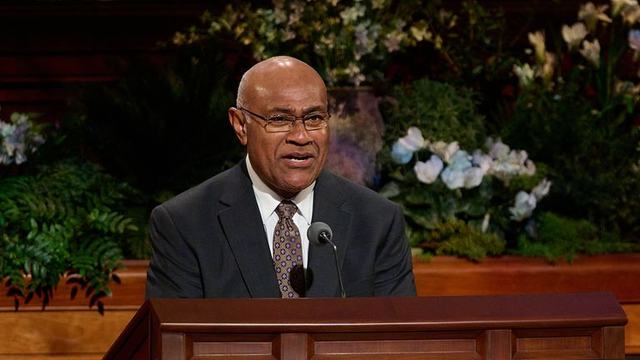
Come unto Christ—Together
 Open talk in Gospel Library
Ideas for Opening the Lesson
- Invite class members to think of a road sign that gives a clear message. Then mention Elder Wakolo’s examples of “Full stop” and “Really you gotta stop,” and ask how prophets and apostles had similarly given clear invitations to come unto Christ. This could help the class begin by noticing the clarity and love in prophetic counsel.
- Begin by writing the phrase “come unto Christ—together” on the board. Ask class members what the word “together” added to their understanding of discipleship, family, temple worship, and ministering. This could naturally open discussion about part-member families, patience, and eternal promises.
- Invite class members to quietly think of someone in their family who is waiting, hoping, returning, or still deciding about the gospel. After a brief pause, explain that Elder Wakolo had spoken directly to those experiences with hope and compassion. This could help create a reverent and tender tone for the lesson.
- Start with Moses’s questions: “Why?” and “By what means?” Ask the class how those questions related to God’s purpose for His children. Then connect their answers to Elder Wakolo’s teaching that God’s work was to bring to pass immortality and eternal life through Jesus Christ and eternal families.
- Share that Elder Wakolo told several stories from different countries and cultures. Invite the class to listen for what those stories had in common. This approach could help class members see recurring principles such as agency, patience, love, ordinances, and trust in the Lord’s timing.
Topics
Hear prophets invite us clearly to Christ
Elder Wakolo said that living prophets and apostles had spoken with simplicity and clarity. He used humorous road-sign examples to show that even simple messages can be made clearer. He emphasized that their united message had invited all to come unto Christ.
How grateful we are for living prophets and apostles who speak with simplicity and clarity—whose collective voices invite us to “come unto Christ.”
- How had Elder Wakolo’s road-sign examples helped you think about the clarity of prophetic counsel?
- What simple invitation from recent prophets or apostles had become especially meaningful to you?
- Why do you think the Lord often taught important truths in simple and direct ways?
- How can we better recognize prophetic invitations as loving guidance rather than pressure?
- What is one clear invitation to come unto Christ that you feel prompted to act on now?
- How has following simple prophetic counsel blessed you or your family?
Trust God’s purpose for eternal families
Elder Wakolo taught that God’s purpose was to bring to pass the immortality and eternal life of His children. He connected Moses’s vision, Nephi’s testimony, and modern prophetic teaching to show that God’s plan centered on Jesus Christ and eternal families. He said that all were alike unto God and that all were invited to receive eternal life through Christ.
The Lord answered, “For mine own purpose have I made these things … to bring to pass the immortality and eternal life of man.”
- How did Moses’s questions about purpose help frame the message of this talk?
- What did Elder Wakolo teach about the relationship between Jesus Christ and eternal families?
- How does knowing God’s purpose change the way we view family challenges or delays?
- What does the phrase “all are alike unto God” add to your understanding of family-centered doctrine?
- How can we teach God’s purpose in ways that bring hope to people in many different family situations?
- When have you felt greater peace by trusting that God had a purpose for your family?
Honor the temple as hope for families
Elder Wakolo taught that the temple and sealing ordinances were central to God’s plan for families. He said the temple stood as a symbol of hope, not pressure, and that the gospel was not meant to divide families but to unite them eternally. He emphasized that temple sealings invited people into God’s divine order and were rightly viewed as crowning ordinances.
The temple stands as a symbol of hope, not pressure. The gospel of Jesus Christ is not a wedge to divide families but a bridge to unite them eternally.
- What stood out to you in Elder Wakolo’s description of the temple as hope rather than pressure?
- How can we speak about the temple in ways that invite and encourage rather than discourage others?
- Why do you think sealing ordinances were described as part of the divine order of God?
- How can the gospel become a bridge in families where not everyone shares the same beliefs?
- What have you learned about the temple from your own family experience or from watching others?
- How can ward members help make temple blessings feel hopeful and accessible to others?
Exercise patience in part-member families
Elder Wakolo spoke directly to those in part-member families and assured them that they were essential to God’s plan. Through several stories, he showed that faithful spouses and family members had waited with love, patience, and trust. He taught that the Lord honored patient faith and that miracles could come even after long delays.
Brothers and sisters, the Lord honors patient faith. And it is never too late for miracles.
- What did Elder Wakolo’s stories teach about the spiritual power of patience?
- How can someone remain faithful without becoming discouraged while waiting on a loved one’s choices?
- What does it mean to you that those in part-member families are “essential to God’s plan”?
- How can we support members who attend alone or who carry quiet family heartaches?
- When have you seen patient faith bring unexpected blessings?
- How can we avoid judging the timing of another person’s conversion journey?
Respect agency while extending loving invitations
Elder Wakolo taught that conversion was personal, timing was individual, and agency was sacred. He said the Savior never forced but always invited. His stories showed that loving invitations, offered without pressure, allowed the Spirit to work in the Lord’s way and time.
The Savior never forces. He invites. He blesses. He fulfills promises according to faith and faithfulness.
- How did Elder Wakolo distinguish between loving invitation and unhealthy pressure?
- Why is it important to remember that agency is sacred in family gospel conversations?
- What can we learn from the examples of spouses and missionaries who invited gently?
- How can we better follow the Savior’s pattern when we hope someone we love will come closer to Christ?
- What experiences have taught you that the Spirit works best when agency is respected?
- How can we keep inviting with love even when the answer is not immediate?
Believe God keeps promises in His timing
Elder Wakolo testified that God kept His promises, though often not according to human timetables. He illustrated this through stories of delayed baptisms, long years of waiting, and blessings fulfilled near the end of life. He bore witness that God knew every tear, prayer, and promise connected to families.
Brothers and sisters, God keeps His promises—but in His timing.
- Why can trusting the Lord’s timing be difficult in family matters?
- What did the stories in the talk teach about waiting on promised blessings?
- How can we remain hopeful when answers seem delayed for years?
- What helps you trust that God remembers prayers offered for loved ones?
- How does Elder Wakolo’s testimony about God knowing every family strengthen your faith?
- When have you seen the Lord fulfill a promise in a way or time you did not expect?
Minister so no one sits alone
Elder Wakolo called on Church members to minister one by one and make sure that no one sat alone. His message broadened the talk beyond individual families to the covenant responsibility of the ward community. He taught that Christlike belonging and personal care could bless those who were waiting, returning, or feeling isolated.
To all members of the Church—let’s continue to minister one by one and ensure that “no one sits alone.”
- What do you think Elder Wakolo meant by making sure that “no one sits alone”?
- How can an elders quorum or Relief Society better notice those who may feel alone spiritually or socially?
- Why is one-by-one ministering especially important for part-member families or returning members?
- What simple acts of inclusion have helped you feel seen and loved at church?
- How can we create a ward culture that reflects the patience and gentleness Elder Wakolo described?
- Who might need our fellowship and encouragement right now?
Commit to come unto Christ together
Elder Wakolo concluded with a direct invitation to commit to come unto Christ together. He tied that invitation to the Resurrection of the Savior and to the eternal rewards promised through faithful discipleship. His closing appeal was hopeful, inclusive, and centered on Jesus Christ.
This month, as we celebrate and remember the Resurrection of our Savior, I invite you to make a commitment and choose to come unto Christ—together. Eternity shall be your reward.
- What does it mean in practical terms to come unto Christ “together”?
- How does the Resurrection of Jesus Christ strengthen hope for families?
- What commitment could individuals or families make because of this talk?
- How can we include those whose family circumstances are painful or incomplete in this invitation?
- What would change in our homes if we intentionally focused on coming unto Christ together?
- How has the Savior helped you move forward with hope in family relationships?
Additional Discussion Questions
- Which story from Elder Wakolo’s talk affected you most, and why?
- How did Elder Wakolo balance doctrine about eternal families with compassion for difficult family situations?
- What can we learn from the examples of spouses who loved quietly and faithfully?
- How can we talk about temple blessings in ways that strengthen faith without creating discouragement?
- Why is it important to remember that conversion is personal and timing is individual?
- How can we better support children, spouses, or parents who are praying for a loved one’s conversion?
- What role did the Holy Ghost play in the stories Elder Wakolo shared?
- How can ministering brothers and sisters help make the Church feel like family to those in part-member homes?
- What does this talk teach about the relationship between ordinances, covenants, and God’s purposes?
- What is one thing you feel inspired to do differently because of Elder Wakolo’s invitation to come unto Christ together?
