
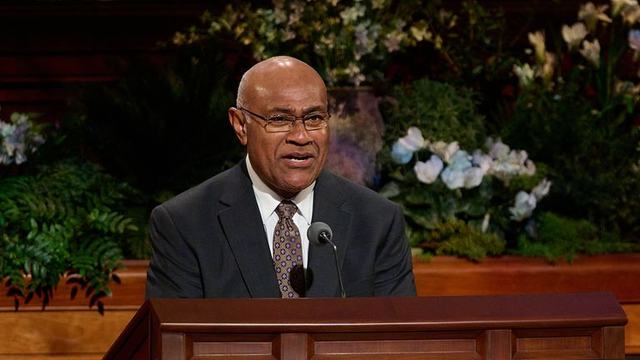
Come unto Christ—Together
 Open talk in Gospel Library
Contents
Topics
Hear prophets invite us to come unto Christ
Elder Wakolo begins by highlighting the simple and clear way prophets and apostles teach the doctrine of Jesus Christ. Their united message is a direct invitation for all to come unto Christ.
When our daughter, Jasmin, was 14 years old, she described general conference as a gathering where “prophets, seers, and revelators testify of Jesus Christ and teach His doctrine so simply that it cannot be misunderstood.”
How grateful we are for living prophets and apostles who speak with simplicity and clarity—whose collective voices invite us to “come unto Christ.”Key Points:
- General conference centers on testimony of Jesus Christ.
- Prophetic teaching is simple, clear, and understandable.
- Living prophets and apostles consistently invite all people to come unto Christ.
- Clarity in gospel teaching helps people know how to act.
- When has a prophet’s or apostle’s simple message answered a question in your life?
- What general conference message has felt especially clear and personal to you?
- When have you felt gratitude for living prophets who taught exactly what you needed?
- How has a simple gospel truth helped you make an important decision?
Understand God’s purpose for His children
Drawing from Moses and Nephi, Elder Wakolo teaches that God’s purpose is to bring to pass the immortality and eternal life of His children. Through Jesus Christ, all are invited to receive eternal life and live in God’s presence as families.
Overwhelmed by this vision, Moses asked two profound questions to God: Why? And by what means? In other words, he wanted to understand the purpose.
The Lord answered, “For mine own purpose have I made these things … to bring to pass the immortality and eternal life of man.”
The prophet Nephi later testified, “For … he denieth none that come unto him … ; and all are alike unto God.”
Because of Jesus Christ, all can receive the gift of eternal life—which includes living in God’s presence eternally as families.Key Points:
- Moses saw the vastness of God’s creations and asked about their purpose.
- God’s work and glory is to bring about immortality and eternal life.
- Jesus Christ makes eternal life possible for all.
- God invites everyone; He denies none that come unto Him.
- Eternal life includes living in God’s presence as families.
- When have you felt a deeper sense of God’s purpose for your life or family?
- How has the doctrine of eternal life brought you hope?
- When have you felt that God knows and includes all His children?
- What experience has strengthened your testimony that Jesus Christ makes eternal blessings possible?
Center family life on temple covenants
The talk teaches that the doctrine of the Church centers on the family and that the temple is essential to God’s plan. Temple ordinances and sealing authority make it possible for families to return to Heavenly Father together.
“The doctrine of The Church of Jesus Christ of Latter-day Saints centers on the family. Essential to our doctrine on the family is the temple.”
“The ordinances received there enable us to return as eternal families to the presence of our Heavenly Father.”
“The gospel plan … is implemented through our mortal families, and its intended destiny is to exalt the children of God in eternal families.”
The Lord has also declared that “marriage is ordained of God … that the earth might answer the end of its creation,” and without the sealing authority needed to enter these eternal covenants that unite families forever, “the whole earth would be utterly wasted at his coming.”
Temple sealings invite us into the divine order of God. Is it any wonder that the temple sealing is often described as the crowning ordinance?Key Points:
- The Church’s doctrine centers on the family.
- The temple is essential to understanding and fulfilling God’s plan for families.
- Temple ordinances prepare families to return to Heavenly Father.
- Marriage is ordained of God.
- Sealing authority is necessary for eternal family relationships.
- Temple sealing is a crowning ordinance in God’s plan.
- How has the temple helped you better understand God’s plan for families?
- What blessing has come to your family through temple covenants or family history work?
- When have you felt hope as you thought about eternal families?
- If you are preparing for the temple, what experiences have increased your desire to make covenants there?
Treat the temple as a symbol of hope
Elder Wakolo teaches that the temple should never be used as a source of pressure or division. Instead, disciples of Christ should approach others with patience, gentleness, and love, allowing the temple to represent hope and unity.
The temple stands as a symbol of hope, not pressure.
The gospel of Jesus Christ is not a wedge to divide families but a bridge to unite them eternally.
We must ensure that our discipleship reflects the Savior’s patience, His gentleness, and His perfect love.Key Points:
- The temple should inspire hope rather than anxiety or coercion.
- The gospel is meant to unite families, not divide them.
- Christlike discipleship requires patience and gentleness.
- Love is the proper way to invite others toward temple blessings.
- When has someone’s patience and love helped you feel closer to the Savior?
- How have you seen the gospel act as a bridge in a family relationship?
- What have you learned about inviting without pressuring?
- When have you felt hope as you thought about the temple or eternal family blessings?
Remember that every person is essential to God’s plan
Speaking directly to those in part-member families, nonmembers, and members with spouses of another faith, Elder Wakolo affirms that each person matters deeply to God and has a place in His plan.
My dear brothers and sisters, many of you are from families yet to be sealed in the temple.
Some of you who are listening are not members of the Church.
Others of you who are members of the Church may have spouses not of our faith.
Today I say to each of you: You are essential to God’s plan.Key Points:
- Many faithful people live in part-member or not-yet-sealed families.
- The Lord sees those who are not yet members and those with differing family faith situations.
- Every individual is essential in God’s plan.
- The gospel message includes and values all.
- When have you felt that God knew your family’s unique circumstances?
- How have you seen the Lord include and bless someone who felt on the margins?
- What experience has taught you that every soul matters to Heavenly Father?
- How can you help others feel that they are essential to God’s plan?
Exercise patience as families come unto Christ
Through several stories, Elder Wakolo shows that family conversion often unfolds gradually. Patience, steady faithfulness, and loving example can prepare the way for unity in Christ.
May I share a few sacred stories of patience, agency, and the quiet, persistent invitation to come unto Christ—together?
What began with tension ended in unity. They chose to come unto Christ—together.
Sometimes the seed is planted long before it breaks the soil.
Brothers and sisters, the Lord honors patient faith.
And it is never too late for miracles.Key Points:
- Conversion in families may take time.
- Faithful consistency can bless marriages and homes.
- Seeds of faith may grow slowly and invisibly at first.
- The Lord honors patient faith.
- Miracles can come even after long waiting.
- When have you had to wait patiently for a blessing or answer from the Lord?
- What experience has taught you that spiritual growth often takes time?
- How have you seen a small seed of faith eventually bear fruit?
- When has the Lord turned tension into unity in your family or relationships?
Honor agency while extending loving invitations
The talk emphasizes that conversion cannot be forced. The Savior invites rather than compels, and His disciples should respect agency while continuing to love and invite.
And yet the love remains. The invitation remains. The agency remains.
These things remind us that conversion is personal. Timing is individual. Agency is sacred.
To those who are invited—know that the invitation is rooted in Christlike love.
The Savior never forces. He invites.Key Points:
- Agency must be respected in matters of faith and conversion.
- Loving invitations can continue even when someone declines.
- Conversion is deeply personal.
- Each person’s timing is individual.
- The Savior’s pattern is invitation, not force.
- When have you felt the difference between pressure and a loving invitation?
- How has respecting someone’s agency strengthened a relationship?
- What experience has taught you that the Savior invites rather than compels?
- When have you seen love remain strong even when someone was not ready to act?
Trust God’s timing and His promises
Elder Wakolo teaches that God keeps His promises, though often according to His own timetable. The stories he shares show that faithful waiting is not wasted and that promised blessings can still come.
God keeps His promises—but in His timing.
These stories are not about statistics. They are about souls.
They know the tears, the prayers, and the patience.
They know the feelings of every waiting spouse, every praying heart, and every child.
They know every sacred promise.Key Points:
- God is faithful to His promises.
- The Lord’s timing may differ from our expectations.
- Heavenly Father and Jesus Christ are aware of individual tears, prayers, and hopes.
- Waiting with faith has spiritual purpose.
- People matter more than numbers or outcomes.
- When have you seen the Lord fulfill a promise in an unexpected time or way?
- How has the Lord helped you while you were waiting for a righteous desire?
- What experience has shown you that God is aware of your prayers and tears?
- How have you learned to trust the Lord’s timing?
Minister one by one and help no one sit alone
Elder Wakolo calls members of the Church to care personally for others, especially those in difficult or waiting family situations. Christlike ministering helps people feel loved, remembered, and included.
To all members of the Church—let’s continue to minister one by one and ensure that “no one sits alone.”Key Points:
- Members should minister personally and individually.
- Those in part-member families or seasons of waiting need fellowship and support.
- Belonging in the Church matters.
- No one should feel isolated in the congregation.
- When has someone in the Church helped you feel seen and included?
- How have you tried to make sure no one sits alone?
- What ministering experience has changed your heart?
- Who in your ward or branch may need extra love and inclusion right now?
Commit to come unto Christ together
The talk concludes with a direct invitation to act. As we remember the Resurrection of Jesus Christ, Elder Wakolo invites all to commit to come unto Christ together, with the promise of eternal reward.
To those in part-member families—do not lose heart.
To those who are waiting—do not give up.
To those who have been endowed or sealed and need to return—come, come again to the God of Abraham, Isaac, and Jacob.
This month, as we celebrate and remember the Resurrection of our Savior, I invite you to make a commitment and choose to come unto Christ—together.
Eternity shall be your reward.Key Points:
- Those in difficult family circumstances should not lose heart.
- Those who are waiting should continue in faith.
- Those who need to return to the Lord and to temple worship are invited back.
- The Resurrection of Jesus Christ gives power and hope to this invitation.
- Choosing to come unto Christ together leads to eternal reward.
- What commitment could you make now to come closer to Christ as an individual or family?
- When have you felt renewed hope because of the Savior’s Resurrection?
- What experience could you share about returning to the Lord after drifting or struggling?
- How has your family, however imperfectly, tried to come unto Christ together?
