
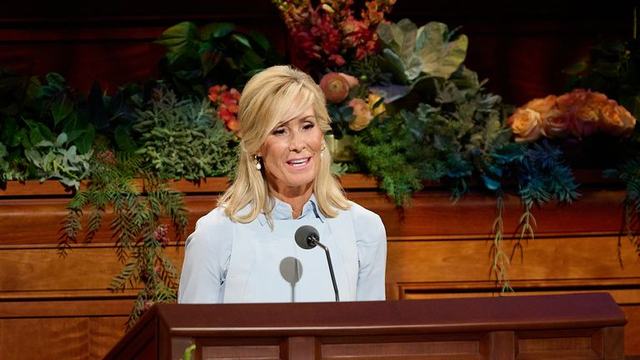
The Sculpting of Our Souls
 Open talk in Gospel Library
Ideas for Opening the Lesson
- Display an umbrella and a rock, or pictures of them. Ask, “What is the difference between protection from a storm and a foundation during a storm?” Read Sister Runia’s statement about the gospel being a solid rock, and invite class members to consider how Jesus Christ sustains them through difficulties rather than preventing every difficulty.
- Display building instructions while keeping the picture of the finished project hidden. Ask what helps someone follow instructions without seeing the final result. Introduce Jaac’s illustration about trusting the designer, and connect it to trusting Heavenly Father when the outcome of our lives remains unclear.
- Write “Not understanding is not the same as not believing” on the board. Give class members a quiet moment to consider what they know about God even when they do not understand their circumstances. Invite voluntary responses without asking anyone to disclose painful personal details.
- Show a piece of clay or a picture of an unfinished sculpture. Ask, “What does a skilled sculptor see in this material that others may not see?” Introduce Sister Runia’s teaching that God shapes us into something only He knows we can become.
- Read “All these things shall give thee experience, and shall be for thy good.” Invite class members to identify words that offer hope or raise questions. Explain that the discussion explores how Christ supports and refines us through experiences we cannot simply fix, while leaving room for grief and unanswered questions.
Topics
Build on Christ During Life’s Storms
Sister Runia contrasts the expectation that gospel living prevents hardship with the reality that everyone experiences storms. The gospel provides a sure foundation rather than an umbrella that keeps every difficulty away. Building on Jesus Christ gives us stability even when circumstances remain painful.
The gospel isn’t the umbrella; it’s the solid rock we’re standing on during the storm—that “sure foundation … whereon if men build they cannot fall.”
- What does the difference between an umbrella and a solid rock teach us about the blessings of living the gospel?
- How can we trust the Lord’s promises without assuming that righteousness prevents every hardship?
- What does building on Jesus Christ look like in an ordinary week?
- What experiences help you recognize that Christ sustains you even when a problem remains unresolved?
- When life feels unstable, which practices help you remain anchored to the Savior?
- How can our quorum or Relief Society offer steady support without suggesting that greater faith makes every storm disappear?
Learn Through Refining Experiences
Sister Runia teaches that mortal experience helps us grow and become like God. Difficult circumstances and unfulfilled righteous desires can become part of that refining process, even when growth looks like unraveling from the outside. God sees possibilities in us that we cannot yet see.
I testify that during those sanctifying experiences, when growth is taking place and God is at work, our stories may not look like success to others. In fact, on the outside it may look like things are sort of unraveling or falling apart, and it will certainly feel that way.
- What does “All these things shall give thee experience, and shall be for thy good” teach you about mortal life?
- How does Sister Runia’s image of a “laboratory of life” help you understand discipleship?
- Why might spiritual growth look different from outward success?
- What experiences help you recognize growth in compassion, patience, or humility during difficulty?
- How can we seek learning in adversity without pressuring ourselves or others to find an immediate explanation for suffering?
- What changes when we measure progress by becoming more like Christ rather than by having an easier life?
Believe in God’s Love Without Every Answer
Sister Runia draws on Nephi’s testimony that he knows God loves His children even though he does not understand all things. She distinguishes not understanding from not believing and describes how confidence in God’s love changes her reflections. Faith allows us to acknowledge real questions while holding to what we know about Him.
I may not understand everything, but I absolutely believe God sees you, loves you, and knows your story—a story that is both personal and purposeful!
- What truths about Heavenly Father help you when answers remain unclear?
- What does “Not understanding is not the same as not believing” make room for in a life of faith?
- How can knowing that God loves you shape the questions you bring to Him?
- What experiences strengthen your confidence that God sees you personally?
- How can we respond compassionately when someone expresses both belief and uncertainty?
- What helps you pray honestly about grief or confusion while continuing to trust God?
Trust God With Your Personal Story
Sister Runia teaches that each person’s story is personal and purposeful, so comparison with others does not reveal its value. Jaac’s building illustration encourages trust in the Designer even when the finished picture is unavailable. Faith in Christ helps us keep moving forward when our lives do not follow the story we imagine.
It will take your finest faith in Christ to keep putting together the pieces—the ones that make sense but also the ones that don’t.
- How does remembering that your story is personal help you resist comparison?
- What does Jaac’s illustration teach about trusting God without seeing the finished picture?
- When an important righteous desire remains unfulfilled, what helps you continue following Christ?
- How can we acknowledge the pain of an unexpected life story while remaining open to God’s guidance?
- What experiences help you trust the Designer when the pieces do not seem to fit?
- What is one faithful step you can take now without knowing how everything turns out?
Turn to Christ for Healing and Joy
Sister Runia invites us to turn toward Christ when life feels broken. His love and work extend beyond our present circumstances, and He offers healing while making room for joy. Her invitation to choose Christ points us toward a relationship with the Savior rather than toward the expectation that we can fix everything ourselves.
We all have a choice right now. Let’s choose Christ, who can heal the wounds of this world while carving out room for joy!
- What does choosing Christ look like when grief, disappointment, or anger feels overwhelming?
- How does the assurance that Christ’s love is bigger than your present story give you hope?
- In what ways can the Savior offer healing even when circumstances do not change?
- What experiences help you recognize that sorrow and joy can coexist?
- How can we help someone turn toward Christ while still listening patiently to their pain?
- What invitation from the Savior can you act on this week to make more room for His healing?
Invite the Savior to Shape Your Soul
The sculpting story illustrates the difference between struggling alone and accepting a master’s help. Sister Runia teaches that pride can interfere with inviting the Savior into our growth, and His refining work may feel uncomfortable. As we humbly welcome Him, He helps us become more like Him while preserving our unique identity.
My friends, there is sculpting taking place within each of our souls. To invite the Savior to become involved is hard. Our pride gets in the way.
- What does the sculpting story teach about the limits of relying only on ourselves?
- How can pride keep us from inviting the Savior’s help?
- What does a sincere invitation for Christ to shape your soul look like in prayer and daily action?
- How can you respond faithfully when correction or change feels uncomfortable?
- What experiences help you recognize the Master’s hand in your developing character?
- Which Christlike quality do you feel invited to cultivate, and what step can you take toward it?
Additional Discussion Questions
- Which teaching in this talk most changes how you view your current circumstances, and why?
- How do the images of the rock, the building instructions, and the sculpture complement one another?
- How does the hope of becoming like the Savior influence the way you approach an unresolved difficulty?
- What is the difference between trusting God and pretending that suffering does not hurt?
- How can our quorum or Relief Society become a place where people feel safe expressing grief and unanswered questions?
- What assumptions about another person’s spiritual progress does this talk invite us to reconsider?
- How can we bear testimony of God’s love without claiming to know why a particular hardship occurs?
- When you cannot fix someone’s situation, what forms of Christlike service remain available to you?
- What daily habit helps you notice the Savior’s sustaining or shaping influence in your life?
- What specific action do you feel prompted to take because of this talk, and how can you make room for it this week?
