
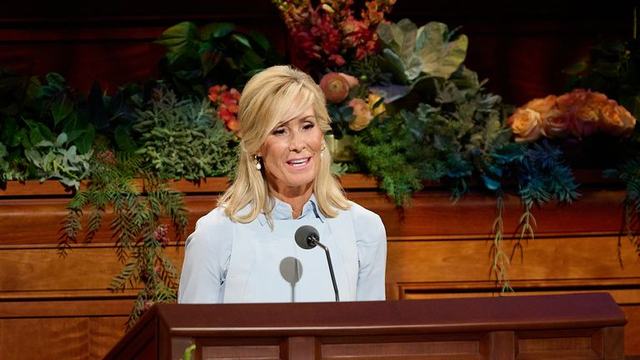
The Sculpting of Our Souls
 Open talk in Gospel Library
Contents
Before Reading
Before reading or listening to the talk, consider the following questions:
- What do I expect the gospel to provide when I face adversity?
- How can I trust God’s love when I do not understand what happens in my life?
- What is the difference between seeking relief from suffering and allowing God to help me grow through it?
- How does Jesus Christ help me move forward when my life differs from the story I envision?
- What does it mean to invite the Savior to sculpt my soul?
Topics
Learn Through Experiences That Refine Your Soul
Sister Runia teaches that mortal experience is essential to spiritual growth and that we cannot obtain its lessons simply by avoiding hardship. God uses refining experiences to help us become like Him, even when our circumstances feel painful or appear unsuccessful to others. His shaping work includes both difficult events and righteous desires that remain unfulfilled.
God’s answer implies that experience is valuable, and I’m learning the only way to get it is to go through it.
It is precisely because He loves us that we’re having these tempering, refining experiences. God knows, and we are here to learn, that we must become like Him so we can live with Him!
And a godlike life is carved from the very things that make it hard—the gut-wrenching things that happen and the righteous desires that haven’t.
- What does the Lord’s response to Joseph Smith teach about the value of difficult experiences?
- Why does Sister Runia describe mortality as a laboratory of life?
- Why might spiritual growth look like unraveling rather than success to an outside observer?
- What current experience invites me to develop a Christlike attribute?
- How does the promise that experience can be for my good affect the way I approach an unresolved difficulty?
- When my righteous desires remain unfulfilled, what helps me stay open to God’s refining influence?
Build on Christ During Life’s Storms
Sister Runia distinguishes the blessings of gospel living from an expectation that obedience prevents all suffering. The gospel provides a sure foundation during storms rather than an umbrella that keeps every storm away. Confidence in God’s love allows us to acknowledge what we do not understand while continuing to believe.
The gospel isn’t the umbrella; it’s the solid rock we’re standing on during the storm—that “sure foundation … whereon if men build they cannot fall.”
God’s love has moved me from questions that begin with “why” to reflections that begin, “I know that God loves me, so what is supposed to be happening here?”
Not understanding is not the same as not believing.
- How does the image of a solid rock differ from the image of an umbrella?
- What does Nephi’s response demonstrate about faith amid incomplete understanding?
- How does Sister Runia distinguish not understanding from not believing?
- Where do I expect obedience to protect me from every hardship, and how can I adjust that expectation?
- What truths about God’s love remain a firm foundation for me when answers are unclear?
- How can I approach a current question with the reflection, “I know that God loves me, so what is supposed to be happening here?”
Trust God With Your Personal, Purposeful Story
Sister Runia teaches that God knows each person’s story and that suffering does not make that story meaningless. She discourages comparison and uses Jaac’s Lego illustration to show how we can follow God’s guidance without seeing the finished design. Trusting the Designer helps us continue when we must surrender the future we envision.
I may not understand everything, but I absolutely believe God sees you, loves you, and knows your story—a story that is both personal and purposeful!
Our suffering means something. It’s not a detour from the path; it gives purpose to our path.
It will take your finest faith in Christ to keep putting together the pieces—the ones that make sense but also the ones that don’t.
- What does Sister Runia mean when she describes our stories as personal and purposeful?
- How does Jaac’s Lego illustration explain trust in Heavenly Father’s plan?
- Why does Sister Runia discourage comparing our lives with the lives of others?
- What comparisons distract me from recognizing God’s care in my own story?
- What expectations about my future do I struggle to surrender to God?
- What guidance can I follow now, even when I cannot see how all the pieces fit together?
Turn to Christ for Healing and Joy
Sister Runia acknowledges the deep pain of a life that does not unfold as we hope. She teaches that Christ’s love and work reach beyond our present circumstances and that He can heal what feels broken. Turning toward Him creates room for healing and joy even amid grief.
Consider this: Christ’s work in your life and His love for you are bigger than your present story. And He can fix what feels badly broken.
You can curse God and blame Him, or you can turn to Him and let Him heal you.
Let’s choose Christ, who can heal the wounds of this world while carving out room for joy!
- What does Sister Runia teach about the reach of Christ’s love beyond our present story?
- What choice does Ryan’s counsel invite a person in pain to consider?
- How does Sister Runia connect choosing Christ with healing and joy?
- What feels broken in my life, and how can I bring it honestly to the Savior?
- What does turning toward Christ look like for me today?
- What moments of comfort or joy help me recognize Christ’s healing influence without denying my grief?
Invite the Savior to Shape Your Soul
Through her brother’s sculpting experience, Sister Runia illustrates the need for humility and the help of a master. Pride can lead us to struggle alone, while inviting the Savior allows Him to shape what we cannot shape ourselves. His work sometimes feels unexpectedly deep or abrupt, but His loving influence helps us become what He knows we can become.
And yet, without a doubt, a master’s hand had shaped what mine could not.
My friends, there is sculpting taking place within each of our souls. To invite the Savior to become involved is hard. Our pride gets in the way.
God is shaping us into something only He knows we can become.
- How does the sculpting instructor illustrate the Savior’s ability to help us?
- What role does pride play in resisting the Savior’s involvement?
- Why does the sculpting analogy suggest that transformation may feel uncomfortable?
- Where do I insist on managing spiritual growth without asking the Savior for help?
- How can I express a sincere invitation for the Savior to work in my life?
- What evidence of the Master’s hand do I recognize in my character, desires, or relationships?
Look Forward to Becoming Like the Savior
Sister Runia closes with hope that suffering, loneliness, and pain do not last forever. She looks forward to a time when we recognize how the Savior’s shaping work helps us become like Him and respond with gratitude. This eternal perspective gives meaning to the process of growth without requiring us to understand it fully now.
I don’t pretend to know how it works, but it feels like a sort of divine mending that changes what’s happening to you into something happening for you!
We will thank Him for all of it—the molding, the shaping, the pain, and the adversity that have helped us become more like Him.
“For we shall see him as he is,” and “we shall be like him,” I joyfully testify in the name of Jesus Christ, amen.
- What future hope does Sister Runia offer to those who experience suffering and loneliness?
- How does becoming like the Savior connect the talk’s imagery of sculpting with its closing testimony?
- What does the phrase “divine mending” suggest about the Savior’s transforming work?
- How does the promise of becoming like the Savior influence my perspective on present hardship?
- What signs of spiritual growth can I recognize even while some pain remains unresolved?
- What can I thank the Savior for today as I continue to trust Him with what I do not yet understand?
