
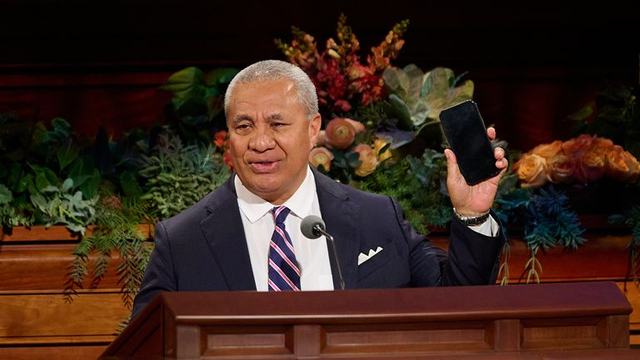
Prophets, Seers, and Revelators
 Open talk in Gospel Library
Ideas for Opening the Lesson
- Write “What a blessing it is to live in a time when apostles and prophets are on the earth” on the board. Invite class members to silently consider what makes this blessing meaningful to them. Ask a few volunteers to share, then introduce Elder Sikahema’s invitation to value prophetic counsel.
- Read Doctrine and Covenants 90:5 together and ask what it means to treat the oracles of God “as a light thing.” Invite class members to contrast merely having access to conference messages with thoughtfully receiving and applying them. Explain that the lesson explores how to move from access to action.
- Briefly summarize the Wolfgramms’ journey, acknowledging the profound sorrow surrounding their infant son’s death. Read Elder Sikahema’s explanation that they seek an Apostle who holds priesthood keys connected with eternal family ordinances. Invite discussion about how the restored gospel offers hope amid grief, without suggesting that faith removes sorrow or requires anyone to imitate this journey.
- Display the words “Hear Him!” and read Joseph Smith—History 1:17. Ask how the First Vision connects Jesus Christ, the Restoration, and living prophets. Invite class members to look throughout the lesson for ways prophetic teachings help them hear and follow the Savior.
- Invite class members to think of a prophetic teaching that gives them direction, comfort, or encouragement. Allow a quiet moment for reflection, then invite two or three brief responses. Introduce the talk as an opportunity to consider why prophetic voices matter and how to receive their messages more intentionally.
Topics
Recognize God’s Guidance Through Living Prophets
Elder Sikahema contrasts a famine of hearing the Lord’s words with the blessing of living prophets and apostles. Through Amos and President Jeffrey R. Holland’s testimony, he affirms that God reveals His will to His servants. This continuing revelation provides direction for people who thirst for the word of the Lord.
“Are the heavens open? Does God reveal His will to prophets and apostles as in days of old? That they are and that He does is the unflinching declaration of The Church of Jesus Christ of Latter-day Saints to all the world.”
- What does Amos’s image of a famine help us understand about our need for the Lord’s words?
- How does knowing that God speaks through living prophets affect your relationship with Him?
- What experiences help you recognize the value of prophetic direction in daily life?
- Where do you notice a thirst for spiritual guidance among people around you, and how can you respond with kindness?
- What can you do this week to seek the Lord’s guidance more intentionally through prophetic teachings?
Hear Jesus Christ Through the Restoration
Elder Sikahema identifies the First Vision as the opening of the work of restoring the Savior’s ancient Church through Joseph Smith. He connects the Restoration with greater truths, priesthood authority, sacred ordinances, additional scripture, and knowledge of God’s plan. The Father’s invitation to hear His Son places Jesus Christ at the center of this work.
“In the years that followed this momentous event, greater truths, priesthood authority, sacred ordinances, additional scriptures, and knowledge of God’s plan of salvation would all be restored or rediscovered through the Prophet Joseph Smith.”
- How does the Father’s invitation, “Hear Him!” help you understand the purpose of the Restoration?
- Which restored truth most helps you know Jesus Christ, and why?
- How do restored scriptures and sacred ordinances help you hear the Savior?
- What experiences strengthen your gratitude for Joseph Smith’s role in the Restoration?
- What change in your study or worship can help you make Jesus Christ more central in your life?
Find Eternal Family Hope Through Priesthood Keys
Elder Sikahema explains that his grandparents’ desire to hear an Apostle rests partly on their understanding of priesthood keys and eternal family ordinances. Their story connects the Restoration with the hope of being bound together as a family forever. That hope gives meaning to their journey amid profound grief.
“They were sailing toward an Apostle, who held priesthood keys, held the authority for the ordinances that would later seal them as an eternal family.”
- What does the Wolfgramms’ story teach about the relationship between priesthood keys and eternal family ordinances?
- How does the promise of eternal family relationships shape your understanding of God’s plan?
- How can hope in Jesus Christ and temple promises coexist with deep sorrow?
- What experiences with temple worship or family history help you appreciate the blessings of the Restoration?
- How can we discuss eternal family blessings in ways that include and strengthen people in varied family circumstances?
Exercise Faith and Courage Amid Grief
The Wolfgramms’ journey illustrates a desire to receive apostolic teaching even amid loss and hardship. Elder Sikahema honors their faith and courage while acknowledging their despair and mourning. He also emphasizes their desire to learn their duty and bless others with the restored gospel of Jesus Christ.
“They sailed to sit at the feet of an Apostle, who would teach them their duty so they could bless others on their island with the message of the restored gospel of Jesus Christ.”
- What aspects of the Wolfgramms’ faith stand out to you, and why?
- How can prophetic teachings provide strength without minimizing the pain of loss?
- What helps you turn toward Jesus Christ when difficulties make spiritual effort feel hard?
- What examples of quiet faith and courage inspire you in your family or community?
- How can our quorum or Relief Society support those who grieve while respecting their needs and pace?
Value Prophetic Counsel Instead of Taking It Lightly
Elder Sikahema warns that easy access to prophetic messages can coexist with taking them for granted. He applies Doctrine and Covenants 90:5 to the way members receive the Lord’s servants, including through modern devices. His invitation encourages gratitude and a more deliberate response to their teachings.
“I suspect the Lord knew that even when we would have these devices (cell phones) to easily see and hear His anointed servants, many of us would still take them for granted.”
- What is the difference between having access to prophetic counsel and truly valuing it?
- What habits can cause us to treat conference messages as ordinary background noise?
- How can technology help you study and apply prophetic teachings rather than simply consume them?
- What experiences show you the value of returning to a conference message more than once?
- What specific practice can help you give greater attention to one teaching from this conference?
Receive the Lord’s Word Through His Servants
Elder Sikahema uses early concerns about Joseph Smith’s writing skills to illustrate the danger of focusing on a messenger’s limitations rather than the Lord’s revelations. He quotes the Savior’s declaration that His word is the same whether it comes through His own voice or the voice of His servants. He concludes by expressing gratitude for a legacy of faith and bearing witness of living prophets, seers, and revelators.
“What I the Lord have spoken, I have spoken, and I excuse not myself; and though the heavens and the earth pass away, my word shall not pass away, but shall all be fulfilled, whether by mine own voice or by the voice of my servants, it is the same”
- What does Doctrine and Covenants 1:38 teach about the Lord’s word through His servants?
- How can focusing on a speaker’s presentation or limitations distract us from the message?
- What helps you prayerfully receive prophetic counsel when it challenges your expectations?
- What experiences help you recognize the Savior’s guidance in a message from His servants?
- How can your response to prophetic teachings contribute to a legacy of faith for others?
Additional Discussion Questions
- How does this talk deepen your understanding of the connection between Jesus Christ, Joseph Smith, and living prophets?
- Which passage in the talk most invites you to change, and what action does it suggest?
- How can we express gratitude for living prophets through our choices rather than through words alone?
- What do the Wolfgramms’ desire to learn and their desire to serve teach us about the purpose of receiving revelation?
- How do restored truths about eternal families influence the way you care for people today?
- What helps you approach conference with both thoughtful questions and a willingness to act?
- How can our class welcome sincere questions while encouraging faith in Jesus Christ and attention to prophetic counsel?
- What small, sustainable sacrifice of time or attention can help you hear the Lord’s servants more clearly?
- How can you share a meaningful prophetic teaching with someone in a way that respects their beliefs and circumstances?
- What would it look like for our quorum or Relief Society to build a shared legacy of faith, courage, and compassionate service?
