
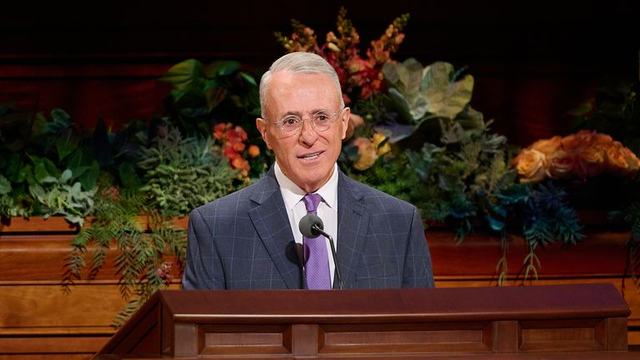
A Higher and Holier Fast
 Open talk in Gospel Library
Ideas for Opening the Lesson
- Write “More than going without food” on the board. Invite class members to identify what makes fasting an act of worship, and record their responses. Introduce Elder Soares’s invitation to honor the sacred purpose of fasting in a higher and holier way.
- Read Isaiah 58:8–9 together, focusing on the promises Elder Soares highlights. Ask which phrase gives class members hope and why. Explain that the discussion explores how sincere fasting draws us nearer to the Lord rather than merely seeking particular outcomes.
- Invite class members to silently consider what they hope to bring to the Lord through fasting: a concern, a desire for guidance, gratitude, or a willingness to serve. Allow a brief moment for reflection without requiring anyone to disclose private circumstances. Read Elder Soares’s statement about joining fasting with earnest and intentional prayer.
- Draw two columns labeled “Draw near to God” and “Turn toward His children.” Invite class members to listen as you read the paragraph beginning “Through this holy law, the Lord also invites us to look beyond ourselves.” Ask how these two purposes of fasting strengthen each other.
- Read Elder Soares’s teaching that fasting and prayer “may not remove every burden from our path, but they draw heaven near.” Invite class members to consider the difference between having a burden removed and receiving strength to endure it. Use their observations to introduce the Savior’s example of fasting and prayer.
Topics
Make Fasting an Act of Worship
Elder Soares presents fasting as a divine pattern of devotion, not merely an outward observance or a physical test of restraint. Isaiah’s teachings reveal that its sacred purpose is to refine discipleship and draw us closer to God. A higher and holier fast centers on sincere devotion to Heavenly Father and Jesus Christ.
In Isaiah chapter 58, the Lord lifted the vision of His covenant people beyond the outward observance of this law. He also revealed its divine purpose as an act of worship that shapes and refines our discipleship and draws us closer to Him.
- What distinguishes fasting as worship from simply going without food?
- Which phrase in Elder Soares’s description of fasting helps you better understand its sacred purpose?
- What attitudes or distractions can make fasting feel like an outward observance, and how can we redirect our hearts?
- What experiences help you recognize that fasting draws you closer to Heavenly Father and Jesus Christ?
- What is one change you can make to approach your next fast with greater sincerity and devotion?
Unite Fasting with Intentional Prayer
A sincere fast includes earnest, intentional prayer that expresses the true desires of our hearts and seeks the Lord’s will. Together, fasting and prayer deepen faith, love, humility, and awareness of our dependence on God. They soften our hearts and prepare us to receive the Holy Ghost and personal revelation.
Our hearts are softened, our souls become more receptive to the influence of the Holy Ghost, and we are better prepared to receive personal revelation and move forward along the covenant path.
- What does earnest and intentional prayer look like during a fast?
- How does seeking to understand God’s will change the way we express our desires in prayer?
- What helps you make time for meaningful prayer rather than allowing a fast to pass without it?
- What experiences with fasting and prayer help you recognize your dependence on the Lord?
- How can you prepare your heart to become more receptive to the Holy Ghost during your next fast?
Follow Christ’s Pattern of Spiritual Preparation
Jesus Christ perfectly exemplifies fasting and prayer as preparation for His sacred mission. His communion with the Father shows the importance of seeking alignment with the Father’s will. Following His pattern brings divine strength to resist temptation and to overcome or endure difficult circumstances.
His example teaches us that fasting and prayer may not remove every burden from our path, but they draw heaven near and endow us with divine power to overcome or endure whatever circumstances we may face, giving us the spiritual fortitude to remain faithful to the Father’s will.
- What does the Savior’s choice to prepare through fasting and prayer teach us about spiritual strength?
- How can we follow the purpose of the Savior’s example in our own spiritual preparation?
- What responsibilities or challenges in your life invite more intentional spiritual preparation?
- How do you recognize the Lord’s help when a burden remains rather than disappears?
- What experiences can you share, as appropriate, that illustrate how fasting and prayer strengthen faithfulness amid difficulty?
Align Your Desires with God’s Will
Fasting expresses faith and trust in the Lord rather than functioning only as a request for specific blessings. It helps align our desires with His purposes and our expectations with His wisdom. Even when answers differ from what we expect, fasting and prayer deepen confidence in His plan and willingness to accept His will.
It is a way to align our desires with His purposes, and our expectations with His wisdom.
- How does fasting as an expression of trust differ from fasting only to obtain a particular outcome?
- How can we express heartfelt desires while remaining willing to accept the Lord’s will?
- What helps you maintain confidence in the Lord when answers do not come as you expect?
- What experiences help you understand the relationship between fasting, trust, and your covenants with God?
- What expectation or desire can you prayerfully examine as you seek greater alignment with the Lord?
Express Christlike Charity through Generous Giving
The law of the fast invites us to look beyond ourselves and respond to the needs of God’s children. Generous fast offerings give tangible expression to Isaiah’s call to relieve oppression and burdens. As we consecrate our means and time, the Lord helps us minister more like the Savior and become instruments in His hands.
Though our fast offerings may seem small and simple, they become consecrated expressions of compassion, concern, and service.
- How does turning toward people in need deepen the spiritual meaning of a fast?
- What does Isaiah’s invitation to “break every yoke” help us understand about relieving others’ burdens?
- How does the Savior’s example of succoring His people shape the way we give and minister?
- What experiences with giving or receiving compassionate service help you recognize the Lord’s love?
- How can you prayerfully consider generosity in both your fast offerings and the time you devote to others?
Recognize God’s Sanctifying Power in Fasting
Elder Soares teaches that the blessings of fasting often come quietly through softened hearts, stronger testimonies, inspiration, and deeper communion with the Lord. He invites us to embrace fasting more intentionally and promises miracles, greater closeness to the Savior, strength against weaknesses, and sensitivity to others’ needs. These blessings point to the Lord’s power to sanctify and transform us.
Fasting, when observed with joy and joined with prayer and generosity, brings sweeter communion with the Lord and a deeper, more personal connection with Him.
- What quiet spiritual blessings can we overlook when we focus only on dramatic answers?
- What helps you approach fasting with joy rather than merely a sense of obligation?
- Which blessing Elder Soares describes speaks most directly to your current spiritual needs, and why?
- What experiences help you recognize a softer heart, a stronger testimony, or greater sensitivity to others through fasting?
- How can you remember and recognize the Lord’s sanctifying influence as you seek to fast more intentionally?
Additional Discussion Questions
- How do prayer, generosity, and trust work together to make a fast higher and holier?
- What does Isaiah’s promise “Here I am” teach you about the Lord’s character and your relationship with Him?
- How does fasting help us move forward along the covenant path in everyday decisions?
- What assumptions about fasting does this talk invite us to reconsider?
- How can we seek personal revelation while also becoming more attentive to the needs of others?
- How can our quorum or Relief Society encourage meaningful fasting without comparing personal experiences or contributions?
- How does consecrating our time and means deepen our commitment to the Lord’s work?
- What can we learn from one another about preparing spiritually for a fast while respecting the privacy of sacred experiences?
- How can pondering Isaiah 58 influence both our worship and our ministering?
- What specific invitation from this talk do you feel prompted to act on, and what helps you follow through?
