
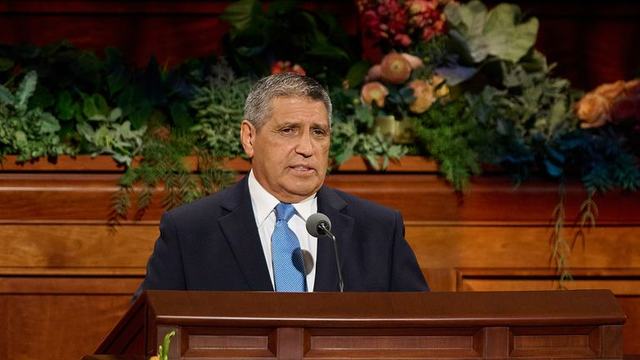
Trusting the Lord Through Tithes and Offerings
 Open talk in Gospel Library
Ideas for Opening the Lesson
- Write “Trusting the Lord” on the board and invite class members to consider what trust looks like when resources feel limited. Read Elder Giuffra’s concluding statement that tithing is a law of faith. Ask the class to look for ways the talk connects financial decisions with a relationship of trust in Jesus Christ.
- Read the sister’s explanation of why she feels unable to pay tithing, followed by her prayer asking Heavenly Father for help. Ask what changes between these two statements. Invite discussion about faith and compassion without asking anyone to disclose personal financial circumstances.
- Write “Obey because we love God” and “Obey because we hope for blessings” on the board. Read the principle Elder Giuffra’s wife teaches their family. Invite class members to consider how love for God shapes their approach to commandments.
- Draw a window on the board and read the talk’s quotation about the windows of heaven. Invite class members to name spiritual and temporal blessings mentioned in the talk. Explain that the discussion also explores the speaker’s assurance that obedience does not eliminate trials.
- Give class members a quiet moment to reread a paragraph that speaks to their current circumstances. Invite a few volunteers to share a phrase and explain why it matters to them, without sharing anything they prefer to keep private. Use their observations to introduce the talk’s themes of trust, love, and covenant commitment.
Topics
Trust the Lord Through Tithes and Offerings
Elder Giuffra presents tithing as a law of faith that demonstrates trust in the Lord. The sister in Puerto Montt faces genuine financial limitations yet chooses to seek the Lord’s help and faithfully contribute tithes and fast offerings. Her example invites disciples to approach this commandment with faith rather than rely only on what seems possible from a worldly perspective.
I testify that the law of tithing is a law of faith. As we obey it, we demonstrate our trust in the Lord and allow Him to work miracles in our lives, often in ways we do not expect.
- What does the sister’s account teach us about trusting the Lord when obedience feels financially difficult?
- Why does Elder Giuffra describe tithing as a law of faith rather than simply a financial obligation?
- How can we acknowledge genuine financial hardship while encouraging faith in the Lord?
- What experiences help you trust the Lord when you cannot see how things will work out?
- What change in your attitude toward tithes and offerings can help you express greater trust in Jesus Christ?
Seek Heavenly Father’s Help Through Prayer and Fasting
The sister turns to Heavenly Father and asks Him to help her live the law of tithing. Elder Giuffra and his companion also pray and fast as they prepare to teach her again. Their experience illustrates how seeking divine help brings peace and assurance as people move forward in faith.
Last night I knelt in prayer and told Heavenly Father that I truly wanted to become a member of His Church and that He would need to help me live this law.
- What stands out to you about the sister’s request for Heavenly Father’s help?
- How can prayer move us from focusing only on our limitations to seeking the Lord’s guidance?
- What do the missionaries’ prayer and fasting teach us about supporting someone who faces a difficult commandment?
- When do you experience peace through prayer even though a difficult circumstance remains unresolved?
- What commandment or commitment can you bring to Heavenly Father this week with a specific request for help?
Keep Commandments Because You Love God
Elder Giuffra emphasizes that love for God, rather than the pursuit of rewards, motivates obedience. He teaches that commandments draw people closer to the Savior, offer protection, and help them remain free from sin. This perspective places the relationship with God at the center of paying tithes and offerings.
We keep the commandments because we love God, not merely because we hope to receive the blessings that come from obedience.
- How does obeying out of love differ from obeying primarily to receive a blessing?
- What helps you cultivate love for God when a commandment requires sacrifice?
- How can paying tithes and offerings become an expression of gratitude and love rather than merely a routine transaction?
- What experiences help you see commandments as a way to draw closer to the Savior?
- How can we teach this commandment in our families without making obedience sound like a bargain with God?
Recognize Spiritual and Temporal Blessings
Elder Giuffra describes blessings that include greater stability, employment, education, stronger marriages, peace, and hope. He shares President Nelson’s teaching about tithing and cycles of poverty and describes faith and diligent effort in the lives of people he serves. His examples invite class members to recognize the Lord’s help in both spiritual and temporal forms rather than focus exclusively on money.
I have also witnessed the Lord open doors for employment, provide education, strengthen marriages, and fill faithful hearts with peace and hope.
- What range of blessings does Elder Giuffra identify, and how does that broaden your understanding of the windows of heaven?
- Why is it important to notice peace, hope, and stronger relationships alongside temporal blessings?
- How does the speaker’s reference to faith and diligent effort shape your understanding of his examples of temporal progress?
- What experience helps you recognize a blessing from the Lord that comes in an unexpected form?
- What practice can help you notice and give thanks for the Lord’s blessings more consistently?
Trust God’s Promises During Continuing Trials
Elder Giuffra explicitly teaches that obedience does not remove uncertainty, financial hardship, illness, or loss. He assures listeners that the Lord knows their circumstances and fulfills His promises in His own time and way. Faith therefore includes trusting God when blessings do not appear immediately or take the form people expect.
Yet even when we do not understand the purpose of our trials, we can have the assurance that the Lord knows our circumstances, honors our obedience, and fulfills His promises in His own time and way.
- How does this assurance help us understand the relationship between obedience and ongoing hardship?
- What helps you remain faithful when a hoped-for blessing does not come on your preferred timetable?
- How can we discuss blessings without implying that financial difficulty signals a lack of faith?
- What experiences strengthen your assurance that the Lord knows your circumstances?
- How can we offer meaningful support to someone who faithfully keeps commandments and still faces serious difficulties?
Prepare for Consecration Through Faithful Sacrifice
Quoting President Dallin H. Oaks, Elder Giuffra teaches that paying tithing brings unique spiritual blessings and expresses acceptance of the law of sacrifice. Tithing also prepares disciples for consecration and other higher laws of the celestial kingdom. He connects these laws with temple covenants that deepen and perpetuate a relationship with Jesus Christ.
Tithe paying is evidence that we accept the law of sacrifice. It also prepares us for the law of consecration and the other higher laws of the celestial kingdom.
- What does paying tithing teach us about accepting the law of sacrifice?
- How can regular acts of giving prepare our hearts for consecration?
- How does Elder Giuffra’s connection to temple covenants deepen the meaning of tithing?
- What experiences show you that sacrificing for the Lord can strengthen your relationship with Jesus Christ?
- What adjustment in how you view your resources can help you become more willing to serve the Lord and others?
Additional Discussion Questions
- How does Elder Giuffra’s account connect trust in the Lord with love for Him?
- What does the mission president’s counsel teach about respecting the sister’s opportunity to exercise faith and receive blessings?
- How can we follow the missionaries’ example of seeking guidance rather than assuming we understand another person’s spiritual possibilities?
- What does the sister’s faithful pattern of paying both tithing and fast offerings invite you to consider about your own discipleship?
- How does the invitation to “prove me now herewith” relate to trusting God’s timing rather than demanding a particular outcome?
- How can we bear testimony of the Lord’s blessings while remaining sensitive to people whose circumstances differ from ours?
- What can this talk teach children or new members about the purpose of commandments?
- How can faith, prayer, diligent effort, and practical support work together when someone faces financial uncertainty?
- Which teaching in this talk most strengthens your relationship with Jesus Christ, and why?
- What specific invitation do you feel to act on this week, and how can you seek the Lord’s help in following it?
