
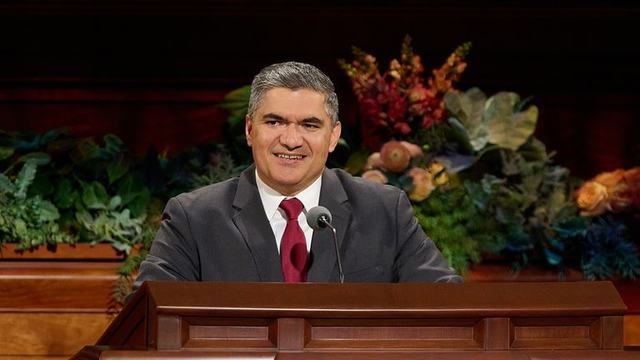
I Am a Child of God
 Open talk in Gospel Library
Ideas for Opening the Lesson
- Write “I am a child of God and He loves me” where everyone can see it. Invite class members to ponder which part of that statement they most need to remember today. Ask a few volunteers to share how this truth influences their daily choices.
- Read Elder Fale’s account of showing his children their baby pictures, including his question about what they do to earn their parents’ love. Ask what this story teaches about Heavenly Father’s love. Acknowledge that earthly family experiences vary and that God’s love reaches every person, regardless of those experiences.
- Invite class members to read John 3:16 silently and identify what the verse reveals about Heavenly Father. Ask how the gift of Jesus Christ helps them understand the statement “He loves me.” Connect their responses to Elder Fale’s testimony that Jesus Christ is evidence of the Father’s love.
- Write three phrases on the board: “Understand Jesus Christ,” “See beyond labels,” and “Believe change is possible.” Explain that Elder Fale identifies these as blessings of understanding Heavenly Father’s love. Invite class members to consider which blessing they most need as the class studies the talk.
- Invite class members to reflect silently on a time when they feel valued, included, or loved. Ask volunteers to share, without disclosing anything private, what helps communicate that love. Introduce Elder Fale’s invitation to help ensure that no one is sitting, standing, or walking alone.
Topics
Remember Your Divine Identity and Heavenly Father’s Love
Elder Fale teaches that every person is a beloved spirit child of heavenly parents with a divine nature and destiny. Understanding Heavenly Father’s love and our identity as His children gives purpose, supports daily and eternal happiness, and protects against deception. His love is not something we earn or lose; remembering it gives us courage to trust Him and grow.
Understanding our Father’s love and our true identity as His children is essential for our daily and eternal happiness. It prevents deception and gives purpose to this mortal life.
- What does the statement “I am a child of God and He loves me” help you understand about your worth?
- How does remembering your divine identity influence your response to disappointment, criticism, or comparison?
- What experiences help you recognize Heavenly Father’s love personally?
- Why do we sometimes struggle to believe that God’s love is not something we must earn?
- What daily practice can help you keep your divine identity in your mind and heart?
Recognize God’s Love Through the Divine Family Pattern
Elder Fale explains that family relationships and scriptural accounts of families help us understand our relationship with Heavenly Father. Loving earthly relationships offer a glimpse of His enduring love, even though all families have imperfections. For those without loving family experiences, Heavenly Father’s love provides power, peace, and comfort, and sacred covenants offer hope for eternal family blessings.
Even when a loving family is not part of our earthly experience, knowing that our Heavenly Father loves us can provide power, peace, and comfort, especially as we remember the eternal blessings that await all who make and keep sacred covenants—including all the blessings of an eternal family.
- What does Elder Fale’s conversation with his children teach about Heavenly Father’s love?
- How do loving relationships help us understand God’s invitation to turn to Him?
- How can we discuss the divine pattern of families while honoring people whose family experiences include pain or loneliness?
- What examples in the scriptures help you understand God’s love through family relationships?
- What can you do in a family relationship or another caring relationship to help someone feel secure, valued, and welcome?
Receive Christ Through Ordinances and Keep Your Covenants
Elder Fale warns against the deception that God’s love makes pride, rebellion, sin, or rejection of Jesus Christ inconsequential. He teaches that receiving Christ through priesthood ordinances and remaining faithful to covenants is the only way to fully understand His love and attain exaltation. Living prophets and apostles hold priesthood keys that provide access to these ordinances and covenants, revealing the Father’s continuing love.
Receiving Christ through priesthood ordinances and covenants, and then being faithful to those covenants, is the only way for us to fully understand His love and the only way to exaltation.
- How does Elder Fale distinguish Heavenly Father’s enduring love from the requirements for exaltation?
- Why is it important to understand both God’s love and our responsibility to receive and follow Jesus Christ?
- How do your covenants help you experience and understand Heavenly Father’s love?
- How do priesthood ordinances and the ministry of living prophets and apostles point you toward Christ?
- What change in your covenant keeping can help you respond more fully to Heavenly Father’s love?
Understand Jesus Christ and Join the Father’s Work
Understanding Heavenly Father’s love helps us understand Jesus Christ’s love, mission, and desire to save and bless every child of God. Christ conquers sin and the grave, teaches us to pray to our Father, and personifies the Father’s enduring love. As we wholeheartedly join Him in the Father’s work, we become more like Him.
We recognize why He is anxiously engaged in trying to save and bless all of His Father’s children. This understanding makes us eager to quickly and wholeheartedly join Him in His Father’s work. As we are anxiously engaged in this work, we are able to become more like Him.
- How does understanding Heavenly Father’s love deepen your understanding of Jesus Christ’s mission?
- What aspects of the Savior’s ministry most clearly reveal the Father’s love to you?
- How does praying to “our Father” influence your relationship with Heavenly Father?
- What experiences in serving others help you become more like Jesus Christ?
- What does joining the Father’s work “quickly and wholeheartedly” look like in your life this week?
See Beyond Labels and Include Every Child of God
Elder Fale teaches that understanding God’s love protects us from divisive and misleading labels applied to ourselves and others. Seeing people as beloved children of God encourages repentance, restrains judgment, and strengthens hope. This understanding moves us to love actively and ensure that no one is left alone.
We see ourselves and all of God’s children as beloved and divine. We become quick to repent, slow to judge, and ever hopeful that the best is yet before us. We are forever willing to love and to make sure that no one is ever sitting, standing, or walking alone.
- How can labels obscure someone’s identity as a beloved child of God?
- What helps you notice when a label influences how you see yourself or another person?
- How does remembering God’s love help you become quick to repent and slow to judge?
- What experiences with inclusion or ministering show you the power of helping someone feel less alone?
- What can our quorum or Relief Society do to ensure that people on the margins feel noticed and welcome?
Turn to Christ Today and Trust His Redeeming Grace
Elder Fale rejects the lie that it is too late to change, turn to Christ, or receive His redeeming grace. The prodigal son and the Savior’s search for the one sheep reveal God’s invitation to return. Understanding the Father’s love gives us hope and encourages us to act today rather than postpone repentance.
Third, understanding our Father’s love protects us from the pernicious lie that it is too late for someone to change, too late for someone to turn to Christ, and too late to receive His redeeming grace.
- Why can the belief that it is too late to change feel convincing, and how does this talk challenge it?
- What do the prodigal son and the search for the one sheep teach about Heavenly Father and Jesus Christ?
- How does confidence in God’s love give you courage to repent rather than hide from Him?
- What experiences or scriptural examples strengthen your hope that Christ makes change possible?
- What is one step you can take today to turn more fully toward Jesus Christ?
Additional Discussion Questions
- How does Elder Fale’s teaching connect knowing who we are with choosing how we live?
- What difference do you notice between understanding God’s love intellectually and allowing it to shape your daily decisions?
- How can we communicate both enduring love and an invitation to repent without weakening either message?
- What does the invitation to “come home” mean for someone seeking a stronger relationship with Heavenly Father?
- How can our teaching about eternal family blessings offer hope without minimizing present pain?
- How does John 3:16 illuminate the relationship between Heavenly Father’s love and Jesus Christ’s saving mission?
- What role does the Holy Ghost play in helping us know that we are loved children of God?
- How can remembering another person’s divine identity change the way we approach a disagreement?
- What can our quorum or Relief Society do to make returning to church feel less intimidating for someone?
- Which teaching from this talk do you feel invited to act on, and what specific action can you take this week?
