
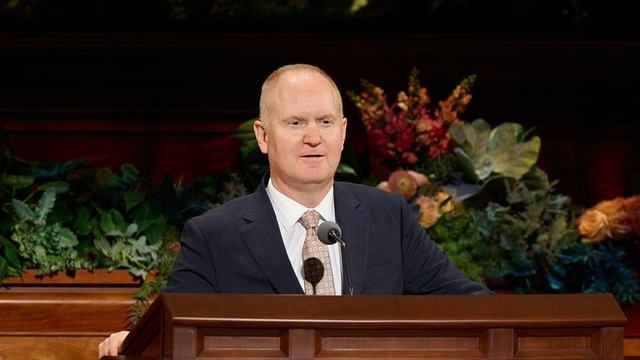
Comfort from the Holy Ghost
 Open talk in Gospel Library
Ideas for Opening the Lesson
- Write “I can’t fix this” on the board and invite class members to silently consider a situation that feels beyond their ability to resolve. Explain that Elder Eyring addresses the comfort available through Jesus Christ when personal strength is not enough. Allow people to reflect without asking them to disclose painful details.
- Read the Savior’s promise quoted at the end of the talk: “I will not leave you comfortless: I will come to you.” Ask what this promise teaches about the Savior’s character. Invite the class to look throughout the lesson for ways He fulfills it through the Holy Ghost.
- Write “Comfort,” “Hope,” and “Faith” on the board. Read Elder Eyring’s explanation that without divine comfort we risk losing hope, and without hope we can lose faith and stop trying. Ask class members how these three gifts support one another.
- Briefly summarize Elder Eyring’s account of sharing a meal with a couple grieving the loss of a baby. Ask what it means to mourn with someone rather than try to fix their grief. Explain that the discussion explores both receiving divine comfort and helping others feel it.
- Invite class members to silently identify a phrase in the talk that brings them hope. Ask a few volunteers to read their phrase and explain why it matters to them. Use their responses to introduce the Savior’s comfort, the Holy Ghost, and the eternal perspective of resurrection.
Topics
Turn to Jesus Christ with Unmanageable Burdens
Elder Eyring teaches that everyone encounters burdens beyond personal strength, experience, or willpower. Jesus Christ understands our suffering because He suffers for us. As we humbly turn to Him and cast our burdens on Him, He promises to draw near and provide comfort.
Our Savior, Jesus Christ, suffered for us. He knows exactly how we feel, especially in our darkest and most trying times. As you humbly turn to the Lord and cast your burdens on Him, you have His promise: “Draw near unto me and I will draw near unto you.”
- What does Elder Eyring’s opening statement, “I can’t fix this,” help us understand about the limits of self-reliance?
- How does knowing that Jesus Christ understands our feelings influence the way we approach Him in prayer?
- What does casting our burdens on the Lord look like while we continue to fulfill our responsibilities?
- What experiences help you recognize the Savior’s nearness during a challenge, even when the challenge remains?
- What is one practical way you can draw nearer to the Savior this week when a burden feels too heavy?
Mourn with Others and Offer Compassionate Comfort
Elder Eyring describes how shared experiences of loss help him and his wife offer empathy to a grieving couple. Their conversation makes room for sorrow, healing, and hope without suggesting that grief has a simple solution. His account also illustrates how priesthood blessings can offer comfort through the Spirit.
As we sat at the table expressing empathy gained through our own suffering, we were grateful “to mourn with those that mourn … and comfort those that stand in need of comfort.”
- What do you notice about the way Elder Eyring and his wife approach the grieving couple?
- How does mourning with someone differ from trying to explain or solve that person’s suffering?
- What forms of listening or practical support help people feel less alone in grief?
- Without sharing private details, what experiences show you the value of someone’s compassionate presence?
- How can our quorum or Relief Society offer ongoing support when grief lasts longer than others expect?
- How can we sensitively help someone access a priesthood blessing without pressuring them or assuming what they need?
Prioritize the Holy Ghost’s Constant Companionship
Elder Eyring identifies the Holy Ghost as the means through which the Savior’s peace becomes manifest. He emphasizes prophetic warnings about the need for the Spirit’s constant influence amid increasing temporal and spiritual turbulence. Seeking to live worthy of that companionship is one of our highest priorities.
The Savior’s peace is made manifest through the comforting power of the Holy Ghost. That comfort will help us when we go through the inevitable hardships of life and times when we can’t fix things on our own. Living worthy of the constant companionship of the Holy Ghost should be one of our highest priorities.
- Why does Elder Eyring connect spiritual survival with the constant influence of the Holy Ghost?
- How can the Spirit’s comfort sustain us even when our circumstances do not immediately improve?
- What practices help you make room for the Holy Ghost in ordinary daily life?
- What experiences help you recognize the difference between temporary distraction and spiritual comfort?
- What adjustment to your priorities can help you seek the Spirit’s companionship more intentionally?
- How can we encourage someone who seeks the Spirit’s comfort but does not readily recognize it?
Trust the Lord’s Timing and Receive His Help
Elder Eyring teaches that the Lord provides answers on His timetable and through various means guided by the Spirit. Those means sometimes include tools, resources, and help from other people. Trusting the Lord therefore includes remaining open to practical assistance rather than expecting every answer to arrive in one particular way.
He will provide comfort; He will provide answers on His timetable as you turn to Him. Answers will come by various means as guided by the Spirit, sometimes in the form of tools, resources, and help from other people.
- What does the distinction between receiving comfort and receiving answers teach us about the Lord’s help?
- How can we continue drawing near to the Lord while we wait for understanding or direction?
- What expectations about how answers should come might limit our willingness to receive help?
- What experiences help you see other people, tools, or resources as possible means of the Lord’s assistance?
- How can accepting appropriate practical help express faith rather than a lack of faith?
- What is one source of support you can prayerfully consider for a challenge you currently face?
Anchor Hope in Resurrection and Redemption
Elder Eyring declares that there is hope in Jesus Christ and highlights President Dallin H. Oaks’s teaching about a literal, universal resurrection. He explains that the Savior prepares our rescue from permanent separation from our bodies and from God because of sin. This eternal perspective gives strength to face mortality without dismissing the reality of present sorrow.
Do we truly appreciate all the Lord has done for us? He spares us from the only two things that can bring us permanent misery: separation from our bodies and separation from God because of sin. Even as He comforts us through temporary times of challenge and pain, He has prepared our rescue from permanent tragedy.
- How does belief in a literal, universal resurrection change our perspective on physical limitations and death?
- Why does the Savior’s victory over death and sin provide a foundation for hope?
- How can we speak about eternal hope in a way that honors someone’s present grief?
- What experiences or gospel teachings help you hold onto hope when mortality feels overwhelming?
- How does remembering the Savior’s redemption influence your willingness to repent and keep trying?
- What can you do this week to make the Resurrection and the Savior’s redeeming power more central to your thoughts?
Recognize God’s Goodness and Anticipate His Blessings
Elder Eyring teaches that we do not yet fully comprehend the generosity of Heavenly Father and Jesus Christ. He points to blessings beyond our present understanding and teaches that suffering that brings us closer to the Savior prepares us for greater blessings. This perspective invites gratitude and trust without requiring us to understand every painful experience now.
“Eye hath not seen, nor ear heard, neither have entered into the heart of man, the things which God hath prepared for them that love him.” We will realize that all the suffering that brought us closer to the Savior was preparing us for greater blessings.
- What does Elder Eyring’s description of the Father and the Savior as “givers of good gifts” teach you about Them?
- How can gratitude for God’s goodness coexist with sorrow, uncertainty, or unanswered questions?
- What helps us trust in promised blessings that we cannot yet fully understand?
- What experiences help you recognize that drawing closer to the Savior brings blessings amid difficulty?
- How can we discuss growth through suffering without implying that every loss is easy to explain or appreciate?
- What practice can help you notice the Lord’s generosity more consistently this week?
Additional Discussion Questions
- How does this talk change your understanding of what it means to be spiritually resilient?
- What connections do you see among receiving comfort, maintaining hope, and continuing in faith?
- How can we balance personal effort, reliance on the Savior, and willingness to accept help from others?
- Which promise quoted in the talk most strengthens your trust in Jesus Christ, and why?
- How can our quorum or Relief Society become a place where people feel safe acknowledging burdens they cannot carry alone?
- What assumptions about another person’s suffering do we need to set aside to offer Christlike comfort?
- How can faith in the Resurrection shape the way we minister to someone facing illness, disability, or bereavement?
- What helps you remain open to the Holy Ghost when comfort comes quietly rather than dramatically?
- How can we support someone whose challenge continues despite sincere prayer and faithful living?
- What specific invitation from this talk do you feel prompted to act on, and how can you make room for that action this week?
