
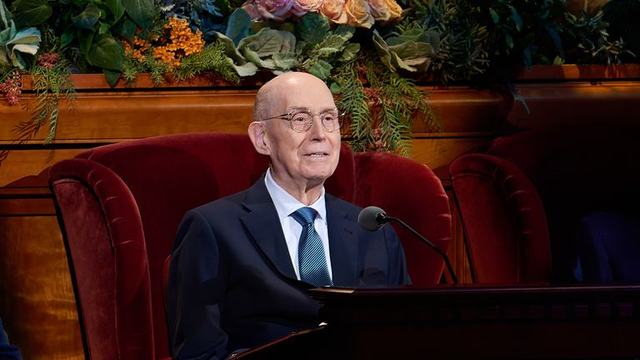
“Fear Not, I Am with Thee”
 Open talk in Gospel Library
Ideas for Opening the Lesson
- Display the words “Fear not, I am with thee” and invite class members to ponder them silently. Ask which word or phrase gives them particular reassurance and why. Introduce President Eyring’s message that the Lord keeps His promises both through the Holy Spirit and through faithful disciples.
- Read aloud the two hymn verses included in the talk, or invite the class to sing them. Ask members to identify what the Lord promises and what He does not promise. Use their observations to introduce the distinction between receiving divine help and having every challenge removed.
- Invite class members to think of someone whose simple act of kindness helps them feel that God knows them. Allow a few volunteers to share brief experiences without disclosing sensitive details. Explain that the lesson explores how the Lord invites His disciples to help fulfill His promises to others.
- Write two questions on the board: “How do I receive the Lord’s help?” and “How do I help someone else receive it?” Invite members to look for answers throughout the discussion. Explain that President Eyring connects trust in the Savior with opportunities to strengthen and comfort others.
- Read the account of President Eyring’s father staying beside his mother and thanking her nurses. Ask what this account teaches about the ways divine help reaches people in distress. Invite the class to notice both those who need comfort and those who offer it.
Topics
Trust the Lord’s Promises amid Life’s Trials
President Eyring affirms that the Lord’s promises of strength, help, and companionship are true. These promises do not guarantee the removal of challenges; they assure us of His aid as we face them. His mother’s example shows how trust in the Lord sustains faith through continuing health difficulties.
Those promises become more precious as we move through the challenges in our lives and in the lives of those we love. It is important to realize that the promise is not for the removal of challenges.
- What is the difference between trusting that the Lord helps us and expecting Him to remove every difficulty?
- Which promise in the hymn speaks most directly to your present circumstances, and why?
- What experience helps you recognize the Lord’s sustaining help even when a challenge continues?
- How can we respond compassionately when someone feels discouraged because a trial does not end?
- What practice can help you remember “Fear not, I am with thee” during the coming week?
Choose Faith, Repentance, and Obedience through the Savior
President Eyring explains that mortal tests provide opportunities to grow in spiritual cleanliness and stature so we can live in Heavenly Father’s presence. Heavenly Father gives us a Savior and the ability to choose faith, obedience, and repentance. Although our trials differ, each of us faces the question of whether we choose to do what the Lord commands.
To make that possible, Heavenly Father gave us a Savior and the power to choose for ourselves by faith to keep His commandments and to repent and to come unto Him.
- How does understanding the purpose of mortality influence the way we respond to hardship?
- What does the Savior’s perfect knowledge of your heart mean to you when others do not understand your circumstances?
- What helps you choose obedience when fear, fatigue, or uncertainty makes it difficult?
- How can repentance help us come unto Christ during a trial rather than feel farther from Him?
- What experience illustrates how turning to the Savior brings spiritual growth, even when circumstances remain difficult?
Follow Promptings to Offer the Lord’s Help
The Lord often meets His children’s needs through other people. President Eyring encourages prayerful attention to the names or faces that come to mind and action on invitations to reach out. Even simple attention can comfort someone and help that person recognize the Lord’s knowledge and love.
You have prayed in faith consistently for your family members or friends to know who the Lord would have you help for Him. As a face or a name has come into your mind, you have reached out to them. Even your simple attention was a comfort.
- How can we make asking whom the Lord wants us to help a regular part of our prayers?
- What helps you notice and act on a prompting to contact someone?
- What experience shows you that simple attention can communicate God’s love?
- What barriers keep us from reaching out, and how can we address them?
- Who comes to mind as you study this message, and what thoughtful action can you take without assuming you know all of that person’s needs?
Encourage Missionaries with Simple Acts of Kindness
President Eyring reminds us that missionaries face stretching experiences and pray for strength, whatever their assignments. A warm smile, a brief kindness, or an encouraging conversation can strengthen their faith that the Lord watches over them. Members can help missionaries feel known and supported.
Your kindness to them, even for a few seconds, or simply a warm smile can be a strengthening of their faith that the Lord is watching over them.
- How does President Eyring’s description of missionaries help us see their need for encouragement?
- What simple acts of kindness can we offer missionaries in our circumstances?
- What words help a discouraged missionary feel that the Lord knows and cares about them?
- What experience illustrates the influence of encouragement on someone who serves the Lord?
- How can our support focus on missionaries’ faith and well-being, not only on the visible results of their work?
Strengthen Church Servants through Prayer and Appreciation
Those who serve in Church callings seek guidance and strength to help others. President Eyring teaches that our prayers, appreciation, and expressions of confidence can become part of the Lord’s answers to their prayers. Such support helps them feel that God knows, guides, and blesses them in their service.
You are an important part of the Lord’s answers to their prayers for assurance.
- How does remembering that Church servants pray for guidance change the way we respond to them?
- What does sincere, specific appreciation look like for someone whose service often goes unnoticed?
- How can we express confidence and encouragement while recognizing that those who serve also face limitations and challenges?
- What experience helps you understand how another person’s support strengthens someone in a calling?
- Whom can you pray for and thank this week, and what contribution can you specifically acknowledge?
Bear Burdens and Comfort Others through the Spirit
President Eyring invites us to seek the Holy Ghost’s help in comforting those who plead for relief. He connects this service with Alma’s teaching about bearing burdens, mourning with others, and comforting those in need. Helping the Lord succor His children is both a blessing and a sacred trust.
Another great opportunity can come when you invite the Holy Ghost to help you find ways to help the Lord comfort those who are pleading for it.
- How can we invite the Holy Ghost to guide the way we comfort someone?
- What is the difference between mourning with someone and trying to quickly solve or explain that person’s pain?
- What experience shows how sharing a burden makes it lighter?
- How can we offer meaningful comfort while respecting someone’s privacy and preferences?
- What change in your ministering can help you treat comforting others as a sacred trust from the Lord?
Additional Discussion Questions
- How do the two parts of President Eyring’s message—trusting the Lord and helping others—reinforce each other?
- What does this talk teach about the relationship between divine help and human kindness?
- How can we acknowledge that every person’s trials differ without comparing or minimizing anyone’s suffering?
- What helps us recognize the Lord’s care when it comes through ordinary people and ordinary actions?
- How can remembering that the Savior knows each heart shape the way we listen to others?
- What can our quorum or Relief Society do to make it easier for members to ask for help and receive it with dignity?
- How can we balance offering help with being willing to receive help ourselves?
- What can we learn from President Eyring’s father about both providing care and expressing gratitude?
- How can we encourage one another to keep trusting the Lord when relief does not come quickly?
- What specific invitation from this talk do you choose to act on this week, and how can it help someone feel “I am with thee”?
