
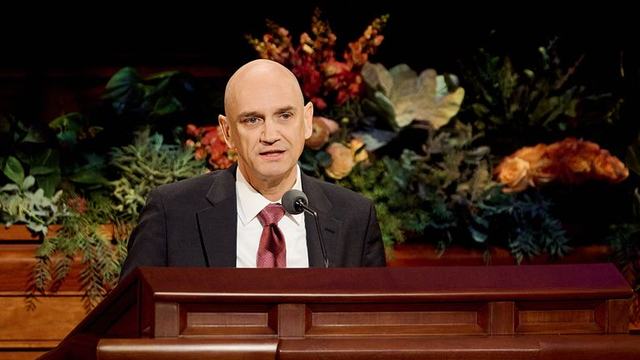
Consider Your Ways, and from This Day Will the Lord Bless You
 Open talk in Gospel Library
Contents
Before Reading
Before reading or listening to the talk, consider the following questions:
- How do Jesus Christ and our covenants help us prepare to meet God?
- What relationship exists between humility, faith in Christ, and overcoming weakness?
- How does the sacrament strengthen us on the covenant path?
- What does the account of Haggai teach about aligning our priorities with God’s will?
- What might it mean for me to consider my ways today?
Topics
Prepare to Meet God Through His Divine Helps
Heavenly Father’s plan of happiness provides a way for us to return to His presence. Mortal life is a time to prepare to meet Him, and He does not leave us to make this journey alone. Elder Schmeil identifies Jesus Christ and our covenants as essential divine helps.
The scriptures call this the plan of salvation or “the great plan of happiness” (Alma 42:8).
And God did not leave us alone in this journey.
I will mention two of these divine helps: the Savior Jesus Christ and our covenants.
- What purpose does Heavenly Father’s plan give to mortal life?
- Which two divine helps does Elder Schmeil identify?
- How do these helps support our return to God’s presence?
- How does knowing that life is a time to prepare to meet God influence my daily choices?
- Where do I recognize Heavenly Father’s help in my journey toward Him?
- What can I do this week to make the Savior and my covenants more central to my life?
Seek Christ With Humility and Faith
Jesus Christ knows us individually and helps us as we seek Him. Elder Schmeil teaches that humility includes having a broken heart and being receptive to God’s will, while faith means trusting Christ even without all the answers. Through the Savior’s Atonement, we receive forgiveness for repented sins, and through humility and faith, weak things can become strong.
Jesus Christ knows us individually, and He will help us if we seek Him.
A central feature of humility is having a broken heart, which means to be receptive to the will of God.
To be receptive to the will of God, we must have faith in Christ, which means that we trust Him even when we don’t have all the answers.
“And if men come unto me I will show unto them their weakness. … For if they humble themselves before me, and have faith in me, then will I make weak things become strong unto them” (Ether 12:27).
- According to Ether 12:27, what does the Lord ask us to do so that weak things can become strong?
- How does Elder Schmeil explain a broken heart?
- What does faith in Christ mean when we do not have all the answers?
- How does the Savior’s Atonement make forgiveness possible?
- What weakness or challenge can I bring to the Savior with greater humility and faith?
- In what area of my life do I need to become more receptive to God’s will?
- How can I show trust in Jesus Christ while a question remains unanswered?
- When do I recognize the Savior strengthening me as I seek His help?
Bind Yourself to Christ Through Covenants
We demonstrate faith in Jesus Christ by making and keeping covenants with God. God establishes the conditions of these sacred promises and promises blessings as we fulfill them. Because Christ is central to every covenant, covenants yoke us with Him and help make our burdens lighter.
We show our faith in Christ by making and keeping covenants with God.
“A covenant is a sacred promise between God and His children. God gives the conditions for the covenant, and His children agree to obey those conditions. God promises to bless His children as they fulfill the covenant.”
Covenants bind us to Jesus Christ because He is central to every covenant we make.
It is through covenants that we become yoked with the Savior Jesus Christ and our burdens become lighter.
- Who establishes the conditions of a covenant, and what do God’s children agree to do?
- How does making and keeping covenants express faith in Christ?
- What connection does Elder Schmeil make between covenants and the Savior’s invitation to take His yoke upon us?
- How do I view my covenants as a relationship with Jesus Christ rather than only a set of obligations?
- What burden can I bring to the Savior as I strive to keep my covenants?
- Which covenant commitment needs more deliberate attention in my daily life?
- Where do I see evidence that my covenant relationship with Christ strengthens me?
Receive Strength Through the Sacrament and Sabbath
The sacrament renews baptismal promises and helps us remember Jesus Christ, with the promise of His Spirit. Elder Schmeil emphasizes willingness to take upon us Christ’s name, remember Him, and keep His commandments rather than perfection as a prerequisite for partaking. Approaching the sacrament with a broken heart and contrite spirit, and aligning Sabbath activities with God’s purposes, brings strength, nourishment, joy, and peace.
In the sacrament prayer we have a good reminder that we do not need to be perfect to partake of the sacrament.
We need to be willing to take upon us His name, remember Him, and keep His commandments, and in return we have the promise to always have His Spirit with us.
The sacrament is essential to have the Spirit and the strength to continue on the covenant path.
In Preach My Gospel we also learn that “as we make our Sabbath activities compatible with God’s intent for the day, we will feel joy and peace. We will be spiritually nourished and physically refreshed.”
- What promises do we renew and make as we partake of the sacrament?
- What does the sacrament prayer teach about willingness and perfection?
- What blessing does the Savior promise as we remember Him?
- What counsel does Elder Renlund offer when we hesitate to attend church and partake of the sacrament?
- How do Sabbath activities that align with God’s intent bless us?
- What can I do before and during the sacrament to remember the Savior more intentionally?
- What does my willingness to take upon me Christ’s name look like this week?
- When I feel hesitant to attend church, how can I respond to the counsel in this talk?
- Which Sabbath activity can I adjust to invite greater spiritual nourishment and peace?
- How does weekly participation in the sacrament help me remain faithful to my covenants?
Prioritize Temple Covenants and Align Your Ways
The sacrament prepares us to make and keep temple covenants. Through Haggai’s account, Elder Schmeil shows that much effort produces little when God’s house is not a priority and our actions do not align with His will. The Lord’s invitation to consider our ways calls us to repent, adjust our priorities, and strengthen our relationship with Him through covenants.
The sacrament also prepares us to make and keep temple covenants.
We learn from this account that the Lord could not magnify their efforts because their actions were not aligned with God’s will.
Although they were doing much, they were not accomplishing much because God’s holy house was not a priority in their lives.
Heavenly Father is not asking us to physically build the temple, but He is asking us to build a strong relationship with Him and His Son, Jesus Christ, through our covenants.
- Why do the Israelites’ efforts produce little in Haggai’s account?
- What response to the Lord’s correction brings the promise of blessings?
- How does Elder Schmeil apply the command to rebuild the temple to our lives?
- How does the sacrament prepare us for temple covenants?
- What do my current priorities reveal about the place of God and His holy house in my life?
- Where am I busy without giving enough attention to what God asks of me?
- What adjustment can I make today to better align my actions with God’s will?
- What next step is appropriate for me in preparing for, understanding, or keeping temple covenants?
Trust God’s Promises as You Keep Covenants
God knows what is best for us, desires to bless us, and keeps His promises. Elder Schmeil testifies that God provides spiritual and physical strength and magnifies our efforts as we make needed adjustments to make and keep covenants. King Benjamin’s teaching connects obedience and enduring faithfulness with temporal and spiritual blessings and everlasting happiness in God’s presence.
He will magnify our efforts as we consider our ways and make the proper adjustments to make and keep covenants with Him.
God knows what is best for us and is eager to bless us.
I know that God keeps His promises.
“Consider on the blessed and happy state of those that keep the commandments of God. For behold, they are blessed in all things, both temporal and spiritual; and if they hold out faithful to the end they are received into heaven, that thereby they may dwell with God in a state of never-ending happiness” (Mosiah 2:41).
- What does Elder Schmeil teach about God’s knowledge of our needs and His desire to bless us?
- How does considering our ways relate to receiving God’s help?
- What kinds of blessings does King Benjamin identify?
- What does King Benjamin teach about remaining faithful to the end?
- What spiritual or temporal blessings do I recognize as I strive to keep God’s commandments?
- How can I record experiences that strengthen my testimony that God keeps His promises?
- What faithful adjustment can I begin today, trusting God’s wisdom about the blessings I need?
- How does the promise of living with God in never-ending happiness influence my commitment to endure faithfully?
