
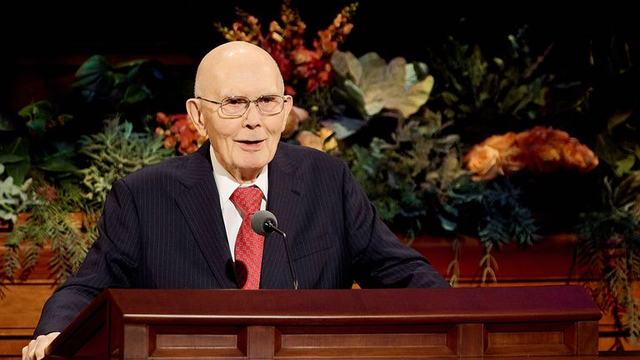
The Gospel of Jesus Christ Is for All
 Open talk in Gospel Library
Ideas for Opening the Lesson
- Write the words “The gospel of Jesus Christ is for all” where everyone can see them. Invite class members to consider whom the word “all” includes and what this truth means for their relationships. Introduce President Oaks’s invitation to draw closer to Christ and help others do the same.
- Read President Oaks’s statement, “We are all a work in progress.” Invite class members to reflect silently on an area in which they seek spiritual growth, without asking them to disclose personal struggles. Ask how recognizing that everyone is growing helps a quorum or Relief Society become more patient and supportive.
- Draw two columns labeled “Scientific method” and “Spiritual method.” Invite class members to identify ways they learn through each, then read President Oaks’s teaching that God knows all truth and expects us to learn by both methods. Frame the discussion around humility and faithful learning rather than debating particular scientific controversies.
- Read the passage President Oaks quotes about the Savior inviting all to come unto Him and denying none who come. Invite class members to discuss what a welcoming quorum or Relief Society looks like in practice. Ask them to keep that picture in mind as they study the talk.
- Invite class members to scan the talk for one action that helps them draw closer to Jesus Christ. Collect a few responses, such as prayer, scriptural learning, repentance, sacrament participation, or temple worship. Explain that the lesson explores both Christ’s invitation to everyone and our personal response to Him.
Topics
Center Your Faith on Jesus Christ and His Church
President Oaks identifies the Church as Jesus Christ’s Church, with the restored fulness of His doctrine and authority. He affirms faith in the Father, the Son, and the Holy Ghost and teaches that salvation comes through Christ’s atoning blood. This foundation gives purpose to the invitation to come unto Christ and proceed along the covenant path.
This is the Church of Jesus Christ, so named because it is His Church with the restored fulness of His doctrine and authority in these latter days.
- What changes in our approach to Church participation when we remember that this is Jesus Christ’s Church?
- How does the first article of faith provide a foundation for your daily discipleship?
- What does coming unto Christ mean beyond simply attending Church meetings?
- Which experiences help you recognize the Savior’s influence through His restored doctrine and authority?
- How can our quorum or Relief Society keep Jesus Christ at the center of its teaching, service, and conversations?
Build Faith Patiently Through Daily Discipleship
President Oaks teaches that drawing closer to Jesus Christ is the way to address concerns, struggles, questions, and doubts. Strong faith involves daily effort through prayer and scriptural learning, not desire alone. Because everyone is a work in progress, he encourages patience with others and ourselves, trust in the Lord’s timing, and faith in foundational truths while other matters remain uncertain.
Strong faith requires more than strong desire. It means daily trying, one step at a time, with prayer and scriptural learning.
- What is the difference between wanting stronger faith and taking daily steps to develop it?
- How do prayer and scriptural learning help you draw closer to Christ during uncertainty?
- What does waiting upon the Lord look like when an answer does not come quickly?
- How can we respond to someone’s questions in ways that communicate patience rather than judgment?
- What experiences help you recognize spiritual growth that comes one step at a time?
- What small, sustainable step can you take this week to strengthen your faith in Jesus Christ?
Seek Truth Through Scientific and Spiritual Learning
President Oaks describes scientific and spiritual methods as ways of gaining needed knowledge. Spiritual learning begins with faith in God and relies on scripture, inspired teaching, and personal revelation, while scientific understanding develops and digital information may be inaccurate. He teaches that there is no ultimate conflict between these methods because God knows all truth, and he cautions against allowing secular learning to limit spiritual horizons.
There is no ultimate conflict between knowledge obtained by these different methods because God, our omnipotent Eternal Father, knows all truth and expects us to learn by both methods.
- How does knowing that God knows all truth influence the way you approach learning?
- What does it mean to keep our spiritual horizons open while pursuing secular knowledge?
- How can we approach apparent conflicts between scientific understanding and religious teaching with both faith and humility?
- What habits help us evaluate digital information carefully rather than accepting it uncritically?
- How do scriptures, inspired teaching, and personal revelation contribute to your understanding of important questions?
- What experiences illustrate how secular and spiritual learning can enrich one another?
Draw Closer to Christ Through Teachableness
President Oaks encourages humility as a way to draw closer to Jesus Christ. Using President Spencer W. Kimball’s definition of humility as teachableness, he emphasizes recognizing that no person possesses every virtue or ability. Humility also invites forgiveness as we acknowledge our own errors and need for mercy.
Along the way we should work to draw closer to Jesus Christ by increasing our humility. President Spencer W. Kimball defined humility as “teachableness.”
- How does defining humility as teachableness deepen your understanding of this attribute?
- What attitudes help us receive correction or a different perspective without becoming defensive?
- How does recognizing our own weaknesses influence the way we respond to others’ mistakes?
- What experiences show you the connection between humility and spiritual growth?
- How can we learn from people whose strengths, backgrounds, or experiences differ from ours?
- What relationship in your life invites you to practice greater teachableness or forgiveness?
Renew and Live Your Sacred Covenants
President Oaks urges members to keep the commandments and remain true to their covenants. He identifies weekly sacrament participation and consistent covenant living as practices that protect and strengthen disciples. For endowed members, he also encourages regular temple attendance.
Protect yourself with the weekly renewing of your covenants by partaking of the sacrament and with consistent efforts to live according to those sacred covenants. Those who have been endowed should include regular attendance at the temple. These simple practices will protect and strengthen you.
- How can we make the sacrament a more intentional opportunity to renew our covenants?
- What does living according to sacred covenants look like during an ordinary week?
- How do covenant practices strengthen your relationship with Jesus Christ?
- For those who are endowed, what helps regular temple worship become a meaningful priority?
- How can our quorum or Relief Society support covenant faithfulness while respecting individual circumstances?
- What practical adjustment can help you connect sacrament participation more closely with daily discipleship?
Respond to Christ Through Faith and Repentance
President Oaks teaches that Jesus Christ’s Atonement reaches all people, while forgiveness requires responding to the conditions the Savior prescribes, including faith, repentance, and baptism. Our desires, choices, and actions matter in that response. The invitation is universal, and each person is invited to hearken to the Savior’s voice.
This means that if our sins are to be forgiven through His Atonement, we must comply with the conditions He has prescribed, including faith, repentance, and baptism. The fulfillment of these conditions depends on our desires, our choices, and our actions.
- How does understanding the Savior’s invitation to all people strengthen your hope in His Atonement?
- How do faith, repentance, and baptism express our willingness to respond to Jesus Christ?
- What helps you see repentance as a way to draw closer to the Savior?
- How can we align our desires, choices, and actions more fully with the Savior’s teachings?
- What daily practices help you hearken to the Savior’s voice?
- Without sharing private details, what experiences help you testify of the hope available through repentance?
Welcome All People as Equal Before God
President Oaks uses the Book of Mormon to affirm that the Lord loves and reaches out to all people everywhere. The Savior’s ministry to the Nephites and His promises concerning other sheep demonstrate His concern for His scattered flock. His grace is not reserved for a chosen few: He invites everyone to come unto Him, and all are alike unto God.
The Book of Mormon teaches that our Savior inviteth “all to come unto him … ; and he denieth none that come unto him, black and white, bond and free, male and female; and he remembereth the heathen; and all are alike unto God, both Jew and Gentile.” His grace is for all.
- What does the teaching that all are alike unto God ask us to change in our attitudes or behavior?
- How does the Savior’s care for His scattered flock deepen your understanding of His love?
- What assumptions can make it harder for us to recognize another person’s spiritual worth or potential?
- How can our quorum or Relief Society help people from different backgrounds feel genuinely valued?
- What experiences help you recognize God’s love for someone whose circumstances differ from yours?
- How can we communicate Christ’s welcome to people who feel overlooked or uncertain about belonging?
Share the Book of Mormon’s Witness of Christ
President Oaks presents the Book of Mormon as a witness of the Lord’s covenants and of Jesus Christ’s manifestation to all nations. He affirms that the Lord ultimately brings forth inspired teachings from His children in various nations for everyone’s benefit. In a time of gathering and widespread hunger for the Savior, he invites us to act on these truths and share them so that all can draw closer to Christ.
I call upon all to act on these truths and to share them with others that we may all draw closer to Jesus Christ, our Savior.
- Which Book of Mormon teachings help you understand that Jesus Christ loves all nations and peoples?
- How does the promise of additional inspired records expand your appreciation for God’s work throughout the world?
- Where do you notice people seeking the hope or guidance Jesus Christ offers?
- How can we share the Book of Mormon’s witness of Christ naturally and respectfully?
- What experiences show you how sharing a truth about Christ blesses both the listener and the person sharing?
- What truth from this talk can you act on and share with someone this week?
Additional Discussion Questions
- How do the talk’s invitations to strengthen personal faith and welcome all people reinforce each other?
- Which teaching in this talk most influences how you understand the Savior’s mission, and why?
- How can we remain faithful to our covenants while showing patience toward someone at a different place on the covenant path?
- What does President Oaks’s description of the Lord’s relentless loving pursuit teach us about supporting someone whose faith is diminishing?
- How can praying for one another strengthen unity within our quorum or Relief Society?
- How do humility and careful learning help us avoid premature conclusions about questions we do not yet understand?
- What can we do to make our class a place where sincere questions receive thoughtful, faithful, and compassionate responses?
- How can the truth that Christ’s grace is for all shape our service beyond the people we already know well?
- Which simple practice in this talk can help you turn belief in Jesus Christ into more consistent action?
- What specific change do you feel invited to make, and how can you seek the Lord’s help in following through?
