
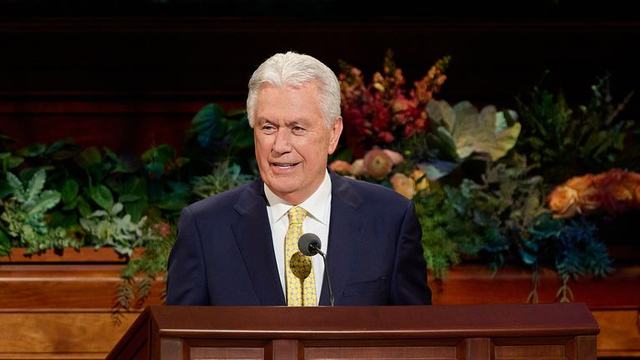
Christ-Centered Unity
 Open talk in Gospel Library
Contents
Topics
Enter Covenants and Walk Together
Baptism begins an individual covenant relationship with God and joins us to a worldwide covenant people. As disciples progress along the covenant path, their relationship with God deepens, and they learn to support one another through service, compassion, and shared faith.
Spiritual growth is rarely dramatic at the beginning. Like an exponential curve, it often starts gradually—with loving parents, simple prayers, and small acts of faith.
Through baptism, we become not only covenant individuals but also part of a covenant people.
We show that we do not want to live only for ourselves.
And we want to walk that path together.Key Points:
- Spiritual growth often begins with simple prayers and small acts of faith.
- Covenant experiences deepen discipleship and expand the capacity for divine understanding and blessings.
- Baptism is both an individual ordinance and an entrance into a covenant community.
- Following Jesus Christ includes bearing others’ burdens and offering comfort.
- Discipleship involves walking toward the Savior together.
- As you reflect on your baptism or someone else’s, what helps you understand belonging to a covenant people?
- What example of another person bearing your burden illustrates the meaning of baptismal covenants?
- How do small acts of faith in your life reveal gradual spiritual growth?
- What experience with temple worship, missionary service, or Church service helps you explain how covenants deepen discipleship?
Follow Christ Across Dividing Boundaries
Jesus Christ reaches across cultural, social, and religious divisions to gather Heavenly Father’s children. Satan promotes isolation, mistrust, and contention, while covenant disciples participate with Christ in gathering and uniting God’s family.
But the Savior of the world, the Son of God, transcended worldly boundaries and divisions.
He consistently reached out to those who would otherwise be shunned as outsiders.
He emphasizes our differences, making them feel like impassable barriers.
And yet the Savior’s work of gathering continues, undaunted. In fact, it is accelerating.Key Points:
- The Savior’s ministry demonstrates that worldly divisions do not limit His love.
- Jesus reaches people whom others exclude or overlook.
- Satan magnifies differences to foster isolation and contention.
- Recognizing everyone as a brother or sister helps disciples participate in Christ’s gathering work.
- Following Christ means reaching beyond familiar social circles.
- What relationship with someone from a different background helps you recognize a shared identity as children of God?
- When you notice someone on the edge of a group, what helps you reach out?
- What experience shows how listening or serving reduces mistrust?
- Which example from the Savior’s ministry guides your response to someone others overlook?
Center Your Relationships on Jesus Christ
Unity in the Savior’s Church rests on love for God and neighbor, commitment to covenants, and the restored gospel. Jesus Christ changes hearts, and drawing closer to Him helps disciples become more patient, forgiving, and united. Every sincere step toward unity matters now and into eternity.
In the Savior’s Church, it is not our political views, culture, or personal interests that unite us.
The catalyst for this change was Jesus Christ and His doctrine.
The closer we come to Him, the closer we will come to each other—and the closer we will come to the unity He wants for us.
Unity won’t magically happen in the next life if we haven’t earnestly tried to learn it here.
Every step we take toward unity matters, however small it may seem.Key Points:
- Christ-centered unity rests on gospel commitments rather than shared political views, culture, or preferences.
- The Book of Mormon shows that Jesus Christ and His doctrine transform hostility into unity.
- Drawing closer to Christ helps people draw closer to one another.
- Patience, kindness, forgiveness, and helpfulness leave less room for pride and contention.
- Disciples learn to value the heart rather than superficial differences.
- Unity requires earnest practice in this life, even when perfection remains beyond reach.
- What experience helps you see how focusing on Jesus Christ changes your response to a disagreement?
- How does prayer, scripture study, or repentance help you become more patient with someone?
- What small act of forgiveness or kindness illustrates progress toward unity?
- What relationship helps you learn to look beyond outward appearance or personal preferences?
- Where do you see shared gospel commitments strengthening people who hold different opinions?
Renew Covenants Together Through the Sacrament
The sacrament offers a weekly opportunity to renew the baptismal covenant, remember all personal covenants with God, and begin again in discipleship. Partaking among fellow disciples also reminds us that we have the Savior and one another.
My dear brothers and sisters, the sacrament can become a fresh starting point for our personal relationship with God and for a greater Christ-centered unity in our lives.
We partake individually but also as a group.
The sacrament is a weekly reminder, a sacred reminder, that we are not alone.
We have the Savior, and we have each other.Key Points:
- The sacrament renews the baptismal covenant and helps disciples remember their other covenants with God.
- The ordinance offers a fresh starting point for a personal relationship with God.
- The sacrament prayers address all who partake rather than naming individual participants.
- Shared covenant renewal strengthens a sense of belonging among disciples.
- The sacrament reminds participants of both the Savior’s help and the support of fellow Saints.
- What moment during the sacrament helps you feel that you can begin again with the Savior?
- How does worshipping beside fellow disciples influence your sense of belonging?
- What phrase in the sacrament prayers helps you think about your responsibility to others?
- How does preparing for the sacrament help you seek reconciliation or offer kindness?
Build Bridges and Invite Others to Belong
President Uchtdorf invites everyone to help build Christ-centered unity and emphasizes that each person belongs. As disciples unite in the Savior’s name and build bridges rather than walls, they invite God’s presence and blessings into their lives, families, communities, and nations.
Wherever you are, I invite you to join the Christ-centered unity we are trying to build.
It would be incomplete without you.
Please, come and see, come and help, and come and belong.
I testify that the more united in Christ we are and the more we desire to build bridges instead of walls, the more our individual lives, our families, our communities, and our nations will experience God’s presence and supernal blessings.Key Points:
- Each person has a place in the Christ-centered unity the Church seeks to build.
- The invitation includes seeing, helping, and belonging.
- Building bridges expresses a commitment to unity in Christ.
- Greater unity invites God’s presence and blessings into individual and collective life.
- Centering minds, hearts, and lives on the Savior directs the work of unity.
- What act of welcome helps you feel that your presence matters in a ward or branch?
- How does inviting someone to serve create a stronger sense of belonging?
- What experience in your family or community illustrates building a bridge rather than a wall?
- Where do you recognize God’s influence as people gather and serve in Jesus Christ’s name?
