
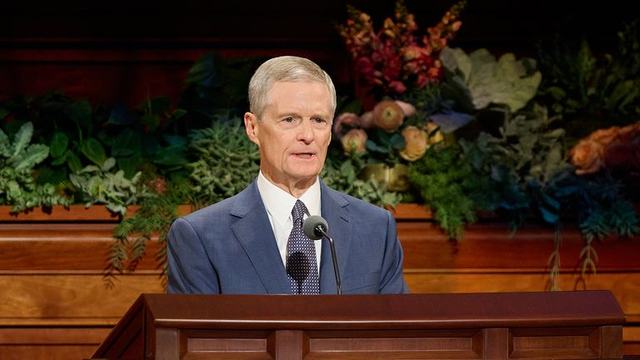
Sealed by the Holy Spirit of Promise
 Open talk in Gospel Library
Ideas for Opening the Lesson
- Write “The quest of a lifetime” and “The challenge of mortality” on the board. Read President Boyd K. Packer’s statement at the beginning of the talk, and invite class members to explain the relationship between receiving ordinances and keeping covenants. Ask how both help us journey home to Heavenly Father.
- Display a picture of a passport and briefly summarize Elder Bednar’s parable. Ask what the story teaches about the difference between receiving an opportunity and fulfilling its conditions. Immediately read his clarification that adversities and afflictions through no fault of our own do not invalidate our covenants or diminish God’s promises.
- Write “Receive,” “Honor,” and “Confirm” on the board. Invite class members to look through the sections on covenants and the Holy Spirit of Promise for teachings that connect with these words. Use their observations to introduce the relationship between priesthood ordinances, ongoing faithfulness, and the Holy Ghost’s ratifying witness.
- Read Elder Bednar’s assurance: “No faithful disciple will ultimately be deprived of any eternal blessing God has promised because of another individual’s unrighteous exercise of moral agency.” Invite class members to reflect silently on what this promise teaches about God’s character. Explain that the discussion welcomes varied family circumstances and does not require anyone to disclose painful personal experiences.
- Read King Benjamin’s testimony at the conclusion of the talk. Ask class members what stands out about the blessings God promises faithful disciples. Introduce the lesson as an exploration of how covenants and the Savior’s Atonement help us move toward those blessings.
Topics
Receive Ordinances and Enter Covenants with God
Elder Bednar describes ordinances and covenants as spiritual credentials for our journey home to Heavenly Father. God establishes covenant conditions, and His children exercise agency to learn about and accept them. Sacred ordinances performed by priesthood authority teach us about our covenants and open opportunities to receive divine purpose, direction, and strength.
For disciples of Jesus Christ, receiving priesthood ordinances and entering into sacred covenants are essential steps in the “quest of a lifetime” to align our hearts, minds, and lives with God’s will.
- How does viewing life as a homeward journey influence the way we approach our covenants?
- What does Elder Bednar’s definition of a covenant teach us about God’s role and our agency?
- How do sacred ordinances help us understand the commitments we make to God?
- What experiences help you recognize the purpose, direction, or strength that comes through covenant living?
- What helps us approach ordinances as sacred commitments rather than milestones to complete?
- What can you do this week to align your heart, mind, and daily choices more closely with God’s will?
Honor Covenants Through Ongoing Faithfulness
The passport parable illustrates that receiving spiritual credentials does not eliminate the need to honor them. Elder Bednar distinguishes the opportunity that ordinances provide from the blessings associated with ongoing faithfulness. He also emphasizes that suffering through no fault of our own does not diminish God’s promises or invalidate our covenants.
Ongoing faithfulness is required for those credentials to be valid and for promised blessings to be received.
- What does the passport parable help us understand about receiving ordinances and honoring covenants?
- Why is Elder Bednar’s clarification about adversity essential to understanding the parable correctly?
- What everyday choices help us maintain the integrity of our covenant commitments?
- How can we respond to our own shortcomings with repentance rather than discouragement?
- What experiences show you that covenant faithfulness brings strength during adversity rather than exemption from it?
- What small adjustment in your daily routine can help you honor your covenants more consistently?
Seek the Holy Spirit of Promise’s Ratifying Seal
The Holy Ghost serves as the Holy Spirit of Promise, confirming righteous acts as acceptable to God. Gospel ordinances and covenants require His ratifying seal to be binding on earth and in heaven, and this sealing remains conditional during mortality. Elder Bednar teaches that this confirmation typically comes over time through sincere repentance, covenant keeping, and yielding our hearts to God.
Receiving this ratifying sealing by the Holy Ghost typically is not a one-time event; rather, it comes over time as we repent sincerely and consistently, honor our covenants, and yield our hearts unto God.
- What does the Holy Ghost’s title “Holy Spirit of Promise” teach us about His role?
- How does Elder Bednar distinguish receiving an ordinance from receiving its ratifying seal?
- Why is it helpful to understand that this ratifying sealing typically comes over time?
- What does yielding our hearts to God look like in ordinary decisions and relationships?
- How do sincere repentance and consistent covenant keeping work together in our spiritual growth?
- What experiences help you recognize the value of patiently seeking the Holy Ghost’s influence rather than expecting a single dramatic event?
Understand Both Dimensions of the Sealing Ordinance
Elder Bednar explains that temple sealing includes both the eternal union of husband and wife and their sealing into God’s eternal family. He describes these as lateral and vertical aspects, and he emphasizes that both are vital. The intended outcomes include spiritual growth, marital devotion, fidelity, shared effort through challenges, and enduring happiness.
The sealing ordinance includes two fundamental and related parts: (1) the eternal union of a man and a woman in marriage—what may be understood as a lateral sealing—and (2) the sealing of the husband and wife into God’s eternal family and the linking of humankind through all generations—what may be understood as a vertical sealing. Both elements of the ordinance are vital.
- What does the distinction between lateral and vertical sealing help us understand about this ordinance?
- How does the sealing ordinance connect individual families with God’s eternal family?
- Which intended outcomes of temple sealing does Elder Bednar emphasize, and what daily practices support them?
- How can disciples in different marital and family circumstances support one another in seeking covenant blessings?
- What experiences with temple worship or family history deepen your appreciation for belonging to God’s family?
- How can understanding both dimensions of sealing help us discuss eternal families with greater care and compassion?
Trust God’s Promises Despite Another Person’s Choices
Another person’s unrighteous choices can cause profound sorrow, but they cannot deprive a faithful disciple of God’s promised eternal blessings. Elder Bednar explains that a faithful spouse remains worthy to receive the ratifying seal for the vertical aspect of the sealing ordinance and all other associated individual blessings. The Savior’s infinite Atonement provides power, love, and strength for those who hold fast to their covenants.
However, unrighteousness by one person cannot hinder or thwart the flow of God’s love, strength, and blessings to another person.
- What does this assurance teach us about God’s justice, love, and respect for individual agency?
- How does Elder Bednar distinguish the real pain caused by another person’s choices from the security of God’s promises?
- Why is the teaching about the faithful spouse’s vertical sealing especially significant?
- How can we support someone experiencing family heartache without speculating about their eternal circumstances?
- Without sharing private details, what experiences help you trust that the Savior offers strength amid choices you cannot control?
- What can we change in our quorum or Relief Society to help members in difficult family circumstances feel included and supported?
Press Forward Without Knowing Every Eternal Detail
Elder Bednar acknowledges that revealed doctrine does not explain every detail of how or when promised blessings come in complex family circumstances. He nevertheless affirms that faithful disciples receive every eternal blessing God promises them. King Benjamin’s testimony reinforces the invitation to keep God’s commandments and remain faithful to the end.
I do not know and cannot explain precisely how and when promised blessings are received. But I do know promised blessings will be received.
- What does Elder Bednar’s willingness to acknowledge unanswered questions teach us about faithful discipleship?
- How can we distinguish trusting a revealed promise from speculating about how God fulfills it?
- What helps you remain faithful when the timing or form of a promised blessing remains unclear?
- How does King Benjamin’s testimony strengthen the message of this talk?
- What experiences help you trust God while living with questions that remain unanswered?
- What faithful step can you take now without first needing every uncertainty resolved?
Additional Discussion Questions
- How does this talk deepen your understanding of the relationship between the Savior’s Atonement and covenant faithfulness?
- What connections do you see between receiving ordinances, honoring covenants, and seeking the Holy Spirit of Promise?
- How can we teach the importance of ongoing faithfulness without implying that adversity signals covenant failure?
- What does this talk invite us to change about the way we speak of temple marriage and eternal blessings?
- How can confidence in God’s promises strengthen our respect for agency rather than lead us to try to control others?
- What role does sincere and consistent repentance play in the hopeful message of this talk?
- How do the teachings about God’s eternal family expand our sense of belonging and responsibility toward one another?
- Which passage offers you the most reassurance, and how can its message influence your choices this week?
- How can our quorum or Relief Society help members seek divine purpose, direction, and strength through their covenants?
- As you consider your journey home to Heavenly Father, what specific invitation from this talk do you feel ready to act on?
