
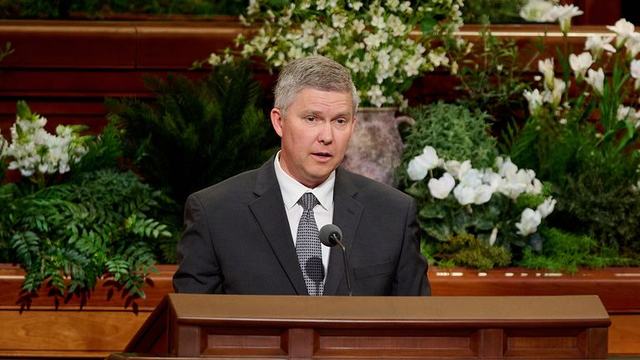
Church Auditing Department Report, 2025
 Open talk in Gospel Library
Ideas for Opening the Lesson
- Begin by inviting class members to consider why the Lord would include instruction about the disposition of tithes in Doctrine and Covenants 120. Ask: "What does it teach us about the Lord that He gives revealed direction not only for doctrine and ordinances but also for sacred stewardship?" This could help the class see the report as a spiritual matter, not just an administrative one.
- Start with a brief object lesson about stewardship. Show a simple envelope or container labeled "sacred funds" and ask how people usually treat something that belongs to someone else versus something that is their own. Then connect that idea to the talk's emphasis that Church funds were handled according to revealed direction, approved budgets, and careful auditing.
- Invite class members to share, without discussing amounts, what paying tithes has taught them about trust in the Lord. After a few responses, explain that this report showed one way the Church honored that trust through accountability, independence in auditing, and careful administration of resources.
- Write three phrases on the board: "revelation," "accountability," and "stewardship." Ask the class to listen for how each phrase appeared in the talk. This opening could help members engage with a short report and discover its doctrinal and practical significance.
- Begin by asking: "Why might an auditing report belong in general conference?" Let the class discuss briefly, then guide them toward the idea that honesty, order, stewardship, and trust are gospel principles. This could open a meaningful discussion about how temporal administration supports the Lord's spiritual work.
Topics
Follow revelation in handling sacred funds
Brother Larson said that the expenditure of Church funds was directed by revelation, specifically as recorded in Doctrine and Covenants 120. He explained that the Council on the Disposition of the Tithes authorized the expenditure of Church funds. This showed that the Church's financial stewardship was rooted in revealed order rather than merely human preference.
Directed by revelation, as recorded in section 120 of the Doctrine and Covenants, the Council on the Disposition of the Tithes—composed of the First Presidency, the Quorum of the Twelve Apostles, and the Presiding Bishopric—authorizes the expenditure of Church funds.
- What did this statement teach us about the Lord's involvement in the temporal affairs of His Church?
- How did Doctrine and Covenants 120 help us see tithing and Church expenditures as sacred rather than merely administrative?
- Why was it significant that Brother Larson connected Church finances to revelation?
- How had seeing revealed order in the Church strengthened your trust in the Lord and His servants?
- What could we do in our own homes to follow gospel principles more carefully in financial decisions?
- How might this topic influence the way we thought about paying tithes and offerings?
- When have you felt peace from following the Lord's pattern rather than relying only on your own judgment?
Authorize expenditures through ordained councils
Brother Larson said that the Council on the Disposition of the Tithes consisted of the First Presidency, the Quorum of the Twelve Apostles, and the Presiding Bishopric. He taught that this council authorized the expenditure of Church funds. This reflected the Lord's pattern of councils, shared responsibility, and united stewardship.
the Council on the Disposition of the Tithes—composed of the First Presidency, the Quorum of the Twelve Apostles, and the Presiding Bishopric—authorizes the expenditure of Church funds.
- What did this council structure teach us about how the Lord governed His Church?
- Why might the Lord use councils rather than leaving important decisions to one person alone?
- How had participation in ward, family, or presidency councils blessed your life?
- What could we learn from this example about unity and shared stewardship?
- How did knowing who authorized expenditures affect your confidence in the Church's use of sacred funds?
- In what ways could we improve how we counseled together in our homes and callings?
- How had the Spirit helped you in a council setting when people sought the Lord's will together?
Disburse funds with budgets and procedures
Brother Larson said that Church entities disbursed funds according to approved budgets, policies, and procedures. He emphasized order, discipline, and consistency in the use of sacred resources. His report suggested that faithful stewardship included both spiritual devotion and careful administration.
Church entities disburse funds in accordance with approved budgets, policies, and procedures.
- Why were budgets, policies, and procedures important in the Lord's work?
- How did careful planning reflect respect for sacred resources?
- What gospel principles did you see in the idea of living and acting within approved limits?
- How could this principle help us in our personal or family finances?
- When had a budget or plan brought greater peace, freedom, or effectiveness into your life?
- Why might some people see procedures as restrictive, and how could we instead view them as protective?
- How could we teach children or youth that order and planning were spiritual strengths?
Maintain independent auditing for accountability
Brother Larson explained that Church Auditing consisted of credentialed professionals and was independent of all other Church departments and entities. He said its responsibility was to perform audits that provided reasonable assurance regarding contributions, expenditures, and safeguarding assets. This highlighted the Church's commitment to accountability, integrity, and trustworthy oversight.
Church Auditing, which consists of credentialed professionals and is independent of all other Church departments and entities, has responsibility to perform audits for the purpose of providing reasonable assurance regarding contributions received, expenditures made, and safeguarding of Church assets.
- Why was independence in auditing an important part of accountability?
- What did the use of qualified professionals suggest about the seriousness of this stewardship?
- How did this part of the report build trust in the Church's financial practices?
- What could we learn about honesty and accountability in our own responsibilities?
- How had being accountable to someone else helped you become more faithful or careful?
- Why was it important to safeguard both contributions and assets?
- How could we create greater accountability in our homes, callings, or personal goals in a healthy and spiritual way?
Record and administer funds with integrity
Based on audits performed, Brother Larson said that contributions received, expenditures made, and assets of the Church for 2025 had been recorded and administered in accordance with Church-approved budgets, accounting practices, and policies in all material respects. His statement affirmed that sacred funds were handled with integrity and consistency. This reinforced confidence that the Church sought to be faithful in both receiving and using consecrated resources.
Based upon audits performed, Church Auditing is of the opinion that, in all material respects, contributions received, expenditures made, and assets of the Church for the year 2025 have been recorded and administered in accordance with Church-approved budgets, accounting practices, and policies.
- What stood out to you in this formal statement of assurance?
- Why did accurate recording and administration matter in the Lord's Church?
- How did this statement influence your feelings about trust and stewardship?
- What did integrity look like in small financial or administrative responsibilities in our own lives?
- When had careful recordkeeping or follow-through prevented problems or built trust for you?
- How could we become more reliable in the way we handled responsibilities, time, or resources?
- Why was faithfulness in temporal matters also a spiritual issue?
Live within a budget and avoid debt
Brother Larson said that the Church followed the practices it taught its members: living within a budget, avoiding debt, and saving against a time of need. This connected institutional conduct with personal discipleship. His report showed that the Church modeled the same prudent financial principles it invited members to live.
The Church follows the practices taught to its members of living within a budget, avoiding debt, and saving against a time of need.
- Why was it meaningful that the Church practiced the same financial principles it taught members?
- How had living within a budget blessed you or someone you know?
- What spiritual benefits could come from avoiding unnecessary debt?
- How did saving for a time of need reflect wisdom and faith rather than fear?
- What small step could individuals or families take to better follow this counsel?
- How could we talk about budgeting and debt in a hopeful, not discouraging, way?
- When had preparation for a time of need brought peace or enabled service to others?
Additional Discussion Questions
- How did this report help you see financial stewardship as part of the Lord's work?
- What doctrines or principles from the talk could strengthen a member's confidence in paying tithing?
- Why do you think the Lord cared about order and accountability in both spiritual and temporal matters?
- How could the principles in this report influence the way we handle family finances, callings, or personal responsibilities?
- What did the talk teach about trustworthiness in sacred things?
- How did the report show a balance between revelation and professional competence?
- In what ways did the talk reflect the principle that 'all things' in the Church should be done in wisdom and order?
- How could this talk help someone who wondered whether administrative matters belonged in a spiritual setting like general conference?
- What changes, if any, did you feel prompted to make in your own stewardship after studying this report?
- How could we use the principles in this talk to teach youth and children about honesty, planning, and accountability?
