
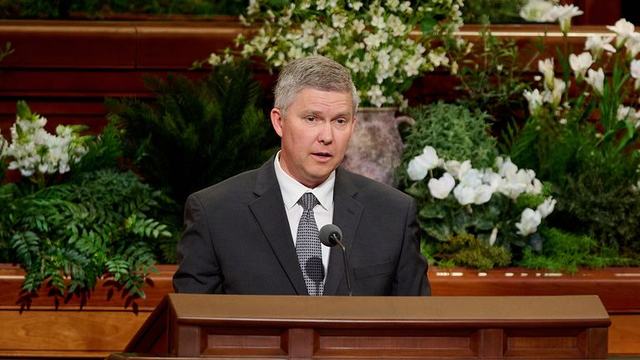
Church Auditing Department Report, 2025
 Open talk in Gospel Library
Contents
Topics
Recognize revelation in the use of sacred funds
The report teaches that the expenditure of Church funds is directed by revelation and follows the pattern established by the Lord in Doctrine and Covenants 120.
Directed by revelation, as recorded in section 120 of the Doctrine and Covenants, the Council on the Disposition of the Tithes ... authorizes the expenditure of Church funds.
the Council on the Disposition of the TithesKey Points:
- The use of Church funds is not merely administrative; it is directed by revelation.
- Doctrine and Covenants 120 provides the revealed foundation for the disposition of tithes.
- Sacred funds are handled according to the Lord’s established order.
- Members can have confidence that tithes are administered under divine direction.
- When have you felt increased trust in the Lord because His Church follows revealed patterns?
- What experiences have helped you see tithing as sacred rather than merely financial?
- When have you been blessed by following prophetic or scriptural counsel in temporal matters?
- How has paying tithing strengthened your testimony that the Lord guides His Church?
- When have you seen revelation bring order or peace to an important decision?
Sustain authorized leaders in financial stewardship
The report identifies the First Presidency, the Quorum of the Twelve Apostles, and the Presiding Bishopric as the council authorized to oversee the expenditure of Church funds.
the Council on the Disposition of the Tithes—composed of the First Presidency, the Quorum of the Twelve Apostles, and the Presiding Bishopric—authorizes the expenditure of Church funds.Key Points:
- The Lord has designated specific priesthood leaders to oversee the use of tithes.
- Financial stewardship in the Church is exercised through established councils.
- The involvement of senior Church leadership reflects the sacred importance of these decisions.
- The Church operates through order, authority, and accountability.
- When has sustaining Church leaders helped you feel peace about how the Lord governs His Church?
- What personal experience has taught you the value of councils and shared decision-making?
- How have you seen inspired leadership bless your ward, stake, or family?
- When have you learned to trust the Lord’s appointed servants even without knowing every detail?
- What experiences could you share about the blessings of sustaining priesthood leaders?
Follow approved budgets, policies, and procedures
The report explains that Church entities disburse funds according to approved budgets, policies, and procedures, showing that sacred resources are managed with discipline and order.
Church entities disburse funds in accordance with approved budgets, policies, and procedures.
The Church follows the practices taught to its members of living within a budget, avoiding debt, and saving against a time of need.Key Points:
- Church spending follows approved budgets rather than impulse or convenience.
- Policies and procedures help protect sacred resources.
- Orderly administration is part of wise stewardship.
- The same principles taught to members are practiced by the Church.
- Budgeting is both a practical and spiritual principle.
- When has living within a budget blessed your family or reduced stress?
- What experience could you share about the wisdom of planning before spending?
- How have policies or routines helped you protect something sacred or important?
- When have you seen the Lord bless careful stewardship in your calling or home?
- What have you learned from trying to align your financial habits with gospel principles?
Value independent auditing and professional accountability
The report states that Church Auditing is independent from other Church departments and is staffed by credentialed professionals who provide reasonable assurance through audits.
Church Auditing, which consists of credentialed professionals and is independent of all other Church departments and entities, has responsibility to perform audits
for the purpose of providing reasonable assurance regarding contributions received, expenditures made, and safeguarding of Church assets.Key Points:
- Independent auditing strengthens accountability and trust.
- Credentialed professionals help ensure competent review of financial practices.
- Audits are designed to provide reasonable assurance about contributions, expenditures, and assets.
- The Church uses careful oversight to safeguard sacred resources.
- Transparency and accountability are consistent with gospel integrity.
- When has accountability helped you act with greater integrity?
- What experience have you had where an outside review or counsel improved your work?
- How have you seen honesty and transparency build trust in relationships or service?
- When have careful checks and balances protected something valuable in your life?
- What personal story could illustrate that integrity matters even in small details?
Safeguard contributions and Church assets
The report emphasizes that audits review contributions received, expenditures made, and the safeguarding of Church assets, underscoring the sacred trust involved in handling consecrated resources.
providing reasonable assurance regarding contributions received, expenditures made, and safeguarding of Church assets.
Based upon audits performed, Church Auditing is of the opinion that, in all material respects, contributions received, expenditures made, and assets of the Church for the year 2025 have been recorded and administered in accordance with Church-approved budgets, accounting practices, and policies.Key Points:
- Member contributions are treated as sacred and carefully accounted for.
- Church assets are safeguarded through established systems and review.
- Recording and administering funds properly is part of faithful stewardship.
- The report affirms that these responsibilities were fulfilled in 2025 in all material respects.
- When have you felt the sacredness of contributing tithes or offerings?
- What experience has taught you to treat the Lord’s resources with greater care?
- How have you learned that trust grows when people handle resources responsibly?
- When have you been entrusted with something valuable, and what did that teach you?
- What personal example could show that small acts of honesty reflect discipleship?
Trust the Church’s faithful financial administration
The report gives an overall conclusion that Church funds and assets for 2025 were recorded and administered according to approved budgets, accounting practices, and policies.
Based upon audits performed, Church Auditing is of the opinion that, in all material respects, contributions received, expenditures made, and assets of the Church for the year 2025 have been recorded and administered in accordance with Church-approved budgets, accounting practices, and policies.Key Points:
- The auditing report offers assurance regarding the Church’s financial administration.
- The conclusion is based on audits performed, not assumption alone.
- Approved accounting practices and policies guide the Church’s administration.
- Members can feel confidence in the careful stewardship of sacred funds.
- When has learning that something was handled carefully increased your peace and confidence?
- What experience could you share about the importance of trustworthiness in leadership?
- How has your confidence in the Lord’s Church grown through observing order and integrity?
- When have you seen that careful administration supports spiritual purposes?
- What personal story might help listeners connect trust with faithful stewardship?
Apply gospel financial principles in daily life
The report concludes by noting that the Church follows the same financial principles it teaches members: living within a budget, avoiding debt, and saving for times of need.
The Church follows the practices taught to its members of living within a budget, avoiding debt, and saving against a time of need.Key Points:
- The Church models the principles it teaches its members.
- Living within a budget is a gospel principle of wise stewardship.
- Avoiding debt brings greater freedom and stability.
- Saving for times of need reflects prudence and preparation.
- Temporal wisdom supports spiritual strength and service.
- When has living within your means brought peace to you or your family?
- What have you learned from trying to avoid or reduce debt?
- How has preparation for a future need blessed you during a difficult time?
- What personal experience could illustrate the spiritual side of financial self-reliance?
- When have simple financial habits helped you be more available to serve the Lord?
