
Church Auditing Department Report, 2025
 Open talk in Gospel Library
Contents
Before Reading
Before reading or listening to the talk, consider the following questions:
- What does this report teach about how the Church handles sacred funds?
- How does Doctrine and Covenants 120 relate to the administration of tithes and other Church resources?
- Why is it significant that Church Auditing is independent of other Church departments and entities?
- What does the phrase “reasonable assurance” suggest about the purpose of auditing?
- What financial principles does the report say the Church follows, and how might those principles apply in my own life?
- How does this report strengthen confidence in the Church’s stewardship of consecrated funds?
Topics
Follow revelation in administering sacred funds
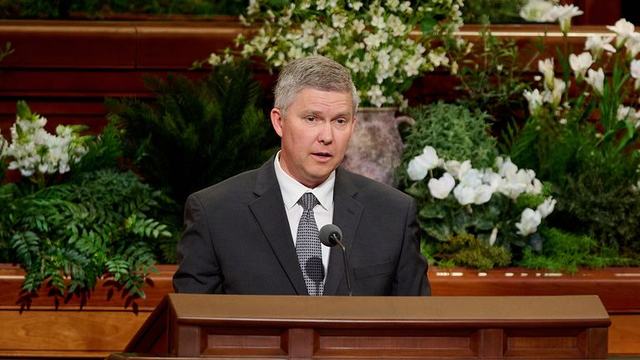
The report begins by grounding the Church’s financial administration in revelation. Brother Larson cites Doctrine and Covenants 120 and explains that the Council on the Disposition of the Tithes authorizes the expenditure of Church funds. This shows that the handling of sacred resources is not merely administrative but is tied to divinely established order and priesthood governance.
Directed by revelation, as recorded in section 120 of the Doctrine and Covenants, the Council on the Disposition of the Tithes—composed of the First Presidency, the Quorum of the Twelve Apostles, and the Presiding Bishopric—authorizes the expenditure of Church funds.
- According to the report, what directs the Church’s approach to the expenditure of funds?
- Which council authorizes the expenditure of Church funds?
- Who composes the Council on the Disposition of the Tithes?
- How does the report connect financial administration with revealed doctrine?
- How does knowing that Church funds are administered according to revelation affect my trust in the Lord’s Church?
- What can I learn from this pattern about seeking revelation in my own stewardship responsibilities?
- How can I treat my tithes and offerings as sacred contributions to the Lord’s work?
- When have I felt increased confidence because the Lord’s Church follows revealed order?
Use approved budgets, policies, and procedures
The report teaches that Church entities disburse funds according to approved budgets, policies, and procedures. This reflects order, discipline, and accountability in the use of consecrated resources. The Church’s financial administration is careful and structured rather than casual or improvised.
Church entities disburse funds in accordance with approved budgets, policies, and procedures.
Based upon audits performed, Church Auditing is of the opinion that, in all material respects, contributions received, expenditures made, and assets of the Church for the year 2025 have been recorded and administered in accordance with Church-approved budgets, accounting practices, and policies.
- How are Church funds disbursed according to the report?
- What standards are used to record and administer contributions, expenditures, and assets?
- Why are budgets, policies, and procedures important in the stewardship of sacred funds?
- What does this report suggest about the value of order in temporal administration?
- How can I better use budgets and plans in my personal or family finances?
- What blessings have come when I have followed wise procedures instead of acting impulsively with money?
- How can I show greater care in managing resources the Lord has entrusted to me?
- What changes could I make to bring more order and accountability into my financial stewardship?
Maintain independent auditing and professional oversight
Brother Larson explains that Church Auditing is made up of credentialed professionals and is independent of all other Church departments and entities. This independence supports objectivity and strengthens confidence in the audit process. The report emphasizes that qualified oversight is part of responsible stewardship.
Church Auditing, which consists of credentialed professionals and is independent of all other Church departments and entities, has responsibility to perform audits
- Who performs the audits described in the report?
- What qualifications does the report mention about Church Auditing personnel?
- Why is the independence of Church Auditing significant?
- How does professional and independent oversight support trust and accountability?
- What does this report teach me about the value of honesty and accountability in my own responsibilities?
- How can I invite appropriate oversight or accountability in areas where I manage money or resources?
- Why is it important for me to act with integrity even when others may not see my actions?
- How can I strengthen trust in my home, calling, or work through transparent and responsible stewardship?
Provide assurance through auditing and accountability
The report explains that the purpose of audits is to provide reasonable assurance regarding contributions received, expenditures made, and the safeguarding of Church assets. Auditing helps verify that sacred funds are handled properly and that assets are protected. This reflects the principle that stewardship includes both use and protection of the Lord’s resources.
has responsibility to perform audits for the purpose of providing reasonable assurance regarding contributions received, expenditures made, and safeguarding of Church assets.
Based upon audits performed, Church Auditing is of the opinion that, in all material respects, contributions received, expenditures made, and assets of the Church for the year 2025 have been recorded and administered
- What is the stated purpose of Church audits?
- What three areas are specifically mentioned as being reviewed through auditing?
- What does the phrase “reasonable assurance” communicate about the role of auditing?
- Why is safeguarding assets an important part of stewardship?
- How can I be more careful in safeguarding the resources the Lord has placed in my care?
- What systems could help me track and review my own use of money and possessions more responsibly?
- How does accountability help me become a more faithful steward?
- In what ways can I be more trustworthy with sacred or shared resources?
Confirm faithful recording and administration of Church resources
After audits were performed, Church Auditing concluded that contributions, expenditures, and assets for the year 2025 were, in all material respects, recorded and administered according to approved budgets, accounting practices, and policies. This statement gives assurance that the Church is acting faithfully and responsibly in its temporal stewardship.
Based upon audits performed, Church Auditing is of the opinion that, in all material respects, contributions received, expenditures made, and assets of the Church for the year 2025 have been recorded and administered in accordance with Church-approved budgets, accounting practices, and policies.
- What conclusion did Church Auditing reach after performing audits for 2025?
- Which aspects of Church financial activity were found to be properly recorded and administered?
- According to the report, what standards were followed in this administration?
- How does this conclusion support confidence in the Church’s stewardship?
- How does this report affect my feelings about paying tithes and offerings?
- What can I do to ensure my own records and responsibilities are handled accurately?
- How can I become more dependable in the way I manage funds, time, or other resources?
- Why is faithfulness in small temporal matters part of discipleship?
Live within a budget, avoid debt, and save for times of need
The report concludes by noting that the Church follows the same sound financial principles it teaches its members: living within a budget, avoiding debt, and saving for a time of need. This connects institutional stewardship with personal discipleship. The principles are practical, wise, and spiritually relevant for individuals and families.
The Church follows the practices taught to its members of living within a budget, avoiding debt, and saving against a time of need.
- What financial practices does the report say the Church follows?
- How do these practices reflect principles the Church teaches its members?
- Why might avoiding debt and saving for times of need be considered both practical and spiritual wisdom?
- How does this statement connect Church administration with personal gospel living?
- Am I currently living within a budget, and if not, what is one step I can take to begin?
- What debts or financial habits should I prayerfully work to reduce or avoid?
- How prepared am I for a time of need, and what can I do to improve that preparation?
- What experiences have taught me the value of provident living?
- How can I better align my financial habits with the counsel taught by the Church?
