
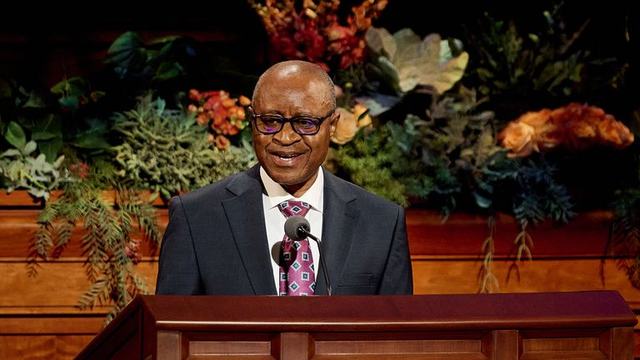
Using the Language of Peacemakers
 Open talk in Gospel Library
Ideas for Opening the Lesson
- Display the phrases “We can work this out,” “I care about you,” and “Let us start again.” Invite class members to consider how these words influence a difficult conversation. Ask what makes language a tool for peace, then introduce Elder Kyungu’s invitation to communicate as disciples of Jesus Christ.
- Read President Oaks’s invitation from the beginning of the talk: “As followers of Christ, let us follow Him by forgoing contention and by using the language and methods of peacemakers.” Invite class members to ponder silently one setting where they need this counsel. Explain that the discussion focuses on practical ways to act on this prophetic invitation.
- Read Ephesians 4:29 as quoted in the talk. Ask class members what it means for communication to edify and “minister grace unto the hearers.” Invite them to identify qualities of uplifting speech, and use their responses to introduce the lesson.
- Present a simple scenario: two people disagree about how to handle a shared responsibility. Invite class members to suggest opening sentences that encourage understanding rather than defensiveness. Compare their suggestions with Elder Kyungu’s examples of peaceful language.
- Invite class members to reflect on a time when someone’s kind words bring them comfort or confidence. Allow a few volunteers to share, without identifying sensitive situations or other people’s faults. Connect these experiences to Elder Kyungu’s teaching that peace begins with our hearts, choices, and words.
Topics
Follow the Prophet’s Call to Communicate as Peacemakers
Elder Kyungu presents President Oaks’s invitation to forgo contention as a call to discipleship, not merely a suggestion. Following Jesus Christ includes prayerfully studying prophetic counsel and acting in faith to change how we communicate.
This invitation to forgo contention by using the language of peacemakers comes from the living prophet. It is not a simple suggestion; it is a call to discipleship as we follow Jesus Christ.
- How does viewing peaceful communication as discipleship change the importance we give it?
- What does acting in faith on this prophetic invitation look like in an ordinary conversation?
- Where do you feel prompted to apply this invitation more intentionally: at home, at church, at work, or elsewhere?
- What helps you move from appreciating conference counsel to consistently practicing it?
- What experiences help you recognize the blessings of following prophetic counsel about relationships?
Choose Words That Edify and Extend Grace
Elder Kyungu draws on scriptural teachings to show that our words carry spiritual responsibility. The Lord warns against lies and discord, and the Apostles teach that our speech should edify others and convey grace. These teachings invite us to consider both what we say and how it affects those who hear us.
The Apostle Paul wrote to the Ephesians, “Let no corrupt communication proceed out of your mouth, but that which is good to the use of edifying, that it may minister grace unto the hearers.”
- What does it mean to “minister grace” to someone through our words?
- How can we evaluate whether our speech builds someone up rather than diminishes them?
- How does the Savior’s teaching about accountability for our words influence everyday communication?
- How can we speak honestly about a concern while preserving another person’s dignity?
- What examples from your life show the strengthening power of words that edify?
Replace Contentious Language with Words That Build Peace
Humiliating, blaming, and dismissive expressions weaken love, diminish respect, and damage relationships. Elder Kyungu offers specific alternatives that communicate appreciation, patience, concern, and a willingness to work together. He invites us to bury contentious language as the converted Lamanites bury their weapons of war.
Rather than choosing words and language that escalate feelings of anger, disappointment, and frustration, let us use words that encourage understanding and peace. We must choose language that strengthens confidence and preserves relationships.
- Which peaceful expressions in the talk seem especially useful in your daily relationships, and why?
- What helps you recognize when frustration begins to shape your words?
- How can phrases such as “Let us slow down and talk” change the direction of a disagreement?
- What does the image of burying weapons teach us about giving up harmful patterns of speech?
- When do you see a calm or caring response help a difficult conversation become more constructive?
Fill Your Heart with the Doctrine of Christ
Elder Kyungu connects our language with the condition of our hearts through the Savior’s teaching that the mouth speaks from the heart’s abundance. He teaches that the true doctrine of Christ has power to change our language. Lasting peacemaking therefore involves inward conversion as well as more careful word choices.
Therefore, let us fill our hearts with the true doctrine of Christ, which has the power to change our language and help us speak more as peacemakers today, tomorrow, and always.
- What does the connection between our hearts and our words teach us about lasting change?
- How does studying the doctrine of Christ influence the way we see and speak to others?
- Which teachings of Jesus Christ help you respond with greater patience or compassion?
- What spiritual practices help you prepare your heart for difficult conversations?
- What experiences help you see that drawing closer to Christ changes more than your vocabulary?
Repent and Seek Peaceful Communication
Elder Kyungu invites us to repent of harsh expressions that offend others and to pray for peaceful communication despite differences of opinion. His examples include apologies, requests for forgiveness, forgiveness, and invitations to begin again. These responses help us take responsibility for our words and seek healing in relationships.
Let us repent for the harsh language and expressions that have offended our friends, leaders, family members, or colleagues. Let us pray for peaceful communication among us, regardless of the difference in our opinions.
- What does sincere repentance for hurtful speech involve beyond deciding to use different words?
- How can “I’m sorry” and “Please forgive me” open the way for a more peaceful conversation?
- How does prayer help us communicate respectfully with someone whose opinions differ from ours?
- What helps us take responsibility for our own words rather than focus only on another person’s behavior?
- Without sharing private details, what experiences show you the healing possibilities of apology or forgiveness?
Become Instruments of the Savior’s Peace
Elder Kyungu teaches that following Jesus Christ enables us both to feel His peace and to become instruments of it. Heavenly Father desires peace and harmony, and Jesus Christ is the Prince of Peace. Our hearts, choices, and words become places where His promised peace begins to influence our relationships.
The Savior promised, “Peace I leave with you, my peace I give unto you.” This peace is real. It is powerful, and it begins with us—with our hearts, our choices, and our words.
- What does becoming an instrument of Christ’s peace mean in your current circumstances?
- How is the Savior’s peace different from simply avoiding uncomfortable conversations?
- How can we contribute to peace even when we cannot control another person’s response?
- What experiences help you recognize the Savior’s peace in your relationships?
- What specific choice can you make this week to help your words bring comfort or unity?
Additional Discussion Questions
- Which invitation in this talk feels most important for you to act on now, and why?
- How can we disagree about an idea while showing warm respect for the person who expresses it?
- How do tone, timing, and willingness to listen affect whether peaceful words convey genuine care?
- How can the principles in this talk improve the way we communicate through texts, email, or social media?
- What can we do when we notice that harsh or dismissive expressions become habitual?
- How can our quorum or Relief Society make room for differing perspectives without allowing contention?
- What does peaceful communication look like when we need to express a firm boundary or address a serious concern?
- How can we encourage children, youth, or other family members to practice peacemaking through our own example?
- What simple reminder can help you choose Christlike language in a moment of frustration?
- As you prayerfully review your communication this week, what signs of progress can you look for, and what further change can you seek?
