
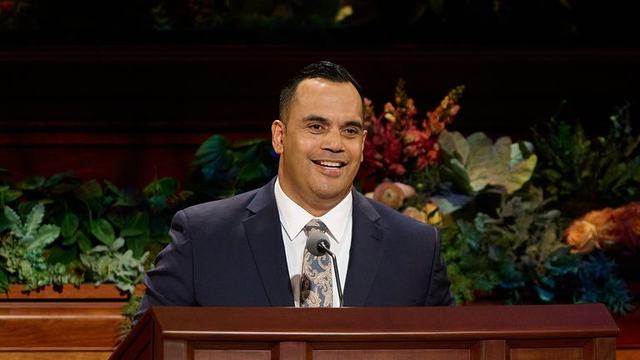
You Are Good Enough to Teach
 Open talk in Gospel Library
Ideas for Opening the Lesson
- Invite class members to silently consider the questions “Do I know enough?” and “Am I good enough to teach the gospel of Jesus Christ?” Read Brother Reid’s assurance that the Savior helps us do His work. Ask what changes when we see teaching as a partnership with Jesus Christ rather than a test of our abilities.
- Write “Love the Lord” and “Love those you teach” on the board. Invite class members to describe how these two invitations strengthen each other. Explain that the discussion explores how love shapes gospel teaching in our homes, Church classes, and individual relationships.
- Invite class members to think of a gospel teacher whose influence helps them feel the Savior’s love. Ask a few volunteers to share what makes that person’s influence meaningful, without requiring names. Read the statement “The impact of a gospel teacher is not just the message—it is the love of the messenger.”
- Display the questions “How can I teach everything in 25 minutes?” and “How can I help those I teach connect to the Savior sooner?” Invite class members to compare the priorities behind these questions. Explain that the lesson focuses on drawing closer to Jesus Christ, not covering every paragraph of the talk.
- Invite class members to quietly read Brother Reid’s account of the Savior ministering to people in the Americas. Ask them to identify actions that communicate personal love. Use their observations to introduce a discussion about following the Savior’s pattern in everyday teaching.
Topics
Trust the Savior to Help You Teach
Brother Reid acknowledges feelings of inadequacy and points to the Savior’s promises to those He calls to teach. Jesus Christ does not require complete knowledge or polished teaching skills before we follow Him. As we come unto Him, learn of Him, and love Him, He helps us become the teachers He knows we can become.
He did not expect them to become master teachers before they followed Him. He promised that He would make them into who He needed them to be.
- What situations bring feelings of inadequacy when you teach the gospel at home, at church, or one by one?
- What do the Savior’s promises to the fishermen and the sons of Mosiah teach us about His ability to work through imperfect people?
- How does the assurance “We were never meant to do His work alone” change your approach to preparing a lesson?
- What experiences help you recognize the Savior’s support when you feel unequal to a teaching opportunity?
- How can you prepare diligently while placing your trust in Jesus Christ rather than in your own abilities?
- What step can you take this week to come unto the Master Teacher and let Him help you grow?
Love the Lord and Those You Teach
Brother Reid places discipleship before teaching technique and identifies love as the heart of both. The two great commandments guide gospel teachers to love God and their learners. As our love for Jesus Christ deepens, He helps us see others as He sees them and love them more fully.
We learned that the surest way to truly love those we taught was to deepen our love for the One we taught about.
- Why does the Savior’s invitation to become a disciple come before instruction about where and what to teach?
- How does deepening your love for Jesus Christ influence the way you see other people?
- What practices help your love for the Savior grow as you prepare to teach or participate in a lesson?
- What experiences show you that a teacher’s love helps learners feel the truth of the gospel?
- How can you express sincere love for someone whose perspective, background, or participation differs from yours?
- What can our quorum or Relief Society change so that our discussions more clearly express love for the Lord and for one another?
Teach the Gospel Through Faithful, Loving Examples
Brother Reid describes his parents as influential gospel teachers whose faith and love shape their home. Their example shows that formal education is not the source of a teacher’s deepest influence. His account invites us to recognize how everyday actions help others learn to love Jesus Christ.
They loved the Lord with all their hearts, and because they loved Him, they loved us in a way that helped us love Him too.
- What everyday actions communicate faith in Jesus Christ more clearly than words alone?
- What examples from parents, family members, friends, or Church teachers continue to strengthen your discipleship?
- How does Brother Reid’s description of his parents broaden your understanding of who qualifies to influence others spiritually?
- What do people around us learn about the Savior from the way we treat them?
- How can our homes become places of gospel learning regardless of our household size or circumstances?
- What adjustment in your daily conduct can bring your example into closer harmony with the gospel you teach?
Build Relationships and Minister One by One
Brother Reid highlights the Savior’s personal attention to individuals in the Americas and His compassion beyond the formal teaching moment. Christ-centered teaching grows from relationships in which people feel known and loved. Knowing learners personally and responding to their needs helps them come closer to the Savior and deepen their conversion.
Christ-centered teaching is rooted in relationships. The inspired new Sunday schedule offers weekly opportunities to know and love those we teach, helping them come closer to the Savior and helping them deepen their conversion.
- What does the Savior’s invitation to come unto Him one by one teach us about the worth of each learner?
- How can knowing someone personally change the way we prepare for and participate in a gospel discussion?
- What experiences help you see the spiritual importance of feeling known by name and genuinely welcomed?
- How can teachers and class members notice those who are quiet, new, absent, or hesitant to participate without putting them on the spot?
- What does the Savior’s continued compassion after teaching suggest about our responsibilities beyond a class discussion?
- What specific act of personal care can you offer this week to help someone feel the Savior’s love?
Focus Every Lesson on Jesus Christ
Brother Reid invites teachers to prioritize helping learners connect with the Savior rather than covering every possible point. Shorter lessons offer an opportunity to focus on what draws people to Him. The measure of a lesson is whether learners feel closer to Jesus Christ, not whether they admire the teacher.
If class members leave the lesson feeling closer to the Savior than when they came, we have taught enough.
- How does asking “How can I help those I teach connect to the Savior sooner?” change your lesson priorities?
- What can a teacher simplify or leave out to create more room for a meaningful focus on Jesus Christ?
- What does President Oaks’s warning against obscuring a learner’s view of the Master invite us to examine in our teaching?
- What kinds of questions and experiences help a gospel discussion turn toward the Savior rather than toward the teacher?
- How can class members help a lesson remain centered on Jesus Christ through their comments and participation?
- What signs help you recognize that a lesson strengthens love for the Savior rather than simply communicating information?
Additional Discussion Questions
- How does Brother Reid’s message change what you consider the essential qualifications of a gospel teacher?
- Where in your daily life do you have opportunities to teach the gospel even without a formal teaching calling?
- How do trust in the Savior and careful preparation strengthen each other?
- What connection do you see between becoming a more devoted disciple and becoming a more loving teacher?
- How can our quorum or Relief Society help people who feel inexperienced or inadequate recognize their ability to contribute?
- What does teaching with love look like when someone asks a difficult question or expresses uncertainty?
- How can we help someone feel both personally valued and invited to come closer to Jesus Christ?
- Which example in the talk most clearly shows you how the Savior teaches, and how can you follow that example?
- What can we do before, during, and after our meetings to make gospel learning more relational and Christ-centered?
- Which invitation from this talk do you feel drawn to act on this week, and what practical step helps you begin?
