
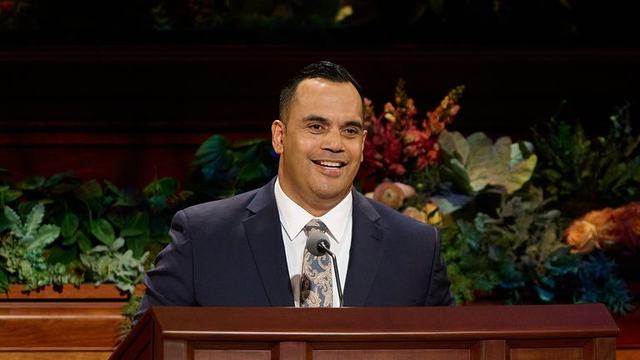
You Are Good Enough to Teach
 Open talk in Gospel Library
Contents
Topics
Trust Jesus Christ to Help You Teach
Brother Reid acknowledges feelings of inadequacy and points to the Savior’s promises to those He calls. Jesus Christ does not require people to become master teachers before following Him. He helps willing disciples become instruments in His hands.
He did not expect them to become master teachers before they followed Him. He promised that He would make them into who He needed them to be.
The Lord invites all of us to teach His gospel.
We were never meant to do His work alone.
And as you deepen your love for the One you teach about, He will teach you, walk beside you, and gradually make you into the teacher He knows you can become.Key Points:
- Feelings of inadequacy do not disqualify someone from teaching the gospel.
- The Savior pairs His invitation to teach with promises of divine help.
- The fishermen’s limited experience and the sons of Mosiah’s rebellious past do not prevent the Lord from working through them.
- The Lord’s help applies to teaching in classrooms, missions, homes, and individual interactions.
- Confidence rests in the Savior’s help rather than complete knowledge or perfect teaching skills.
- What experience with an unfamiliar calling helps you recognize the Savior’s support?
- When you feel inadequate to explain a gospel principle, what helps you move forward with faith?
- What opportunity to teach helps you notice that the Lord works through imperfect people?
- How does your growth as a teacher illustrate the Savior’s patient help?
Love the Lord and Those You Teach
Brother Reid identifies discipleship as the foundation of gospel teaching and love as the heart of discipleship. The two great commandments guide teachers to love God and their learners. Deepening love for Jesus Christ helps teachers see others as He sees them.
Before the Savior taught His disciples where to go and what to teach, He taught them who to become.
Love the Lord and love those you teach.
We learned that the surest way to truly love those we taught was to deepen our love for the One we taught about.
To teach like the Savior, we must love like the Savior!Key Points:
- Becoming a disciple comes before developing teaching techniques.
- Love for God and love for others guide every gospel teacher.
- A deeper relationship with the Savior helps teachers love learners more fully.
- Christlike love helps teachers see beyond differences in background or experience.
- The invitation to learn of Christ and love Him applies to both longtime and returning disciples.
- What practice helps your love for Jesus Christ grow and influences how you treat others?
- What relationship illustrates how turning to the Savior helps you understand another person?
- When does love help you respond differently to someone who challenges you?
- What experience in a family or Church setting shows the connection between discipleship and teaching?
Teach Through Loving Relationships and Faithful Examples
Brother Reid’s memories of his parents and Primary teachers show that faith, example, and personal love shape gospel learning. Their influence comes not merely through lessons but through the way they live and care for others. Loving relationships help learners feel the Savior’s love and recognize gospel truth.
They loved the Lord with all their hearts, and because they loved Him, they loved us in a way that helped us love Him too.
Some of the greatest lessons they taught were the ones we caught simply by watching them.
Their love helped us feel the Savior’s love, and feeling His love helped us feel the truth of His gospel.
The impact of a gospel teacher is not just the message—it is the love of the messenger.Key Points:
- Deep faith in Jesus Christ matters more than impressive educational credentials.
- Everyday examples reinforce spoken gospel instruction.
- Knowing learners personally communicates care and belonging.
- Faithful preparation and sincere love work together in effective teaching.
- Parents and Church teachers share opportunities to help others experience the Savior’s love.
- Which parent, caregiver, or teacher helps you understand the gospel through everyday example?
- What memory of a teacher’s personal attention illustrates the power of feeling known?
- What simple act of love makes a gospel lesson especially meaningful to you?
- What ordinary moment in your home offers an example of teaching through action?
Follow the Savior’s Pattern of Individual Care
Brother Reid points to the resurrected Savior’s ministry in the Americas as a pattern for loving instruction. Jesus invites people to come unto Him individually and responds compassionately to their needs. His care continues beyond formal teaching as He heals, blesses, and prays.
He invited each person to come unto Him one by one so they could know for themselves that He was Jesus Christ.
We may say that “class” had ended, but His love for the people had not.
For the Master Teacher, every lesson was inspired by love for those He taught.
Christ-centered teaching is rooted in relationships.Key Points:
- The Savior helps individuals know Him personally.
- Christlike teaching attends to people rather than treating them only as an audience.
- Compassion responds to learners’ needs and desires.
- A teacher’s care does not end when a lesson ends.
- Regular opportunities to build relationships help learners draw closer to Christ and deepen conversion.
- What one-on-one interaction helps you feel the Savior’s concern for you?
- What experience shows you the value of listening before offering instruction?
- How does a teacher’s care outside a lesson strengthen your trust or faith?
- What opportunity in your current responsibilities invites you to notice someone who needs individual attention?
Help Learners Connect to the Savior
Brother Reid encourages teachers to measure success by whether learners draw closer to Jesus Christ, not by how much material a lesson covers. Shorter lessons invite greater focus on the Savior. The teacher’s role is to direct attention toward Him rather than toward personal performance.
Perhaps the better question is “How can I help those I teach connect to the Savior sooner?”
President Dallin H. Oaks taught, “A gospel teacher will never obscure [a learner’s] view of the Master by standing in the way.”
The purpose of every lesson is not for people to leave talking about the teacher. It is for them to leave thinking about and loving the Savior.
If class members leave the lesson feeling closer to the Savior than when they came, we have taught enough.Key Points:
- The central purpose of gospel teaching is to help others come unto Jesus Christ.
- Limited teaching time invites focus rather than an attempt to cover everything.
- Teachers avoid making themselves the center of a lesson.
- Helping learners love the Savior matters more than demonstrating teaching expertise.
- A sacrament meeting speaker can apply this principle by choosing messages and experiences that direct attention to Christ.
- Which simple lesson or testimony helps you feel closer to Jesus Christ, and what makes it effective?
- What experience helps you recognize the difference between an impressive presentation and spiritually meaningful teaching?
- When does focusing on one gospel truth help you more than receiving a large amount of information?
- Which personal experience can you share briefly in a way that highlights the Savior’s influence rather than your own accomplishments?
