
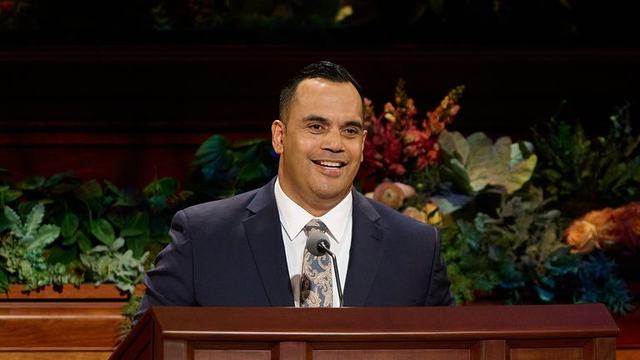
You Are Good Enough to Teach
 Open talk in Gospel Library
Contents
Before Reading
Before reading or listening to the talk, consider the following questions:
- What concerns or feelings of inadequacy do I experience when I have opportunities to teach the gospel?
- What does the Savior promise those He invites to participate in His work?
- How does loving Jesus Christ help me love those I teach?
- What do the Savior’s interactions with individuals reveal about His way of teaching?
- How can I measure a lesson’s success by connection to the Savior rather than the amount of material covered?
Topics
Trust the Savior to Help You Become a Teacher
Brother Reid teaches that the Savior invites ordinary, imperfect people to teach His gospel and promises to help them grow. The fishermen of Galilee and the sons of Mosiah illustrate that willingness and changed hearts matter more than already possessing mastery. Gospel teachers can move forward with confidence in Christ’s help rather than relying solely on their own abilities.
He did not expect them to become master teachers before they followed Him. He promised that He would make them into who He needed them to be.
The Lord invites all of us to teach His gospel. Wherever we teach—in classrooms, in the mission field, in our homes, or one by one—His promise remains the same: He will help us do His work.
We were never meant to do His work alone.
And as you deepen your love for the One you teach about, He will teach you, walk beside you, and gradually make you into the teacher He knows you can become.
- What pattern does Brother Reid identify in the Savior’s invitations to teach?
- What do the fishermen and the sons of Mosiah illustrate about whom the Lord can prepare to teach?
- Why does Brother Reid affirm that we can teach even when we lack knowledge, skill, or confidence?
- Which teaching responsibility or opportunity makes me feel inadequate, and how can the Savior’s promises shape my response?
- When do I recognize the Lord’s help in my efforts to share the gospel?
- What willing step can I take now instead of waiting until I feel fully qualified?
Love the Lord and Those You Teach
Brother Reid places love at the heart of discipleship and gospel teaching. The two great commandments guide teachers to love God and their neighbors, and deepening love for the Savior helps teachers see others as He sees them. A teacher’s love helps learners feel the Savior’s love and recognize the truth of His gospel.
Before the Savior taught His disciples where to go and what to teach, He taught them who to become. His first lesson was not about teaching—it was about discipleship.
Love the Lord and love those you teach.
The impact of a gospel teacher is not just the message—it is the love of the messenger.
We learned that the surest way to truly love those we taught was to deepen our love for the One we taught about.
- How do the two great commandments guide gospel teachers?
- Why does Brother Reid connect becoming a disciple with becoming a teacher?
- How does deepening love for Jesus Christ influence the way teachers see and treat learners?
- What practice helps me deepen my love for Jesus Christ, and how can I make room for it this week?
- Who do I struggle to understand or love, and how can I seek to see that person as the Savior does?
- How can my preparation include attention to people’s needs as well as lesson content?
Teach the Gospel Through Faithful, Loving Examples
Brother Reid’s family and Primary experiences show that gospel learning takes place through both instruction and example. His parents’ deep faith and love help their children love the Lord, while faithful teachers reinforce those lessons through preparation and personal care. Formal education and impressive settings are not the foundation of their influence; lived faith and love are.
My mother had limited formal education. But together they possessed something far more important: a deep and abiding faith in Jesus Christ.
They loved the Lord with all their hearts, and because they loved Him, they loved us in a way that helped us love Him too.
Some of the greatest lessons they taught were the ones we caught simply by watching them.
Our teachers faithfully prepared each lesson, but what I remember most is how they loved us.
- What qualities make Brother Reid’s parents influential gospel teachers?
- How do example and spoken instruction work together in his description of gospel learning?
- What does his account of Primary teachers reveal about the importance of preparation and personal love?
- What does my everyday example teach others about my faith in Jesus Christ?
- Which parent, teacher, or mentor helps me feel the Savior’s love, and what can I learn from that person’s example?
- What simple change in my home or classroom can make gospel learning more loving and personal?
Follow the Savior’s Pattern of Loving Individuals
The resurrected Savior’s ministry in the Americas demonstrates teaching that attends to individuals and responds compassionately to their needs. He invites people to come unto Him one by one, teaches His doctrine, and continues ministering after inviting them to return home. Brother Reid presents relationships and personal care as essential to Christ-centered teaching and deeper conversion.
He began by focusing on the individuals. He invited each person to come unto Him one by one so they could know for themselves that He was Jesus Christ.
We may say that “class” had ended, but His love for the people had not.
For the Master Teacher, every lesson was inspired by love for those He taught.
Christ-centered teaching is rooted in relationships.
- What does the Savior do before teaching His doctrine to the people in the Americas?
- How does His response to the people’s desires illustrate love beyond a formal teaching period?
- Why are relationships important to helping learners come closer to the Savior?
- How well do I know the individuals I teach, including their names, concerns, and spiritual needs?
- What can I do before or after a lesson to show genuine care for one person?
- How can I become more attentive to learners’ needs while remaining focused on Jesus Christ?
Help Learners Connect to the Savior Sooner
Brother Reid reframes shorter lessons as opportunities to focus on helping people come unto Christ rather than covering every possible point. The teacher’s purpose is not to attract attention but to help learners think about and love the Savior. Feeling closer to Him provides a more meaningful measure of a lesson than the amount of material presented.
Perhaps the better question is “How can I help those I teach connect to the Savior sooner?”
The purpose of every lesson is not for people to leave talking about the teacher. It is for them to leave thinking about and loving the Savior.
Twenty-five-minute lessons are not a limitation; they are an invitation: to focus, more clearly than ever, on helping others come to the Savior.
If class members leave the lesson feeling closer to the Savior than when they came, we have taught enough.
- How does Brother Reid change the question teachers ask about a 25-minute lesson?
- What distinction does he make between drawing attention to the teacher and directing attention to the Savior?
- What measure of successful teaching does he offer?
- What can I simplify in my next lesson to make its connection to Jesus Christ clearer?
- How can I help learners think about and love the Savior early in the lesson?
- What signs can help me reflect on whether my teaching encourages learners to draw closer to Christ?
